Coastal Buyers: 316L + 20–30s Rinse Keeps Stainless Safe in Saltwater
Stainless steel can handle saltwater well, but only when you pick the right grade and finish and keep up with basic care. For coastal wear, 316 or 316L is the minimum standard worth trusting, while 304 falls short in continuous salt exposure. Watch for “marine grade” claims with no real spec behind them. The sections below walk through why chloride causes damage, which grades hold up, and how design and maintenance determine how long your stainless steel pieces actually last.
TL;DR:
- 316L stainless steel provides the best resistance to saltwater corrosion, especially in full immersion or splash zones, compared to lower grades like 304.
- Proper placement, smooth finish, and regular rinsing with fresh water are essential to prevent chloride buildup, pitting, and crevice corrosion over time.
- Surface finish quality and avoiding tight crevices or unsealed welds can significantly extend the lifespan of stainless steel in coastal environments.
- “Marine grade” labels lack standard definitions; choosing alloys with high PREN and correct fabrication is more reliable for saltwater durability.
- For jewelry and watches, consistent rinsing, drying, and selecting 316L material with proper passivation ensure reliable performance at the beach or pool.
Table of Contents
- How salt attacks stainless steel
- Which grades resist saltwater: why 316/316L wins
- Placement and finish matter as much as alloy
- Maintenance routines that prevent staining and pitting
- What to buy: watches and jewelry built for saltwater
- How we build for saltwater at WYNWOOD BLVD
- Stop chasing “marine grade,” start specifying PREN
- Meet the Atlantic Blue, built with saltwater wear in mind
- FAQ
- Sources
How salt attacks stainless steel
Stainless steel resists rust because of a thin, invisible layer of chromium oxide that forms on its surface and seals out oxygen and moisture. Chloride ions in saltwater are small and aggressive enough to break through weak points in that layer, and once they get in, two main problems show up.
- Pitting corrosion starts as tiny pinholes where chloride has broken the passive film, often in spots where salt water evaporates and leaves concentrated residue behind.
- Crevice corrosion happens in tight gaps, under washers, clasps, or seals, where trapped moisture cannot refresh its oxygen supply and chloride builds up unchecked.
Temperature, warmth speeds up the reaction, along with oxygen levels and biological growth on the surface, all influence how fast this damage spreads. A 2026 comparative corrosion study found that resistance increased in a clear order across common grades, with lower-alloy steels failing well before the better-formulated ones.
Which grades resist saltwater: why 316/316L wins
Molybdenum is the difference-maker. According to Ryerson’s grade comparison, 304 is fine for indoor or freshwater use but falls short in ongoing coastal exposure, while 316 and 316L are built for exactly that environment.
The same 2026 study found resistance increasing in this order: AISI 420 < 304 < 304L < 316L, with 316L performing best among the grades tested.
For harsher conditions, splash zones, continuous immersion, or high heat, specifiers often move up to duplex or super-austenitic alloys such as 2205 duplex, 2507, 254 SMO, or 6Mo. These fall into a higher PREN (Pitting Resistance Equivalent Number) range, and industry guidance recommends matching PREN to exposure severity:
- Mild coastal atmosphere: standard 316/316L is usually sufficient.
- Splash zones or heavy salt spray: look for higher-order alloys or additional protection.
- Full seawater immersion: duplex or super-austenitic grades are the safer call.
Placement and finish matter as much as alloy
Where a piece sits and how it’s made often decides its fate more than the alloy stamped on the spec sheet. IMOA case studies comparing coastal installations found that Type 316 with a smooth finish lasted decades when rain regularly washed it clean, while the same grade in a sheltered or rough-surfaced spot corroded much faster.
A quick checklist for evaluating any stainless piece or installation:
- Check how close it sits to saltwater and whether it’s in a direct splash zone, the riskiest spot by far.
- Confirm it gets rinsed by rain or regular cleaning rather than sitting sheltered and salt-caked.
- Look for a smooth surface finish, ideally below 0.5 micrometers Ra, since rough textures trap salt and moisture.
- Avoid designs with tight crevices, unsealed seams, or poorly finished welds where chloride can concentrate unseen.
Maintenance routines that prevent staining and pitting
Care is simple, but skipping it is the most common reason stainless steel fails early in saltwater settings. The World Stainless cleaning guidance points to a fresh-water rinse as the single most effective, lowest-cost step you can take to stop chloride from building up on the surface.
- Rinse with fresh water as soon as possible after saltwater or spray contact.
- Use a mild, neutral cleaner for buildup instead of harsh acids or chloride-based products.
- Dry the surface fully rather than letting it air-dry with residue left behind.
- Have welded or fabricated pieces periodically passivated to restore the protective oxide layer.
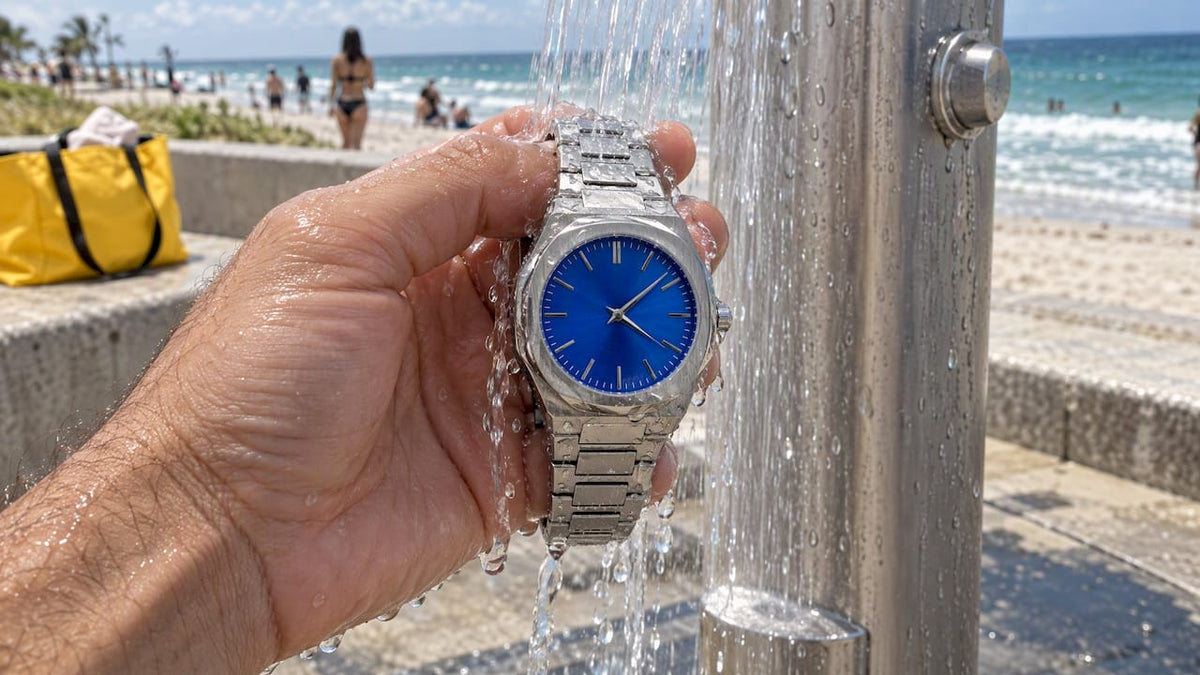
For watches and jewelry specifically, a quick household habit works well: rinse under running fresh water for 20 to 30 seconds, dry with a soft cloth, and check gaskets or seals occasionally for wear. A practical watch-cleaning routine built around this same timing is worth following if you wear a piece regularly at the beach or pool. Anglers face a similar challenge with saltwater tackle, and the same rinse-first principle applies there too, as covered in this corrosion prevention guide for fishing gear.
Pro Tip: Keep a small bottle of fresh water in your beach bag just for rinsing jewelry and watches before the salt has a chance to dry.
What to buy: watches and jewelry built for saltwater
When shopping for a watch or piece of jewelry you plan to wear near the ocean, 316L should be your baseline, not an upgrade option. Coatings like PVD can add scratch resistance and color durability on top of that, though they don’t replace the need for a solid base alloy.
- Ask directly for the alloy specification, don’t accept “marine grade” as an answer, since it has no formal industry definition.
- Ask whether the surface has been properly finished and passivated after fabrication.
- Expect mild surface discoloration, sometimes called tea staining, to be cosmetic and fixable, while actual pitting is a structural problem that won’t reverse itself.
With consistent rinsing and drying, a well-made 316L piece can perform reliably for years of regular coastal wear. Our own breakdown of stainless steel jewelry for ocean use and this guide to 316L watches cover these buying questions in more detail.
How we build for saltwater at WYNWOOD BLVD
We design our watches and jewelry around the same principles covered above: 316L stainless steel as the baseline material, smooth finishes that resist salt buildup, and clear care guidance so pieces hold up to beach, pool, and boat days. Our beach jewelry line and our ocean-safe care routine reflect this directly, grade selection paired with a rinse habit that takes less than a minute.

Stop chasing “marine grade,” start specifying PREN
“Marine grade” sounds reassuring but means nothing on a spec sheet. What matters is PREN, finish quality, and smart design that avoids trapped moisture. Pair that selection with a simple rinse habit and most saltwater corrosion problems never start.
— Mathias
Meet the Atlantic Blue, built with saltwater wear in mind
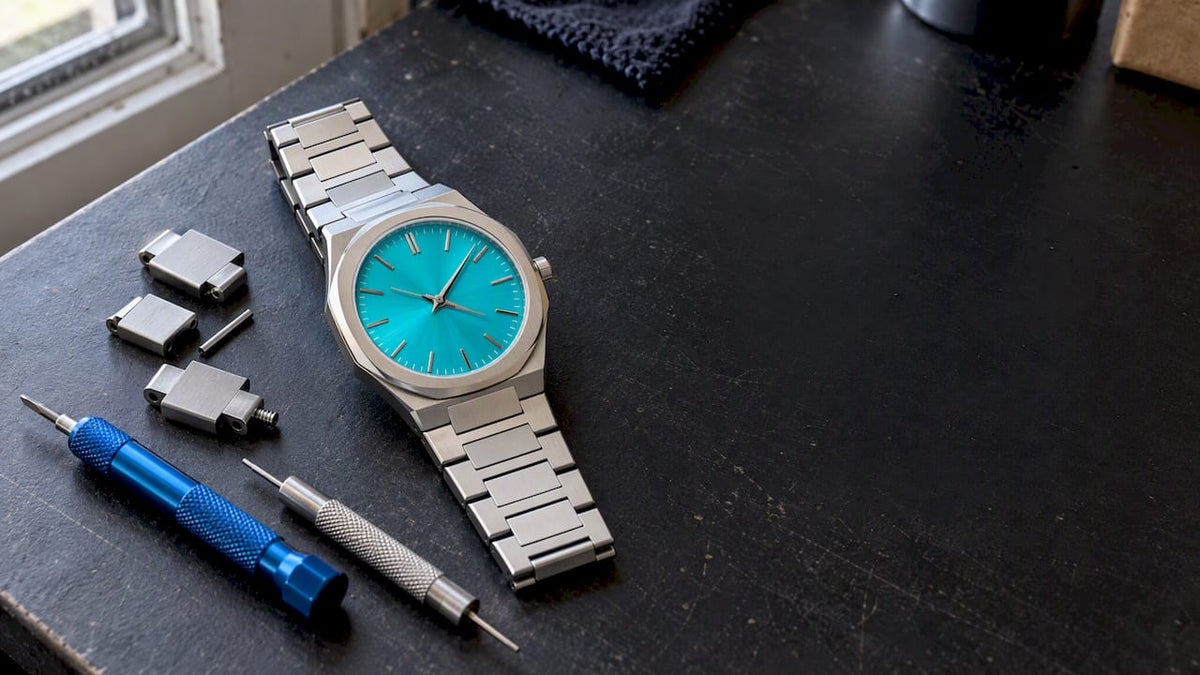
If you want a watch that matches the grade and finish guidance above without having to piece it together yourself, our Atlantic Blue Stainless Steel Automatic Watch is built on 316L stainless steel with care instructions suited to ocean, pool, and beach wear, right in line with everything covered in this guide.

It’s part of our wider Miami Inspired Watches collection, and if you’re drawn to smaller everyday pieces, our Miami Inspired Charms and Palm Tree Charms follow the same material standards. Businesses looking for branded coastal-themed merchandise can also explore our Corporate Custom Watches program for bulk or logo-engraved orders.
FAQ
Is stainless steel good in saltwater?
Yes, but only with the right grade and care. The 2026 comparative study found 316L performed best among common grades tested in seawater, while lower grades like 304 and AISI 420 corroded faster.
Is 304 or 316 better for salt water?
316 is the better choice for salt water because its added molybdenum resists chloride-driven pitting and crevice corrosion far better than 304, according to Ryerson’s grade comparison. 304 is generally reserved for indoor or freshwater applications instead.
What metal will not rust in salt water?
No common metal is entirely immune to saltwater corrosion, but high-molybdenum stainless steels like 316L, along with duplex and super-austenitic alloys, resist it far longer than standard steel or lower stainless grades. Proper finish and design still play a major role in how long any metal lasts in that environment.
Is 304 stainless steel safe to use in seawater?
304 stainless steel is not well suited to continuous seawater exposure since it lacks the molybdenum that protects against chloride attack. The 2026 corrosion study found 304 corroded more readily than 304L and 316L in seawater testing, so 316 or 316L is the safer pick for marine use.
Sources
- 304 stainless vs 316 stainless — Ryerson
- IMOA case studies: coastal stainless performance (Jones Beach, Kure Beach examples)
- World Stainless — Cleaning and descaling of stainless steels
- Comparative study of stainless steel grades in seawater (2026) — IOPscience