Identify Before You Touch: Screw and Pin Links for Watch Owners
If you want the easiest at-home sizing, choose a bracelet with screw links. If you need the highest mechanical security for a tool or dive watch, pin-and-collar systems usually win. Both can fail if you force the wrong tool, so inspect your bracelet before you touch it, and check the identification steps below first.
TL;DR:
- Screw links are easier to size at home with a small screwdriver, but can be damaged if a wrong tool or force is used.
- Pin-and-collar systems offer better long-term security for demanding use but require specialized tools and more careful handling.
- Visual identification with arrows, slots, or raised rims is essential to choose the correct removal method and prevent damage.
- Regular inspection, proper tool use, and applying removable threadlocker help maintain bracelet integrity and avoid costly repairs.
- Manufacturers frequently change link hardware, so always verify link type before attempting any adjustment to prevent stripping or damage.
Table of Contents
- How screw links and pin systems differ mechanically
- How to tell which link type your bracelet uses
- Weighing the real trade-offs of each system
- Tools and safe steps for resizing each system
- Avoiding the mistakes that shorten a bracelet’s life
- Why identification-first habits build real trust with owners
- What most advice gets wrong about link maintenance
- A watch designed for easy upkeep
- FAQ
- Sources
How screw links and pin systems differ mechanically
A screw link uses a small threaded screw that passes through each link, holding the bracelet together by clamping force. A friction pin is a smooth metal rod pushed through the link holes, held in place by tension alone. A pin-and-collar system adds a small sleeve around the pin, and that collar grips the link walls to stop the pin from sliding out.
Each design trades convenience for security in a different way:
- Screw links are the easiest to size at home because a small screwdriver is the only tool you usually need.
- Friction pins resize faster with a pin pusher but offer less long-term holding power on their own.
- Pin-and-collar systems resist loosening the best, but they’re fiddlier to service and often need a jeweler’s tools.
- Screw links look cleaner on dress watches, where a smooth case side matters more than brute strength.
Dress watches and many microbrand pieces favor screw links because the bracelet rarely takes hard knocks. Dive watches and tool watches lean on pin-and-collar systems, since that design is trusted for long-term security in demanding use. Collars provide friction that keeps the pin from shifting even under repeated impact or water pressure, which is why you’ll see this system on sport and tool watches rather than slim dress pieces.
How to tell which link type your bracelet uses
Don’t guess. Using a pin pusher on a screw link, or a screwdriver on a friction pin, is one of the fastest ways to damage a bracelet. A quick visual check tells you which method is safe.
- Look for small arrows stamped on the inside of the links. They mark push direction for pins, not screws.
- Check for a visible slot or hex shape on the link’s side. That’s a screw head, and it needs a matching driver, not a pusher.
- Run your finger along the link seam. A smooth round hole with no slot usually means a plain friction pin.
- Look for a slightly raised rim around the hole. That often signals a collar, which changes how much force you’ll need.
- Place the bracelet on a soft tray under good light, and use a loupe if you have one, since stamped arrows can be tiny.
A visual identification checklist like this reliably tells you which removal method to use, and forcing the wrong tool into the wrong link is the most common cause of stripped heads or damaged holes. If anything looks ambiguous under the loupe, stop and treat it as a screw link until you confirm otherwise. That assumption costs you a few extra minutes, not a ruined bracelet.
Weighing the real trade-offs of each system
Security and convenience pull in opposite directions here, and neither system is free of risk once you start working on it yourself.
- Pin-and-collar retention resists backing out on its own, while screw links can loosen gradually without a dab of threadlocker.
- Stripped screw heads, damaged threads, and lost collars are the most common DIY injuries to a bracelet.
- A poorly fitted pin can stretch the link holes slightly, which loosens the whole bracelet over time.
- Screw links often read as a more refined, premium detail, even though pin-and-collar hardware is mechanically tougher.
Threadlocker matters more than most owners realize. Removable (blue) threadlocker holds a screw snug without welding it in place, which is why professional guidance favors removable threadlocker for bracelet screws over the permanent (red) variety. Permanent threadlocker can turn a two-minute adjustment into a trip to a jeweler, since it’s designed to resist the exact kind of removal you’ll want to do later.
Pro Tip: Apply the smallest dab of blue threadlocker you can manage, just enough to coat the threads, since excess can squeeze into the link and attract dust.
Tools and safe steps for resizing each system
Good tools cost less than one repair visit, and the right ones remove most of the risk from a home adjustment.
- Identify the link type first, using the checklist above, before you pick up any tool.
- Secure the bracelet in a holder or on a padded tray so it can’t slide while you work.
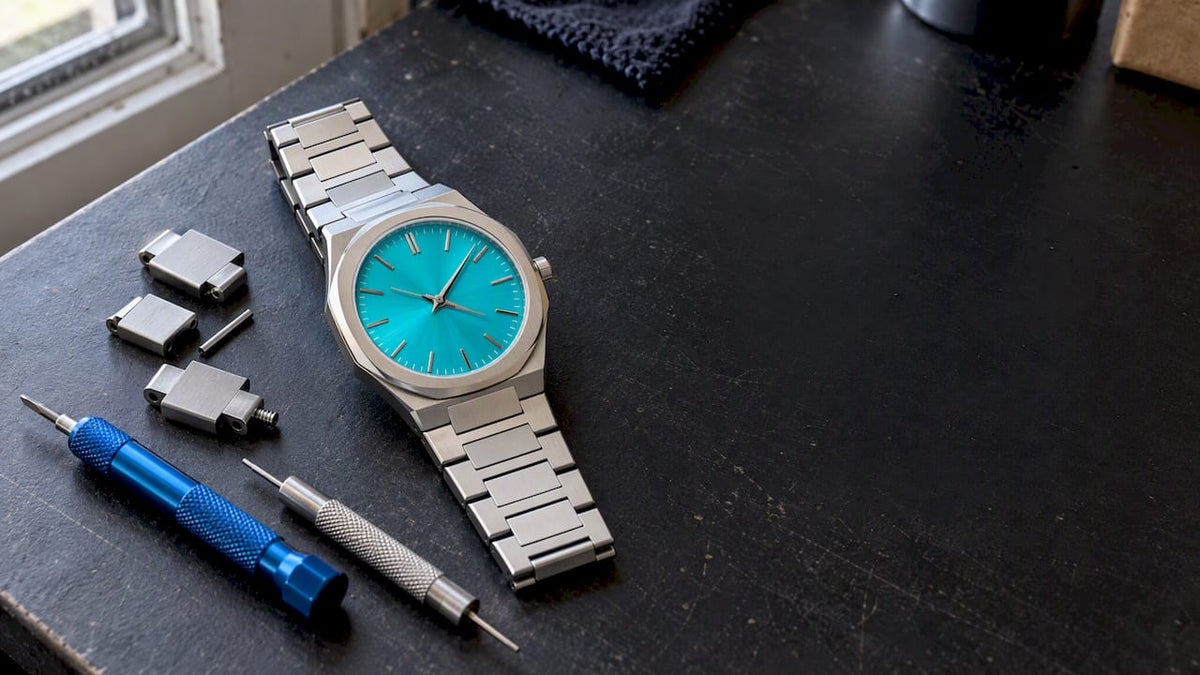
- For screw links, use a precision flat-head driver that completely fills the slot, and turn gently.
- For pin links, use a proper pin pusher rather than a nail or paperclip, and push in the direction the arrows show.
- Remove links in matched pairs from each side of the clasp to keep the bracelet centered on your wrist.
- Keep each screw or pin with its original link, since replacement parts aren’t always interchangeable.
- Reinsert and check that every head or pin sits flush before you wear the watch again.
A properly matched driver that fills the screw slot, combined with light initial torque, is the single most repeated piece of guidance across DIY bracelet removal walkthroughs, since mismatched tips cause most stripped heads.
Stop immediately if a screw resists after the first turn, if the driver slips, or if a pin won’t move with gentle, steady pressure against the stamped arrow. Cheap screwdriver sets with poorly ground tips are a frequent cause of stripped slots. If a head is already stripped, threads are damaged, or a collar is missing, call a jeweler rather than forcing it further.
Avoiding the mistakes that shorten a bracelet’s life
Most bracelet damage isn’t from normal wear. It’s from a mismatched tool, careless force, or skipping identification. Microscopic wear from the wrong driver or pusher adds up, and a loose pin fit can stretch link holes faster than you’d expect.
- Inspect screw tightness and collar fit every 6 to 12 months, especially if you resize the bracelet often.
- Reapply a small amount of removable threadlocker if a screw link feels like it’s working loose.
- Wipe down pins and screws occasionally to limit corrosion, which can seize a pin in place over time.
- Store the watch somewhere dry, since humidity speeds up the corrosion that causes seized pins.
- Replace a stripped screw, bent pin, or missing collar with a jeweler rather than reusing damaged parts.
Why identification-first habits build real trust with owners
Our guide to removing watch links at home walks through the same identify-first sequence, with photos and a matching tool list, so you can confirm what you’re looking at before you pick up a driver or pusher. We design our bracelets with serviceable link systems in mind, since a watch you can resize and maintain yourself tends to stay on your wrist longer. If a screw ever strips or a pin won’t seat flush, that’s the point to stop and get help rather than push through it.

What most advice gets wrong about link maintenance

Most guides treat screw links and pin-and-collar systems as a simple upgrade path, where pins and collars are always “better” because they’re more secure. That framing misses the point for most owners. Security only matters if you can also service the bracelet without wrecking it, and pin-and-collar systems are genuinely harder to work on at home.
The habit that actually prevents damage isn’t picking the “stronger” system. It’s identifying what you have before you touch a tool, every single time, even on a bracelet you’ve resized before. Manufacturers change link hardware between model years, so last year’s screwdriver size isn’t a guarantee today. If you take one thing from this guide, let it be that five-minute inspection under good light, not a hunt for the theoretically tougher hardware.
— Mathias
A watch designed for easy upkeep
If you like the idea of a bracelet you can actually maintain yourself, the Keys Blue Miami Inspired Watch pairs a stainless steel automatic movement with a link system built for straightforward home sizing.

Pair it with our step-by-step link removal guide before your first adjustment, or browse the full Miami Inspired Watches collection to compare styles and bracelet specs.
FAQ
How do screw links and pin links differ in strength?
Pin-and-collar systems generally hold up better under repeated stress because the collar’s friction resists the pin backing out on its own. Screw links are easier to adjust at home but can loosen gradually without a removable threadlocker holding the threads snug.
What tools do I need to identify and remove watch links?
Start with a loupe and good light to check for stamped arrows, slots, or screw heads, then use a precision flat-head driver sized to fill the slot for screw links or a pin pusher for friction pins. A padded tray keeps small parts from rolling away during the work.
What are the different types of links used in watch bracelets?
Watch bracelets typically use three link systems: screw links, friction pins, and pin-and-collar assemblies. Pin diameters and styles vary by design, with common men’s bracelet pins clustering around 1.00 by 12 millimeters, so a replacement pin should always be measured against the original before buying.
What are the three types of screws commonly used in watch hardware?
Watch bracelet screws generally come in slotted, hex, and Torx head styles, each requiring a matching driver size to avoid stripping. Using a driver that doesn’t completely fill the head is the most common cause of a stripped screw during home adjustment.
When should I take my bracelet to a jeweler instead of fixing it myself?
Take it to a jeweler as soon as a screw head strips, threads feel damaged, or a collar is missing from a pin link. Forcing a repair at that point usually causes more damage than the original problem, and a jeweler can replace small parts that aren’t sold individually to consumers.
Sources
- How to Size a Watch Bracelet and Remove Links Yourself | WatchPolice
- Taking Links Out of a Metal Bracelet at Home - We Know Watches
- Watch pins: slotted, straight or knurled — technical criteria
- Why are pins-&-collars superior to screw-in link-pins on a bracelet? | WatchUSeek Watch Forums