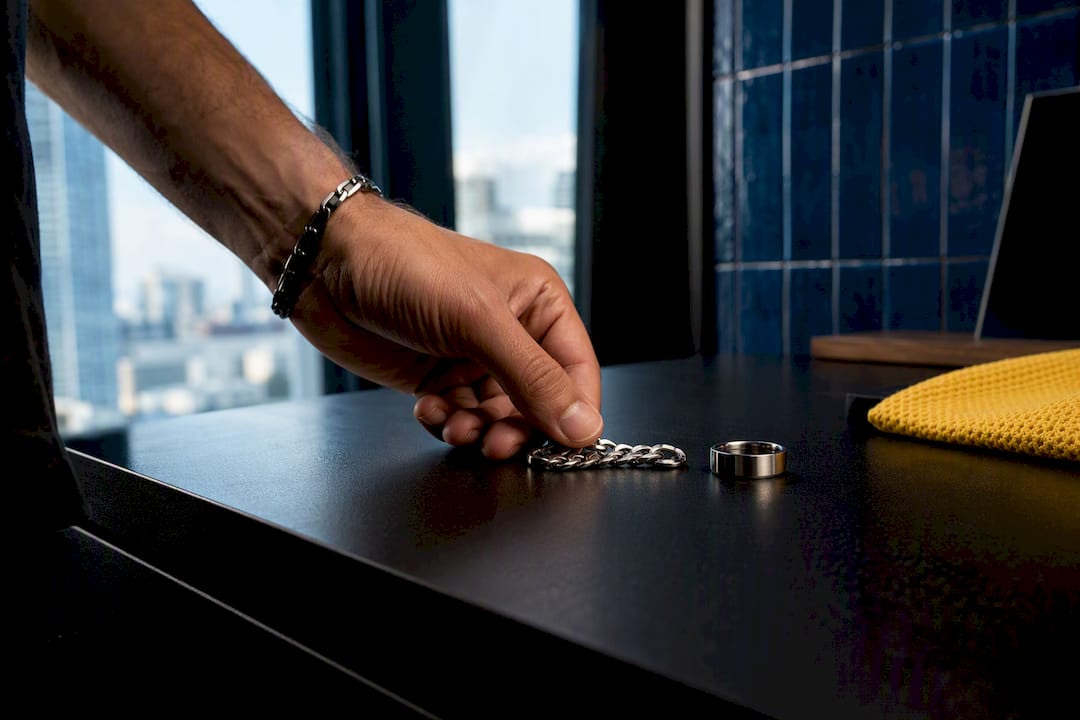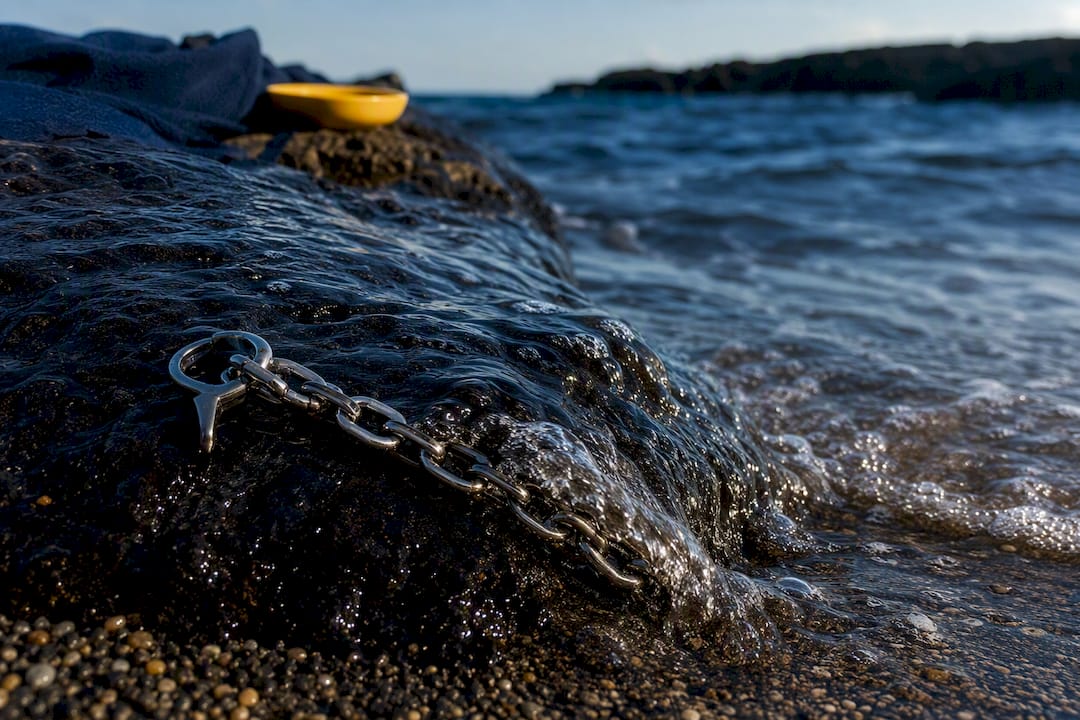
316 Stainless Beach Jewelry From WYNWOOD BLVD That Survives Saltwater
For beach days, choose 316 stainless steel or solid-gold-finish pieces with sealed settings and secure clasps. These materials shrug off salt, chlorine, and humidity while still looking coastal. Pair them with on-trend shapes like shell motifs, irregular pearls, and beaded anklets, and you get jewelry built for real wear and not just a photo on the sand.
TL;DR:
- Jewelry made from 316 stainless steel or solid gold withstands saltwater, chlorine, and humidity better than plated or lower-grade alloys.
- Thick gold plating over stainless steel, especially between 1.0 and 2.5 microns, significantly extends jewelry lifespan in water exposure.
- “Waterproof” jewelry should be fully submerged repeatedly without damage, while “tarnish-resistant” mainly protects the finish, not structural components.
- Post-swim routines like rinsing, drying, and air circulation are crucial for preserving jewelry, often more so than the claimed water-resistant features.
- Natural shells and pearls show unique imperfections and weight differences, making them easier to distinguish from imitations and more environmentally responsible choices.
Table of Contents
- Beach Jewelry Trends and How to Layer Them
- Which Metals Actually Resist Saltwater and Tarnish?
- What Do “Waterproof” and “Tarnish-Resistant” Actually Mean?
- How to Choose Beach Jewelry: A Quick Buyer Checklist
- Why WYNWOOD BLVD Understands Beach-Ready Jewelry
- Storing Beach Jewelry So Humidity and Sand Don’t Win
- Real Shells and Pearls vs. Imitations: How to Tell the Difference
- Sourcing Beach Jewelry Materials Responsibly
- Designing for the Water: What Actually Gets Prioritized
- Shop WYNWOOD BLVD’s Beach-Ready Palm Tree Charms
- Sources
Beach Jewelry Trends and How to Layer Them
Coastal style right now leans into texture. Shell motifs, irregular baroque pearls, mixed beaded stacks, and small palm or wave charms dominate the racks this season, and editorial roundups keep pointing to the same three: shell shapes, uneven pearls, and beaded stacks as the pieces people actually reach for at the beach. What ties them together is a mix of organic texture with something engineered to hold up. A raw shell pendant looks better next to a polished stainless-steel chain than it does alone.
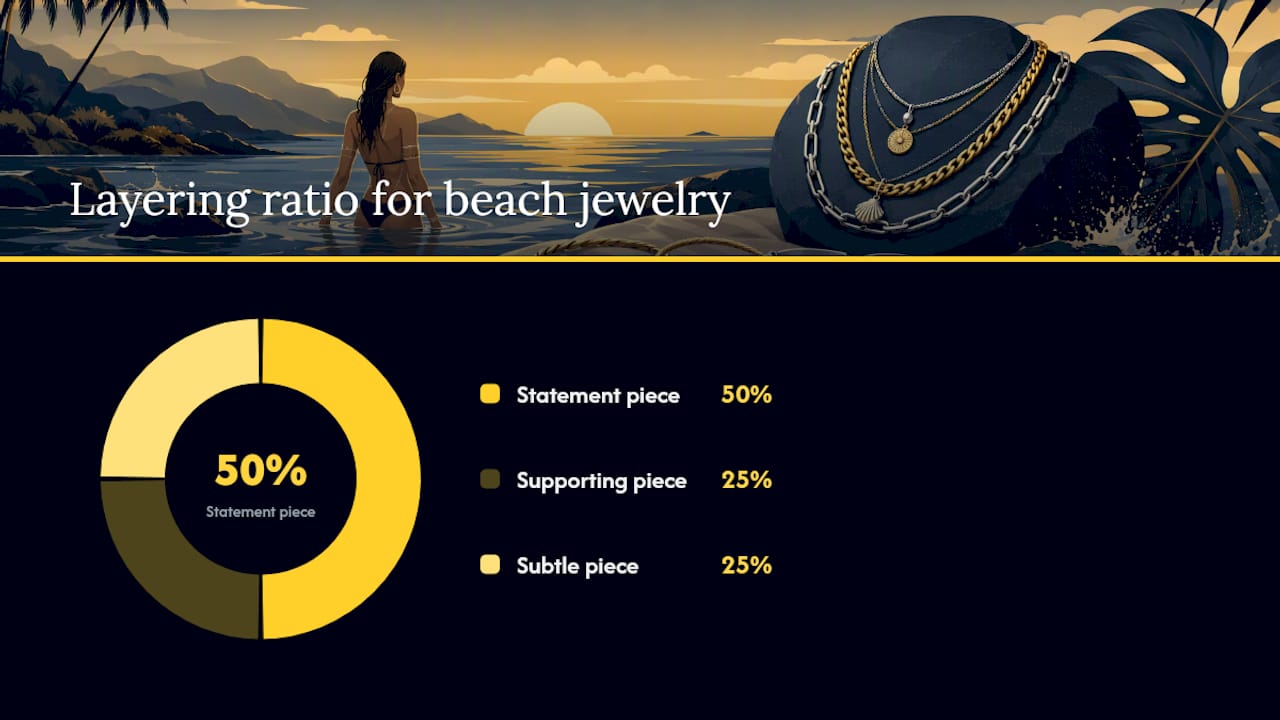
Layering is where most people either nail the look or overdo it. A simple ratio helps: one statement piece, one supporting piece, one subtle piece. Think of it as 2:1:1, weighted toward restraint. A bold palm charm or shell pendant carries the look. A slim secondary chain or beaded anklet backs it up. A single stud or thin band finishes it without competing for attention.
Here’s how that plays out depending on where you’re headed:
- Swimsuit and cover-up: One waterproof pendant on a short chain, plus a beaded anklet. Skip earrings that snag on hair or hoods.
- Linen and sandals for a beach walk: Layer two thin necklaces of different lengths with a palm or shell charm as the focal point.
- Beach-to-dinner transition: Swap the anklet for a second necklace or a stack of rings, and let the pendant carry through both settings.
- Boho beach jewelry look: Mix a beaded choker with an irregular pearl drop earring for asymmetry without clutter.
The through-line across all of these is that pieces that survive the water do double duty. You’re not changing jewelry between the ocean and the bar. That’s the real test of whether a piece belongs in a beach wardrobe or just looks like it should.
Which Metals Actually Resist Saltwater and Tarnish?
Not all metal marketed as “beach jewelry” behaves the same way once it hits salt water. The material underneath the finish decides whether a piece lasts a season or a decade.
316 stainless steel is the standard for a reason. It resists tarnish, saltwater corrosion, chlorine, and humidity better than nearly anything else at a comparable price point, which is why it’s become the common base material for beach-friendly jewelry. Solid gold performs just as well chemically, but it comes at a price point most people won’t wear daily to the beach.
18K gold plating over 316 stainless steel is the practical middle ground. When the plating is thick enough and properly sealed, it holds its color through repeated ocean and pool exposure far longer than plating over brass or low-cost alloys, which tend to flake, discolor, or turn skin green within weeks. Some retailers now market pieces built specifically from medical-grade 316 stainless steel with 18K gold plating as safe for shower, pool, and ocean wear without tarnishing, and the underlying metal grade is what makes that claim credible rather than just marketing copy.
Pro Tip: Ask for the plating thickness in microns before you buy. Anything under 0.5 microns wears thin within months of regular water exposure; 1.0 to 2.5 microns is the range that actually holds up.
Here’s where beach jewelry tends to fail, even when it looks fine on a product photo:
- Porous stones like turquoise or opal absorb salt and chlorine, which dulls color and weakens the stone over time.
- Glued components (rhinestones, some shell accents) loosen when adhesive breaks down in water and heat.
- Brass or nickel bases under thin plating corrode fast and are a common cause of skin irritation.
- Unsealed settings let moisture seep behind stones or enamel, causing discoloration you can’t polish out.
Affordable coastal accessories, like budget beach-themed earring bundles built from nonmetal materials or low-cost alloys, illustrate the tradeoff clearly: the price is right for a single vacation, but tarnish and discoloration show up fast once sweat and salt water get involved.
When you’re evaluating a listing, look for these signals before adding to cart:
- Stated metal grade (316 or 304 stainless steel, or karat gold)
- Plating thickness in microns, not just “gold plated”
- Hypoallergenic or nickel-free claims
- A warranty or return window that signals the brand stands behind durability
Jewelry returns in the fashion accessory space often trace back to skin reactions or rapid tarnishing, which is exactly why metal grade and plating thickness matter more than color or shape when you’re shopping for something that’ll actually see saltwater. Stainless-steel jewelry built for ocean wear tends to spell out both of those specs clearly on the product page, which is a good baseline for comparison shopping.
What Do “Waterproof” and “Tarnish-Resistant” Actually Mean?
These terms get used loosely, and that’s a problem for anyone trying to buy jewelry that survives more than one swim.
“Waterproof” should mean a piece can be fully submerged, repeatedly, without the finish breaking down. In practice, retail language often blurs waterproof and tarnish-resistant, so the same label gets applied to pieces with very different real-world performance. “Water-resistant” is a weaker claim. It typically means brief splash or rinse exposure is fine, but prolonged submersion in salt water or chlorine isn’t guaranteed. “Tarnish-resistant” refers specifically to color and finish holding up over time. It says nothing about whether the clasp, glue, or stone setting will survive repeated water exposure.
The gap between marketing language and lived experience usually shows up in the small parts: clasps, jump rings, and glued accents. A pendant can be genuinely waterproof while its cheap lobster clasp corrodes within a month.
Here’s a post-swim routine that does more for longevity than any tarnish-resistant label:
- Rinse the piece in fresh water immediately after leaving the ocean or pool.
- Pat it dry with a soft cloth, rather than letting it air-dry with salt residue still on it.
- Open the clasp and let the piece air-dry fully before storing it closed.
- Wipe with a polishing cloth once dry if you notice any dullness.
These four steps matter more than most tarnish-resistant claims alone, since rinsing, drying, and airing out the clasp actively prevents the corrosion that marketing language only promises to resist.
Long-term care depends on the piece. Solid stainless steel needs almost nothing beyond the post-swim routine and an occasional polish. Plated pieces benefit from re-plating every one to three years depending on wear frequency, especially for daily-wear rings and bracelets that see more friction than a pendant.
Pro Tip: Before trusting a “wear it in the ocean” claim, check the product reviews for photos taken after weeks of actual wear, not just the listing photos. Sealed bezel settings should show no gaps where water could pool behind a stone.
How to Choose Beach Jewelry: A Quick Buyer Checklist
You don’t need an hour of research per piece. A short mental checklist at the product page or in-store counter catches most of the bad buys before they happen.
Run through these before adding anything to cart:
- Confirm the metal grade: 316 or 304 stainless steel, or karat gold.
- Check the clasp type. Lobster clasps and magnetic closures with a safety catch hold up better in water than simple hook closures.
- Weigh the piece in your hand. Cheap alloys often feel unnaturally light for their size.
- Ask whether stones are natural or resin, and whether settings are sealed.
- Look for a hypoallergenic or nickel-free label if you have sensitive skin.
- Check the return and warranty window. Anything under 30 days signals low confidence in durability.
Budget guidance comes down to how long you want the piece to last. If you’re buying a single souvenir anklet for one trip, a lower-cost piece is a reasonable call. If it’s something you’ll wear weekly for years, solid stainless steel or a properly plated piece pays for itself in avoided replacements.
Sizing deserves a specific note for anklets and layered necklaces. Anklets should sit loose enough to move with your ankle, typically an inch of slack beyond a snug fit. For layered necklaces, stagger lengths by at least two inches so pendants don’t tangle or overlap awkwardly.
| Buying factor | What to look for | Why it matters |
|---|---|---|
| Metal grade | 316/304 stainless steel or karat gold | Determines actual saltwater resistance |
| Clasp type | Lobster clasp or magnetic with safety catch | Prevents loss in water or during activity |
| Plating thickness | 1.0 to 2.5 microns for 18K plating | Longer wear before color fades |
| Stone type | Natural, sealed settings over porous or glued stones | Avoids water damage and discoloration |
| Return window | 30 days or more | Signals brand confidence in durability |
Why WYNWOOD BLVD Understands Beach-Ready Jewelry
Wynwoodblvd designs stainless-steel jewelry inspired by Miami, Key West, and coastal travel, which means saltwater performance isn’t an afterthought. It’s the design brief. The brand has also published comparative research on waterproof jewelry alternatives, tracking how different brands approach anti-tarnish claims and material grades.
Two products reflect that approach directly:
- The Palm Tree Charm – Silver Classic uses stainless steel in a minimal pendant design, suited to daily beach wear without added bulk.
- The Palm Tree Charm – Silver Signature Painted applies a Miami-inspired painted finish over the same stainless-steel base, for a more statement-driven look.
Both charms rely on stainless steel specifically because it holds up where softer metals don’t.
Storing Beach Jewelry So Humidity and Sand Don’t Win
Storage matters as much as care after a swim. Humidity is the quieter threat, since it works on jewelry even when you’re not wearing it.
Store pieces in a dry, airtight container rather than an open dish or drawer. Silica gel packets, the kind that come in shoeboxes, absorb ambient moisture and slow tarnish on plated pieces significantly. A humid bathroom or a bag left on a beach towel is the worst place to leave stainless steel or plated jewelry overnight.
Sand is the second issue, and it’s mostly mechanical rather than chemical. Fine grit works into clasps and hinges, and it acts like sandpaper against plated surfaces during normal wear. Rinse pieces before storing them, not just after swimming, if you’ve spent the day on the beach even without going in the water.
Keep pieces separated rather than piled together. Tangled chains rub against each other, and that friction wears down plating faster than saltwater alone. A jewelry roll with individual compartments, or even small ziplock bags per piece, does the job without any special equipment. For anklets and beaded pieces specifically, lay them flat rather than hanging, since the wax cords and stringing materials used in handmade shell anklets can stretch or warp under their own weight over time.
Real Shells and Pearls vs. Imitations: How to Tell the Difference
Natural materials carry small imperfections that manufactured imitations don’t bother replicating, and that’s your fastest tell at the counter.
Real shell has slight color variation, faint growth lines, and a cool, slightly rough texture when you run a fingernail across it. Resin or plastic imitations feel warmer to the touch and often show a uniform, glossy surface with no natural variation at all. Weight is another clue: natural shell feels denser for its size than most plastic substitutes.
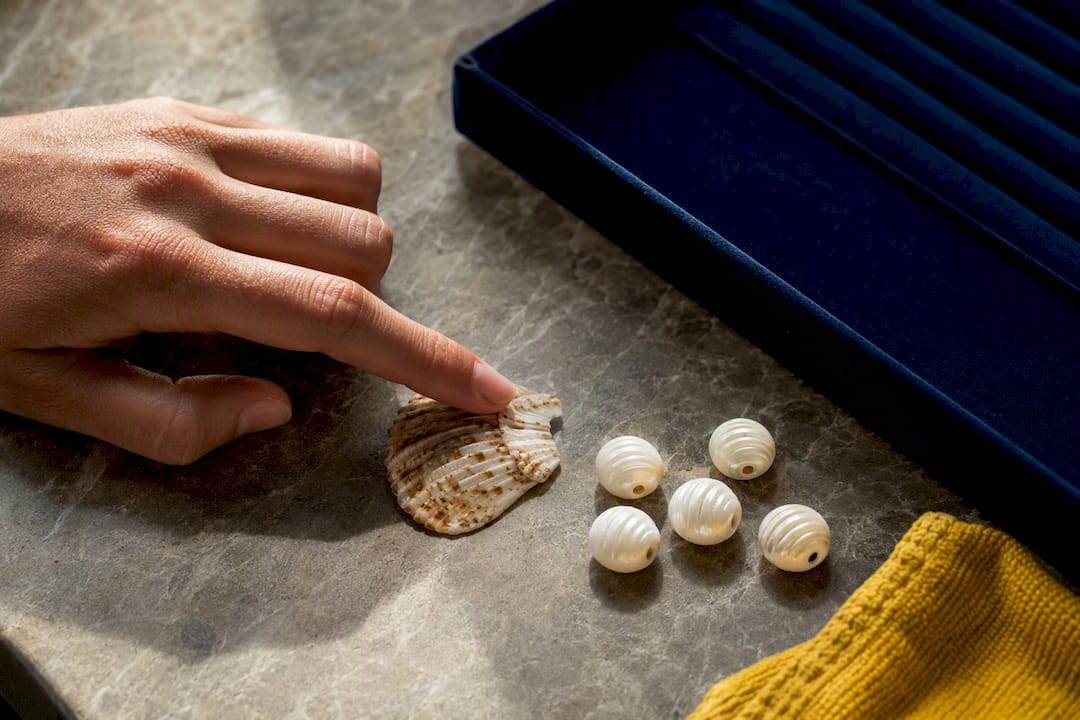
Real pearls, particularly the irregular baroque styles popular in beach jewelry right now, are never perfectly round or perfectly matched in a strand. If every pearl in a necklace looks identical in shape and shine, you’re likely looking at glass or plastic beads with a pearl coating. A genuine pearl also feels slightly grainy against your teeth (yes, that’s a real jeweler’s test), while imitation pearls feel smooth and slick.
Price is a rough but useful signal too. Designers working with coastal creatives on genuine shell and pearl pieces, like the surf-inspired anklets built from natural materials, price them higher than mass-produced imitations precisely because sourcing and hand-finishing natural materials costs more than molding resin. If a “natural shell” piece is priced like a gas-station souvenir, it probably is one.
Sourcing Beach Jewelry Materials Responsibly
Where beach jewelry materials come from matters, both for the ocean the designs celebrate and for the people making the pieces.
Shell and pearl sourcing carries real environmental weight. Wild-harvested shells taken in bulk can strip coastal ecosystems that rely on them, while responsibly sourced shell often comes as a byproduct of existing seafood industries rather than dedicated harvesting. Farmed pearls, when raised under proper environmental standards, put far less pressure on wild oyster populations than historical pearl diving ever did.
Metal sourcing has its own footprint. Stainless steel is highly recyclable, and a meaningful share of the steel used in jewelry production comes from recycled stock rather than freshly mined ore. That’s a real advantage over gold-only pieces, since gold mining carries a heavier documented environmental cost per gram than steel production.
If sustainability matters to you as a buyer, ask two questions before purchasing: whether shell or pearl components are farmed or byproduct-sourced rather than wild-harvested, and whether the metal base uses recycled content. Brands that can answer both clearly tend to be more transparent about the rest of their supply chain too.
Designing for the Water: What Actually Gets Prioritized
Every coastal collection starts with a tension: durability versus how a piece actually feels on your wrist or around your neck. Stainless steel wins the durability argument outright, but it can read as heavy or industrial if the design doesn’t account for it. That’s why finish choices, brushed versus polished, painted versus raw metal, do more design work than people realize. They soften what would otherwise feel like hardware.
Lightweight wearability matters just as much as corrosion resistance. A piece that survives twenty years of saltwater but feels uncomfortable after two hours on a humid afternoon fails the actual test of beach jewelry. The best coastal pieces get worn constantly, not admired occasionally, and that’s the real design brief behind them.
— Mathias
Shop WYNWOOD BLVD’s Beach-Ready Palm Tree Charms
Wynwoodblvd built these two palm tree charms specifically to solve the problem this whole guide has been about: jewelry that looks coastal without falling apart the first time it hits saltwater.
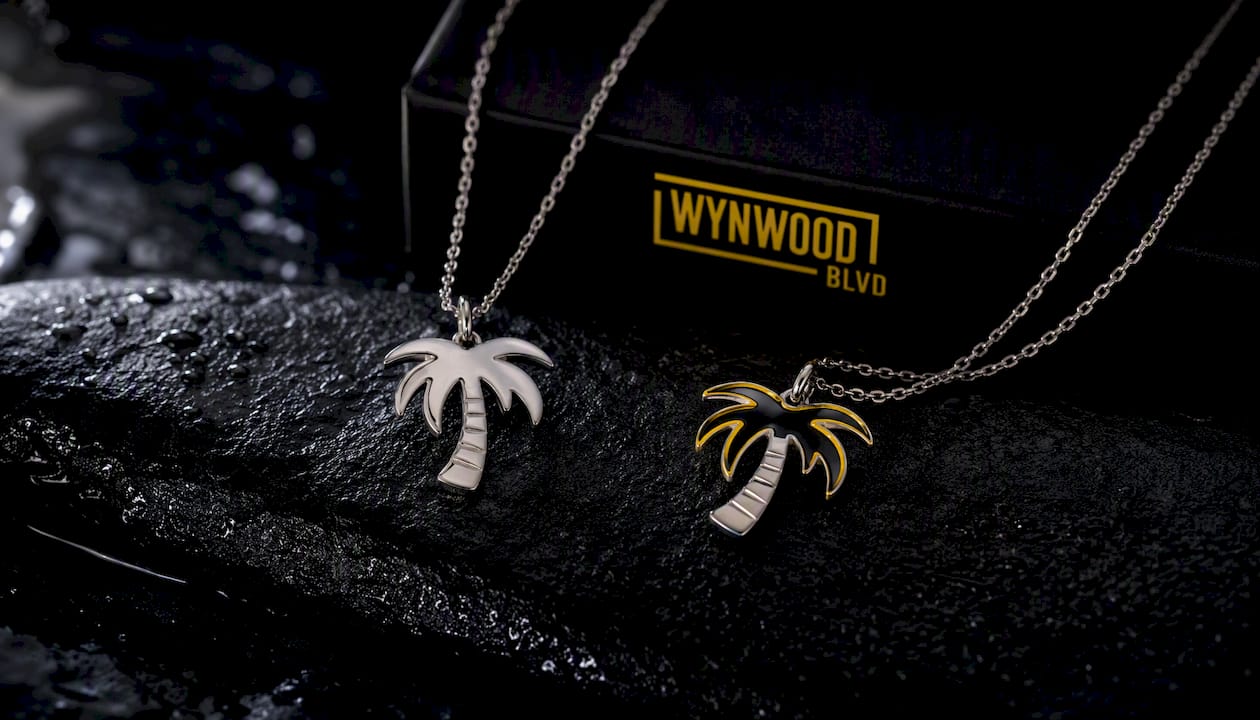
The Palm Tree Charm – Silver Classic is stainless steel in a minimal pendant form, easy to layer with a thin chain for everyday beach wear. The Palm Tree Charm – Silver Signature Painted takes the same stainless-steel base and adds a Miami-inspired painted finish for a bolder, statement look. Both ship directly from Wynwoodblvd’s online store, and if you’re outfitting a wedding party, a hotel gift shop, or a branded merchandise run, the team also handles custom orders with logo engraving and bulk pricing for businesses. Browse the full necklace collection to see how either charm pairs with the rest of the coastal lineup, or reach out directly to start a custom order.