6 Questions to Choose a Steel vs Leather Watch for Daily Wear
Choose steel if your days involve gym sessions, sweat, water, or constant wrist contact with surfaces. Choose leather if you want a dressier look and can keep your watch away from moisture most of the time. Modern treated leathers can survive a splash or brief exposure. Steel weighs more but asks far less of you day to day. The Atlantic Blue Stainless Steel Automatic Watch is a solid example of the steel route done right.
TL;DR:
- Steel watches are better suited for daily activities involving sweat, water, or impact, as they resist corrosion, scratches, and moisture more effectively than leather.
- Untreated leather straps cannot handle prolonged water exposure or heavy sweating, requiring careful maintenance and eventual replacement, unlike steel which only needs occasional cleaning.
- For people with skin sensitivities, high-quality 316L steel causes fewer reactions than lower-grade metals, while leather reactions typically stem from tanning chemicals rather than the material itself.
- Choosing a steel bracelet first provides long-term durability and flexibility for later strap changes, which is more cost-effective than starting with a leather strap.
- The Atlantic Blue Stainless Steel Automatic Watch is built for everyday durability, featuring corrosion-resistant 316L steel, a full water resistance, and low maintenance needs.
Table of Contents
- Steel vs Leather Watch: A Side-by-Side Comparison
- How Do You Choose Between Steel and Leather?
- How Do You Care for Each Material?
- Why Trust This Watch Material Comparison?
- Can You Be Allergic to Steel or Leather Watches?
- Which Material Is More Sustainable?
- Does Temperature Affect Steel and Leather Differently?
- Think of Your Strap as a Changeable Accessory
- Meet the Atlantic Blue: A Steel Option Built for Daily Wear
- Sources
- FAQ
Steel vs Leather Watch: A Side-by-Side Comparison
The honest answer to “steel vs leather watch” depends on what your wrist actually does all day, not what looks best in a photo. Here’s how the two materials stack up where it counts.
Durability and scratch resistance. Steel wins on raw toughness. Most modern watch cases and bracelets use 316L stainless steel, the industry default because it resists corrosion, shrugs off daily knocks, and can be polished or brushed back to near-new condition when it does pick up marks. Leather does not scratch the same way. It creases, softens, and develops a patina that some people find attractive and others read as wear and tear.
Water and sweat. Steel does not care about moisture. Leather does, unless it has been specifically treated. Manufacture Jean Rousseau, a French strapmaking house, produces leather straps engineered to survive short immersion of up to about 60 minutes, with a clean water rinse afterward to protect the hide. Untreated leather has no such tolerance. Sweat during a workout or a hot commute will stain and stiffen it faster than most owners expect.
Comfort and weight. Steel bracelets feel substantial on the wrist and offer micro-adjustment through the clasp, so you can fine-tune fit through a hot day of swelling and cooling. Leather is lighter and molds to your wrist shape over weeks of wear, which some people find more comfortable for long stretches.
Maintenance. Steel needs an occasional wipe and soapy rinse. Leather needs conditioning, careful drying, and eventual replacement.
Cost over time. A quality leather strap runs anywhere from modest to several hundred dollars for handcrafted, premium options, and most leather straps get replaced well before the watch itself. Steel bracelets cost more upfront but rarely need replacing.
Formality. Leather still reads as dressier in most social contexts. Steel works for both business casual and active wear without looking out of place in either.
Pro Tip: If you travel often or sweat through workouts regularly, keep a steel piece as your everyday watch and save leather for evenings when you know you’ll stay dry.
Leather’s versatility is real, but it’s situation-dependent in a way steel simply isn’t.

How Do You Choose Between Steel and Leather?
Run through these six questions before you decide:
- What do your daily activities look like? Gym, manual work, or outdoor time points toward steel.
- How much water or sweat exposure will the watch see? Frequent exposure rules out untreated leather.
- What level of formality do you need most often? Business and social events favor leather; everyday rotation favors steel.
- What’s your budget for replacement? Steel is a one-time cost; leather is a recurring one.
- How much maintenance are you willing to do? Leather demands more attention than steel.
- Do you want to swap straps later? If yes, buying on a bracelet keeps that door open.
Three quick profiles make this concrete. The active commuter who bikes, walks dogs, and hits the gym should default to steel. It handles sweat, rain, and impact without complaint. The office professional who wants one watch for meetings and dinners does well with leather, provided the job doesn’t involve much hands-on physical work. The weekend dresser who wears a watch occasionally for events can lean leather too, since infrequent wear means less exposure to the moisture and abrasion that wear it down fastest.
On sizing, steel bracelets use pin-and-collar or screw links that require removing sections to fit smaller wrists. This can be fiddly without the right tools, and many buyers have it done at the point of sale rather than attempting it at home. Leather straps adjust with a simple buckle across a range of holes, no tools needed, but lug width has to match the watch case exactly.
Pro Tip: Always try a watch on before buying if you can. Photos flatten proportions, and a bracelet that looks sleek online can feel bulky in person, especially on smaller wrists.
How Do You Care for Each Material?
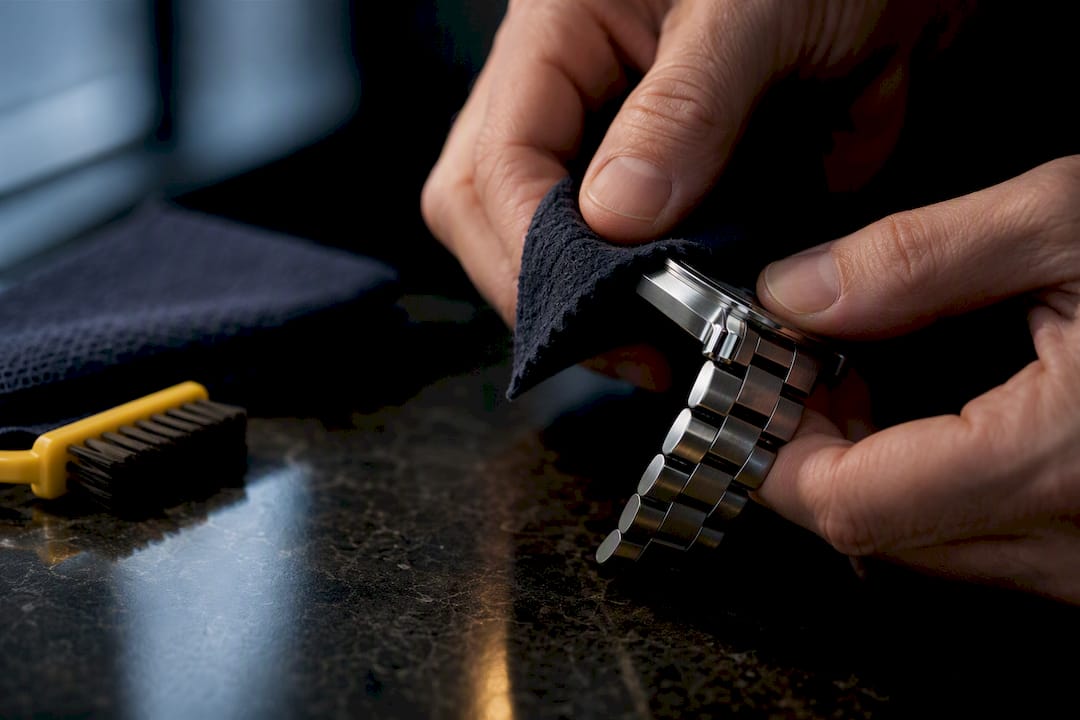
Cleaning stainless steel is straightforward: mild soap, a soft brush for the links, and a thorough dry to avoid water spots. Do this every few weeks if you wear the watch daily.
Leather needs a different routine. Wipe the surface with a dry cloth after wear, condition it every few months depending on climate, and avoid full immersion unless the strap is specifically treated for water resistance.
Watch for these signs that a leather strap needs replacing:
- Cracking along the edges where the strap flexes
- A persistent odor that conditioning doesn’t fix
- Loose or fraying stitching near the buckle or lugs
Lower-end calfskin often shows visible wear within months to a couple of years of daily use, while premium hides with proper care last considerably longer. To reduce scratches on a steel bracelet, avoid resting your wrist directly on rough surfaces like concrete or stone countertops, and consider professional polishing once marks accumulate rather than DIY buffing, which can remove more metal than necessary.
If you do get a treated leather strap wet, rinse it with clean water as soon as possible and let it air dry away from direct heat. Skipping that step is what actually shortens treated leather’s lifespan, not the exposure itself.
Why Trust This Watch Material Comparison?
Mathias, who writes on watch materials for Wynwoodblvd, has covered the specifics behind 316L stainless steel and how to prevent watch rash in past pieces, both grounded in the same material realities discussed here.
Watches made with 316L steel hold up well to humidity, salt air, and daily wear, avoiding the maintenance fuss leather demands. A few things worth knowing about the brand’s approach:
- Every steel watch uses corrosion-resistant 316L construction, not a softer or cheaper alloy.
- Designs draw from specific coastal locations rather than generic templates.
- Water resistance is built in, not an afterthought requiring special treatment.
Full product specifications, warranty details, and sizing information are available directly on each product page.
Can You Be Allergic to Steel or Leather Watches?
Nickel allergy is the most common skin reaction tied to metal jewelry and watches, and it can cause redness, itching, or a rash where the metal contacts skin. Not all steel is equal here. Lower-grade or plated metals can leach more nickel over time, while 316L stainless steel contains nickel in a form that’s bound more tightly within the alloy, which is one reason it’s the standard choice for watch cases and bracelets.
Leather carries a different set of risks. Reactions usually come from tanning chemicals or dyes rather than the hide itself, and they show up as contact dermatitis, dry patches, or irritation along the strap’s edge. Synthetic and vegetable-tanned leathers tend to trigger fewer reactions than chrome-tanned versions, though this varies by manufacturer.
If you’ve had skin reactions to jewelry before, a few practical steps help either way. Keep the watch loose enough that air circulates underneath, dry your wrist thoroughly after sweating, and give your skin a break by removing the watch overnight. For steel wearers specifically, sticking with well-made 316L pieces from reputable brands lowers the odds of a reaction considerably compared to unmarked or unusually cheap alloys.
Which Material Is More Sustainable?
Steel and leather sit on opposite ends of the sustainability conversation, and neither is a clean win.
Stainless steel is highly recyclable and durable enough that a single bracelet can outlast the watch movement inside it, sometimes getting passed down or resold decades later. That longevity offsets much of the environmental cost of mining and refining the raw metal. Steel doesn’t biodegrade, but it also doesn’t need replacing every year or two the way a strap might.
Leather’s footprint depends heavily on sourcing and tanning method. Traditional chrome tanning uses chemicals that require careful disposal, while vegetable tanning is gentler but slower and pricier. The leather industry has responded with alternative materials gaining traction, including straps made from salmon skin, pineapple fiber, and apple waste, which repurpose byproducts that would otherwise go to waste and often perform differently in terms of water resistance and durability.
If sustainability drives your decision, a steel bracelet you keep for years beats cycling through several leather straps, purely on a replacement-frequency basis. If you prefer leather’s look, ask about tanning method and consider one of the emerging alternative leathers before defaulting to conventional chrome-tanned hide.

Does Temperature Affect Steel and Leather Differently?
Yes, and this matters more than most buyers realize until they’re standing in direct sun or freezing wind. Steel conducts heat and cold efficiently, which means it warms up fast on a sunny beach day and can feel noticeably cold when you first put it on in winter. Once it adjusts to skin temperature, most wearers stop noticing, though a steel bracelet left in a hot car or on a poolside table can genuinely feel hot to the touch for a minute.
Leather behaves the opposite way. It’s a poor conductor, so it stays closer to a neutral temperature regardless of ambient heat or cold, and it breathes slightly, allowing a small amount of air exchange against the skin. That breathability is part of why leather feels comfortable for long wear in moderate climates, but it also means leather traps sweat and humidity against your wrist in hot weather, which is exactly the condition that damages untreated hide fastest.
Neither material has a clear temperature advantage across every climate. Steel handles extreme heat and cold at the case level better; leather is gentler against skin during long everyday wear as long as sweat isn’t part of the equation.
Think of Your Strap as a Changeable Accessory
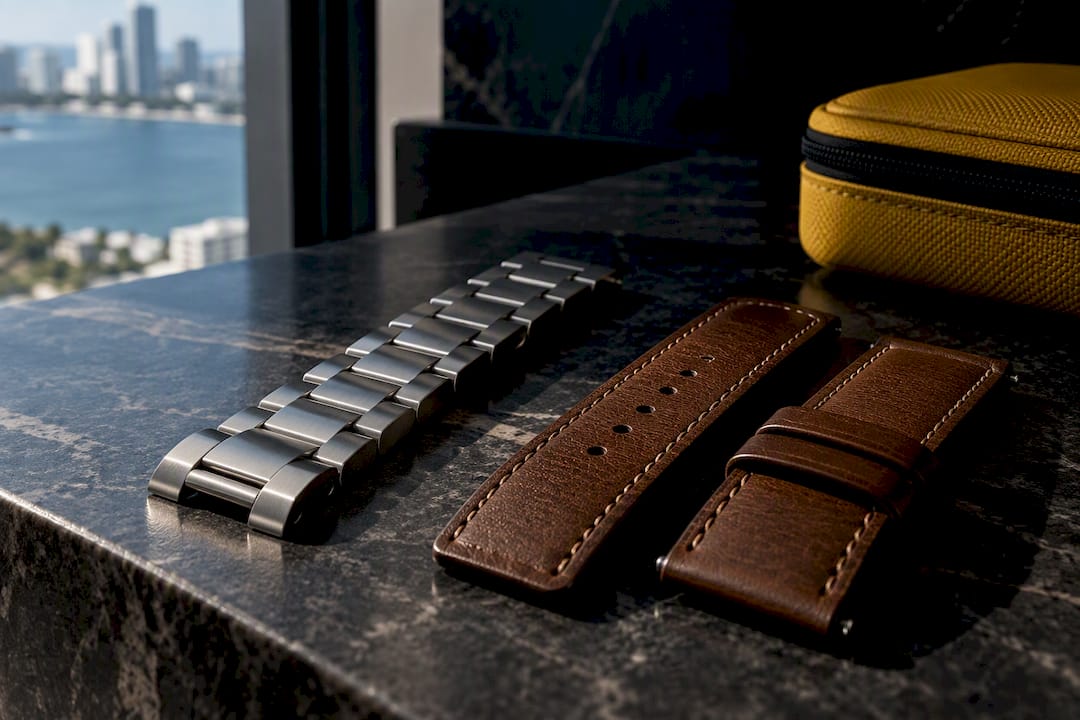
If you’re torn, buy the watch on a bracelet. OEM bracelets are expensive and hard to source later, while the leather aftermarket is enormous and affordable. That means you can start practical with steel and add a dressier leather strap for occasions later, rather than locking yourself into a strap that’s costly to walk back from. Wynwoodblvd’s collections are built around that same flexible logic, letting one well-made steel piece anchor a wardrobe that a rotation of straps could never match on its own.
— Mathias
Meet the Atlantic Blue: A Steel Option Built for Daily Wear
If everyday durability and low maintenance top your list, the Atlantic Blue Stainless Steel Automatic Watch solves exactly the problem this comparison keeps circling back to: a watch you don’t have to babysit.

Built in 316L stainless steel with a dial and color palette drawn from Miami’s coastline, it’s designed for the person who wants one reliable piece that handles gym sessions, humid commutes, and dinner out without a strap change. The steel bracelet does add some heft compared to leather, worth knowing if you’re used to a lighter feel on your wrist, but that same weight is what lets it shrug off scratches and skip the conditioning routine leather demands. Browse the full Miami Inspired Watches collection to compare finishes, or check sizing details on the Atlantic Blue product page before you order.
Sources
For more depth on strap treatments, case materials, and bracelet economics, see WatchTime’s strapmaking feature, Hodinkee’s bracelet vs. strap piece, and The Chrono Edit’s case materials guide. For sizing basics, Wynwoodblvd’s own watch size guide covers bracelet and strap fit in detail.
- Extreme Strapmaking: Spotlight on Manufacture Jean Rousseau | WatchTime
- Watch case materials explained | The Chrono Edit
FAQ
Is a Steel or Leather Watch Better for Everyday Wear?
Steel is generally better for everyday wear because it resists sweat, water, and scratches without needing regular conditioning. 316L stainless steel in particular balances toughness and corrosion resistance, which is why it’s the standard for daily watches.
Is Leather Watch Strap Durable?
Leather can be durable if it’s high quality and properly cared for, but it wears faster than steel under regular sweat or water exposure. Treated leathers from makers like Jean Rousseau can handle brief immersion, while untreated leather should stay dry.
Which Material Causes Fewer Skin Reactions?
Neither material is guaranteed reaction free, but 316L stainless steel tends to cause fewer reactions than lower-grade metals because its nickel content is more tightly bound in the alloy. Leather reactions usually come from tanning chemicals rather than the hide itself, so vegetable-tanned or synthetic options often irritate skin less.
Should I Buy a Watch on a Bracelet or a Strap First?
Buying on a bracelet is often the smarter first move, since OEM bracelets are pricier and harder to find later, while leather straps are widely available and affordable to add afterward. This keeps your options open without locking you into a costly swap down the line.
What Does the Atlantic Blue Watch Cost?
Current pricing for the Atlantic Blue Stainless Steel Automatic Watch is listed directly on its product page. Checking there also shows current availability and sizing options.