Ion Plating vs. PVD: What Watch and Jewelry Buyers Need to Know
Ion plating is a specialized form of physical vapor deposition, not a separate technology competing against it. It uses ion bombardment during the vacuum process to pack coating atoms tighter and bond them more firmly to the metal underneath. For most watch and jewelry buyers, the coating chemistry and the metal underneath it decide durability, not whether a listing says “PVD” or “IP.”
Before comparing brands or prices, check three things:
- Coating material: titanium nitride, chromium nitride, and diamond-like carbon behave differently.
- Substrate alloy: 316L stainless steel holds a coating better than softer base metals.
- Warranty and re-plating policy: what happens if the finish wears at the edges.
Key Takeaways
Ion plating is a type of PVD process, so the coating material and stainless steel substrate matter more to durability than which label a listing uses.
| Point | Details |
|---|---|
| IP is a PVD subset | Ion plating adds ion bombardment during vacuum deposition to boost adhesion and density. |
| Hardness gap is real | Ion plating systems can reach around 2,000 HV versus roughly 200 HV for standard electroplating. |
| Coating chemistry rules | TiN, chromium nitride, and DLC each behave differently regardless of the deposition method used. |
| Substrate decides longevity | 316L stainless steel holds a coating far better than softer base alloys. |
| Wynwoodblvd’s approach | Stainless steel cases with vacuum-deposited finishes, detailed on each product page. |
Table of Contents
- PVD vs. Ion Plating: How the Terminology Actually Works
- How Ion Bombardment Changes Adhesion, Thickness, and Hardness
- What “Gold Tone” and “Black PVD” Actually Mean
- A Buyer’s Checklist: When the PVD vs. IP Distinction Actually Matters
- The Environmental Case for Vacuum Coatings Over Electroplating
- What Actually Determines a Coating’s Worth to You
- How Wynwoodblvd Builds Coated Watches That Hold Up
- Sources
PVD vs. Ion Plating: How the Terminology Actually Works
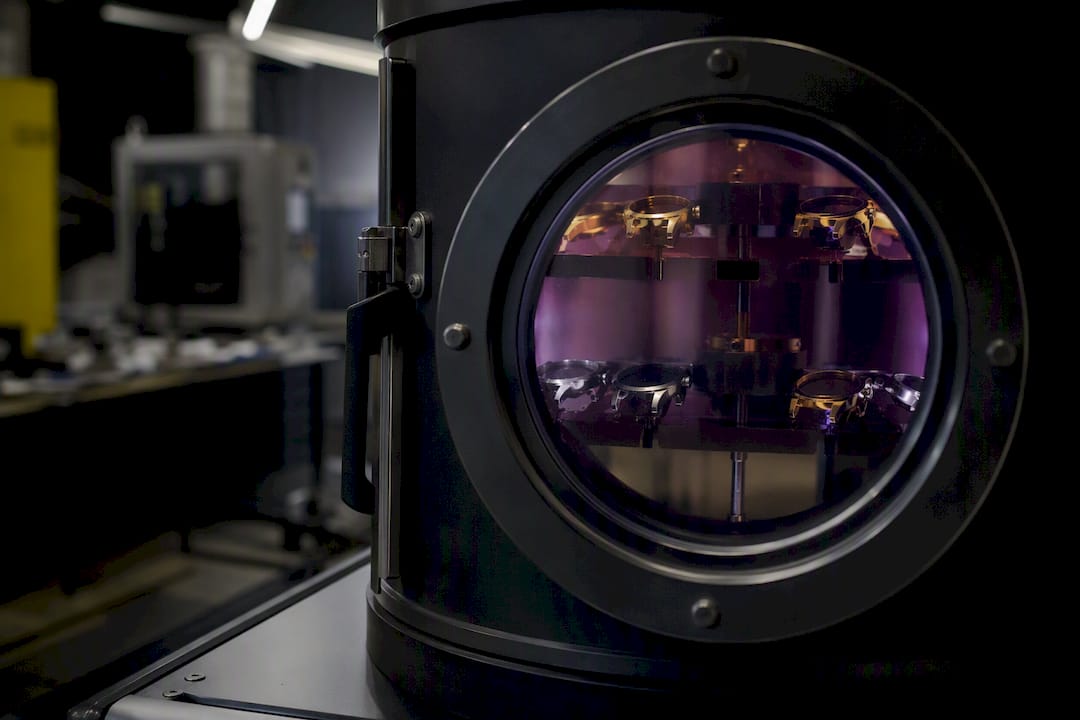
Physical vapor deposition is the umbrella term for a group of vacuum processes that turn a solid coating material into vapor and deposit it, atom by atom, onto a surface. It covers several distinct methods:
- Thermal evaporation, which heats the coating source until it vaporizes and drifts onto the part.
- Sputtering, which uses charged particles to knock atoms loose from a target material.
- Cathodic arc deposition, which vaporizes material using a high-current electrical arc.
Ion plating, sometimes labeled ion-assisted deposition, adds a deliberate step to any of these: bombarding the substrate with ions during deposition. That bombardment compacts the growing film and improves how well it grips the metal beneath it. The technique dates back to work described in the 1960s and has been refined into variants like ion-beam assisted deposition ever since.
Marketing departments often use “PVD” and “IP” interchangeably because ion plating is, technically, a PVD process. That is not dishonest, but it does mean a “PVD watch” and an “IP watch” could be using identical or wildly different processes. The only way to know is to check the spec sheet for the actual coating chemistry and deposition method, not just the acronym on the box.
How Ion Bombardment Changes Adhesion, Thickness, and Hardness
The ion bombardment in ion plating does two measurable things: it densifies the coating and it improves how strongly the film bonds to the base metal. Denser films resist micro-cracking. Better adhesion means the coating is less likely to flake or peel at the edges of a watch case or the inside of a ring, where daily contact concentrates wear.
Vacuum-deposited coatings, whether standard PVD or ion-assisted, typically run 0.2 to 5 microns thick, a fraction of the thickness electroplating usually deposits. That thinness is a feature, not a shortcut: it lets the coating conform to complex shapes like clasp mechanisms and beveled dial edges without losing dimensional accuracy.
Hardness gap: Ion plating systems can reach hardness levels around 2,000 Vickers (HV), compared to roughly 200 HV for traditional decorative electroplating. That is a tenfold difference in surface hardness, which translates directly into scratch resistance on a daily wearer.
A few caveats matter here:
- Hardness figures vary by lab, test load, and exact alloy formulation, so treat published numbers as representative ranges, not guarantees.
- A harder coating does not fix a soft substrate underneath it. More on that below.
- Adhesion failures usually start at edges and corners, where coating thickness is hardest to control evenly.
What “Gold Tone” and “Black PVD” Actually Mean
The color and hardness of a coated piece come from the coating chemistry, not the deposition method. A handful of materials dominate the jewelry and watch industry:
- Titanium nitride (TiN) produces the warm gold tone seen on most yellow gold-look watches and jewelry; it is hard, stable, and widely used because it resists color fading better than plated gold.
- Chromium nitride (CrN) shows up in gunmetal and darker gray finishes, prized for corrosion resistance in humid or coastal environments.
- Diamond-like carbon (DLC) creates deep black finishes and ranks among the hardest coatings available for consumer goods, whether applied through standard PVD or an ion-assisted variant.
DLC deserves a specific callout because its performance depends far more on the carbon structure than on whether ion bombardment was used during deposition. A well-formulated DLC coating outperforms a poorly specified TiN coating regardless of which acronym sits on the product page. On hypoallergenic performance, TiN and CrN both create a stable barrier layer that reduces skin contact with the base alloy, which matters for anyone with nickel sensitivity. Color stability tends to favor nitride coatings over carbon coatings in direct, prolonged sun exposure, though both hold up better than plated gold.
A Buyer’s Checklist: When the PVD vs. IP Distinction Actually Matters
For most casual buyers, the practical difference between standard PVD and ion plating is small enough to ignore. It matters more if you sweat heavily, wear a piece daily against rough surfaces, or work in a job with constant hand-to-surface contact like construction or food service. In those cases, favor listings that specify ion-assisted deposition or name a high-hardness coating like DLC outright.
Before buying, run through this checklist:
- Confirm the substrate. 316L stainless steel resists corrosion and holds coatings better than softer alloys used in budget pieces.
- Ask for the exact coating chemistry, not just “PVD” or “IP” as a category.
- Check listed thickness, if available, and compare it against the 0.2 to 5 micron range typical of quality vacuum coatings.
- Look for warranty language covering coating wear specifically, not just mechanical defects.
- Ask about re-plating options if the coating does wear through after years of use.
Pro Tip: Ask the seller directly whether their coating uses ion bombardment during deposition. A seller who can answer specifically, rather than repeating “PVD” as a buzzword, is usually selling a better-specified product.
Cost differences between standard PVD and ion-assisted processes are often minor at the consumer level, since both run through similar vacuum chamber equipment. The bigger cost driver is the coating material itself. DLC and multi-layer nitride systems generally cost more to apply than a basic single-layer TiN finish.
Why the Metal Underneath the Coating Decides How Long It Lasts
A hard coating over a soft base metal is like a hard candy shell over a soft center: crack the shell and the softness underneath shows immediately. Coatings a few microns thick will telegraph dents from the substrate rather than prevent them, which is why premium watchmakers favor 316L stainless steel or titanium as a base.
Real-world wear comes from three sources: abrasion against desks and countertops, chemical exposure from lotions and chlorinated water, and repeated edge contact from clasps and case backs rubbing against other surfaces. A well-coated stainless steel watch can hold its finish for years under normal wear. Rinsing off sweat and lotion residue, and avoiding abrasive cleaning cloths, extends that lifespan meaningfully. For deeper care guidance, see how to prevent stainless steel tarnish over time.
What Wynwoodblvd’s Product Practice Reflects About Coated Stainless Steel
Wynwoodblvd builds its watch collections around 316L stainless steel cases finished with durable vacuum-deposited color layers, precisely because substrate quality determines how long a coating survives daily wear. A few practices guide that approach:
- Prioritizing stainless steel over softer alloys for every case and bracelet component.
- Publishing clear material specs so buyers can compare coating and substrate before purchase.
- Pointing buyers toward hypoallergenic stainless steel guidance for sensitive skin concerns.
Check individual product pages for full coating and warranty details before comparing across brands.
The Environmental Case for Vacuum Coatings Over Electroplating
The bigger environmental story in coating technology has less to do with PVD versus ion plating and more to do with vacuum deposition versus traditional electroplating. Electroplating relies on chemical baths, often containing cyanide compounds or heavy metals like chromium, that require careful handling and produce hazardous liquid waste. Vacuum-based processes, whether standard PVD or ion-assisted, eliminate that liquid waste stream almost entirely because the coating material moves from solid to vapor to solid film without a wet chemical bath.
That does not mean vacuum coating is energy-free. Running a vacuum chamber down to the pressures needed for deposition, then sustaining plasma or arc energy for the coating cycle, draws substantial electricity, and ion-assisted processes typically add more energy demand than basic evaporation because they sustain an ion source alongside the deposition source. The trade-off is a process that avoids toxic runoff at the cost of higher power consumption per batch.
For jewelry and watch manufacturers, this shows up in fewer wastewater permits and disposal requirements compared to electroplating shops, which is one reason vacuum coating has become standard for precision components across industries beyond fashion, including aerospace and medical devices. The sustainability advantage is real, but it comes from eliminating hazardous chemical waste, not from vacuum coatings using less total energy than plating baths.
What Actually Determines a Coating’s Worth to You
Most guidance on PVD versus ion plating treats the acronym as the decision point, and that gets the priority backward. The research is consistent on this: coating chemistry and substrate quality drive real-world performance far more than which deposition method put the atoms in place. A DLC coating applied through basic PVD can outlast a thin TiN layer applied through ion plating, depending on formulation and thickness.
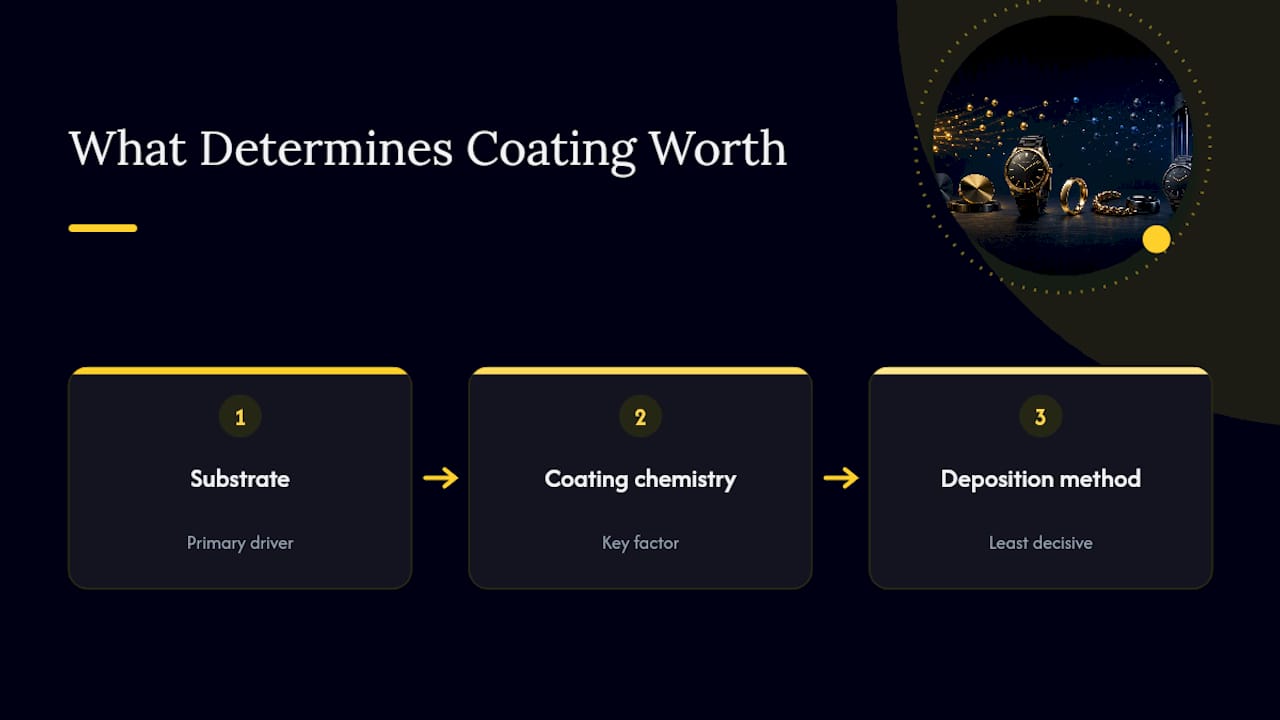
Where conventional advice falls short is in treating “IP” as an automatic upgrade label. It isn’t automatically better; it’s a process that, done correctly, produces denser and better-adhered films. Done poorly, on a weak substrate, with a thin or mismatched coating material, it offers no advantage over standard PVD at all. The label tells you almost nothing about the finished product’s durability.
If you take one thing from this comparison, prioritize the substrate first, the coating chemistry second, and the deposition method third. A comparison of PVD and DLC finishes makes a similar point from the horology side: the finish family matters more than the acronym stamped on a listing. Ask sellers for specifics, not marketing shorthand, and you’ll make a better purchase regardless of which vacuum process ends up on the spec sheet.
— Mathias
How Wynwoodblvd Builds Coated Watches That Hold Up
Wynwoodblvd’s watches skip the guesswork this article just walked through: every case starts with 316L stainless steel, then gets a vacuum-deposited color finish built for daily wear, not just daily looks.
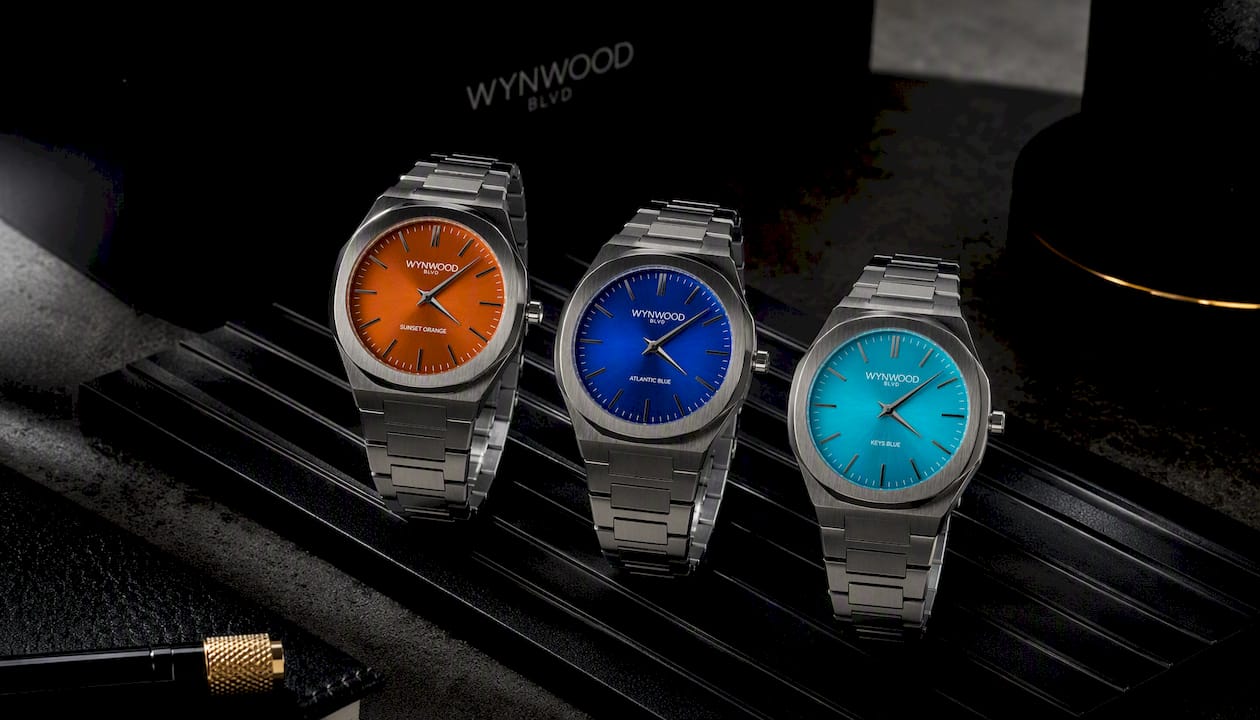
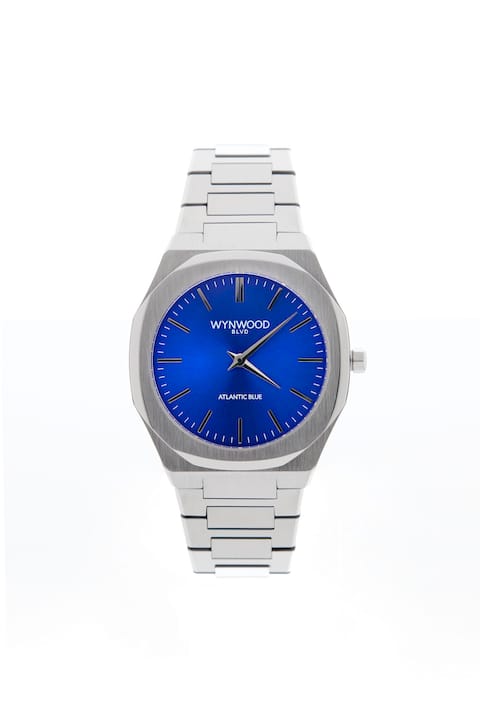
The Sunset Orange automatic watch pairs a vibrant Miami-inspired dial with a stainless steel case built to resist the abrasion and edge wear this article covered above. The Atlantic Blue automatic watch applies the same substrate-first approach to a deeper coastal blue finish, and the Keys Blue automatic watch rounds out the collection with a lighter, water-inspired tone on the same durable case construction. Check each product page for full material specs and care details, then pick the finish that matches your Miami or coastal style.