How to Pack Jewelry for Travel Without Losing or Tangling It
Carry your jewelry on the plane, give each piece its own small container, and pack one compact organizer instead of loose baggies rolling around your suitcase. That’s the whole strategy. Everything else is detail.
The fastest wins come from three methods you can do in under five minutes:
- A drinking straw or a partially sealed zip-top bag to stop necklaces from tangling
- A spare button or a pillbox to keep earring pairs together
- One small travel jewelry case with lined compartments for everything else
The rest of this guide walks through each method by jewelry type, plus how to handle airport security, insurance, and customs if you’re carrying anything valuable across a border.
Key Takeaways
Packing jewelry for travel comes down to three habits: carry-on placement, individual containment for every piece, and one compact organizer for everything else.
| Point | Details |
|---|---|
| Keep it in your carry-on | Fine and sentimental jewelry should never go in checked luggage due to loss and crush risk. |
| Isolate every necklace | Use a straw for thin chains or a zip-top bag with the clasp outside for pendants. |
| Pair earrings before you pack | Push posts through a spare button or a punched card so pairs never separate. |
| Choose organizers with real features | Lined compartments, secure zips, and dedicated necklace tabs prevent scratches and tangles. |
| Build a durable travel capsule | Stainless steel pieces like WYNWOOD BLVD’s watches and palm tree charms resist tarnish and water damage on the road. |
Table of Contents
- How Do You Pack Jewelry for Travel Without It Tangling?
- What’s the Best Way to Keep Earrings and Rings From Getting Lost?
- Which Travel Jewelry Organizer Actually Prevents Damage?
- What Household Items Work as Emergency Jewelry Packing Hacks?
- Is Carry-On Really Safer for Jewelry, and How Does TSA Handle It?
- How Do WYNWOOD BLVD Pieces Fit a Travel Jewelry Capsule?
- Should You Get Travel Insurance for Jewelry?
- Do You Need to Declare Jewelry at Customs?
- Sources
How Do You Pack Jewelry for Travel Without It Tangling?
Necklaces cause more travel frustration than any other jewelry type, mostly because chains find every possible way to knot themselves in a bag. The fix depends on what kind of necklace you’re dealing with.
For fine chains, thread one end through a drinking straw before clasping it shut. The straw keeps the chain rigid so it can’t loop back on itself. Here’s the exact process:
- Unclasp the necklace and feed one end through the straw.
- Pull the chain through until both ends stick out slightly.
- Reclasp the necklace so the straw sits in the middle of the loop.
- Snip the straw shorter with scissors if it’s bulkier than the necklace itself.
This works well for thin chains, but heavier link necklaces or thick rope chains can be too stiff to thread through a standard straw. For those, skip the straw and move to isolation instead.
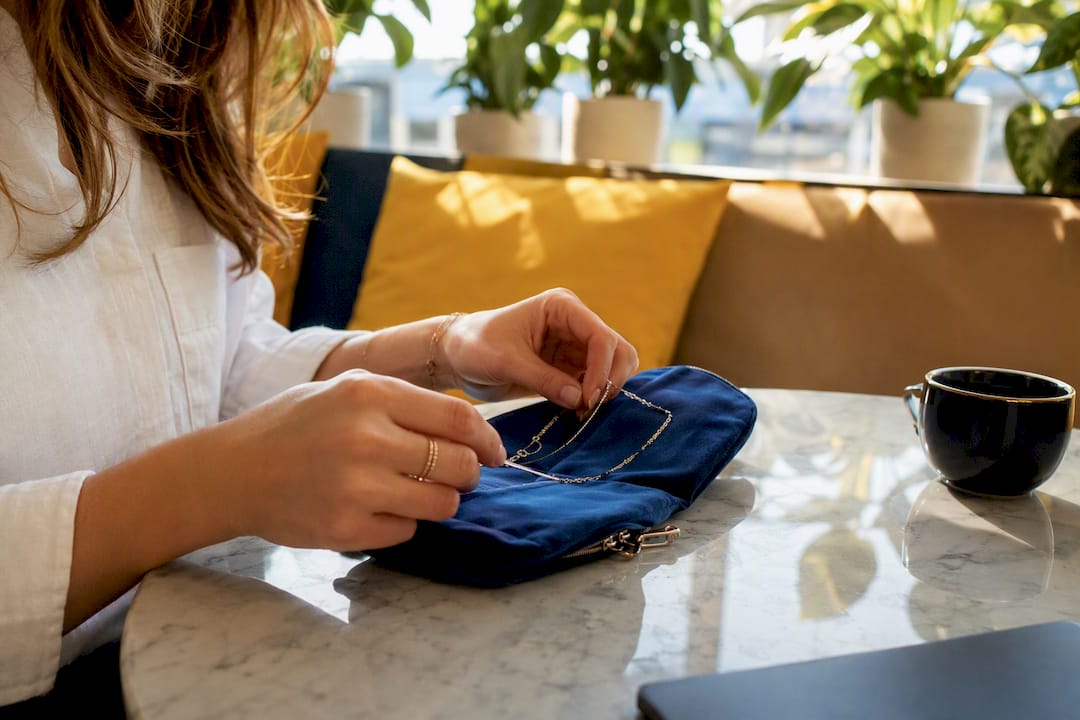
Lay the necklace flat between two sheets of plastic wrap, or place it in a zip-top bag with the clasp hanging outside the bag so you can close it around the chain without sealing the pendant inside. This keeps beaded necklaces and pendants from swinging into other pieces and scratching them.
Statement necklaces and anything with weight, like a chunky pendant or a multi-strand piece, do better in a rigid compartment or rolled with a strap to hold its shape. If a necklace has real sentimental or dollar value, consider wearing it during travel instead of packing it at all.
Pro Tip: Keep the clasp closed at all times, even when the necklace isn’t being worn. An open clasp is the number one reason chains snag on other jewelry or the lining of your bag.
What’s the Best Way to Keep Earrings and Rings From Getting Lost?
Losing one earring from a pair is one of the most common travel jewelry casualties, and it’s almost always preventable. The classic fix is the button trick: push each earring post through a hole in a spare button, then secure the backs on the other side. The button holds the pair together and keeps posts from poking through fabric or bags.
For hook earrings, a punched-hole card works the same way. Slide each hook through its own hole, and the pair stays matched without any loose parts.
- A pillbox with daily compartments is ideal for sorting studs and small rings by day if you’re rotating outfits.
- Micro-pouches or felt squares wrapped around individual rings prevent metal-on-metal scratching in a shared compartment.
- Wear your ring instead of packing it, especially if it’s a piece you’d hate to lose in transit.
Pro Tip: If you’re short on buttons or cards, a folded sticky note works in a pinch. Push the posts through the paper and fold it over.
Which Travel Jewelry Organizer Actually Prevents Damage?
Not all organizers solve the same problem, so match the style to what you’re actually packing.
- Rolls work best for mixed collections; they unroll flat and hold rings, earrings, and short necklaces in separate pockets.
- Rigid cases protect cuffs, bangles, and watches that would get crushed in a soft pouch.
- Hanging organizers are convenient if you’re unpacking into a hotel closet for more than a couple of nights.
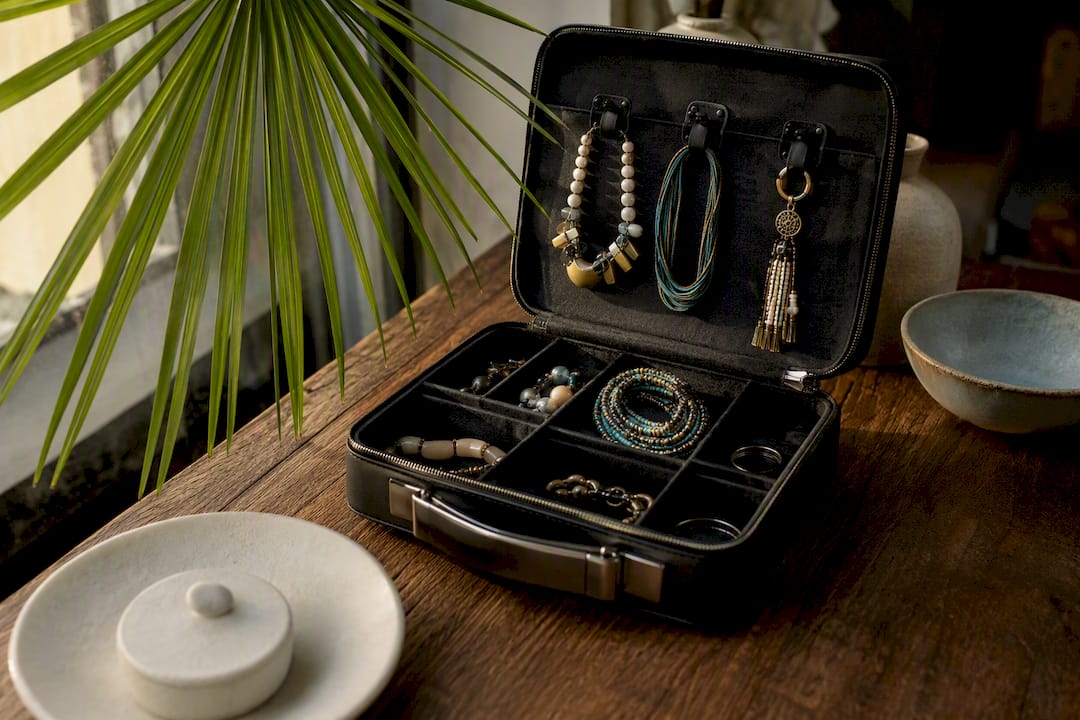
Whatever style you choose, prioritize a few specific features over general “capacity.” Look for lined compartments so metal doesn’t scratch metal, secure zippers or snaps rather than open flaps, dedicated necklace tabs to keep chains separated, and a small ring roll or elastic loop. Product listings for well-designed hanging jewelry organizers consistently point to soft lining and secure closures as the features that actually stop tangles and scratches, and rigid panels or dedicated tabs tend to outperform soft pouches for preventing chain kinks specifically.
If you’re only bringing three or four pieces, a DIY combination of a straw, a button, and a small zip bag does the job without buying anything. Once your collection grows past that, a dedicated case earns its space in your carry-on.
What Household Items Work as Emergency Jewelry Packing Hacks?
You don’t need to own a travel case to pack jewelry safely. Four household items solve most tangling and pairing problems, and simple DIY methods like these get recommended across travel blogs precisely because they’re fast and nearly free.
- Straws for necklaces: thread the chain through, clasp shut, trim to size.
- Plastic wrap or zip bags for pendants: lay flat between wrap or seal loosely in a bag with the clasp outside.
- Buttons for earring pairs: post through a hole, secure the back.
- Pillboxes for studs and small rings: one compartment per pair or per day.
Tin foil is a lesser-known fifth option. Wrapping a single piece in foil before placing it in your bag prevents it from touching other jewelry, which matters most for anything with soft gemstones or delicate plating.
These hacks have real limits. If you’re traveling with a genuine heirloom, a piece with loose stones, or anything insured for real money, upgrade to a padded case instead of trusting a sandwich bag. DIY works for durability and convenience, not for protecting irreplaceable items.
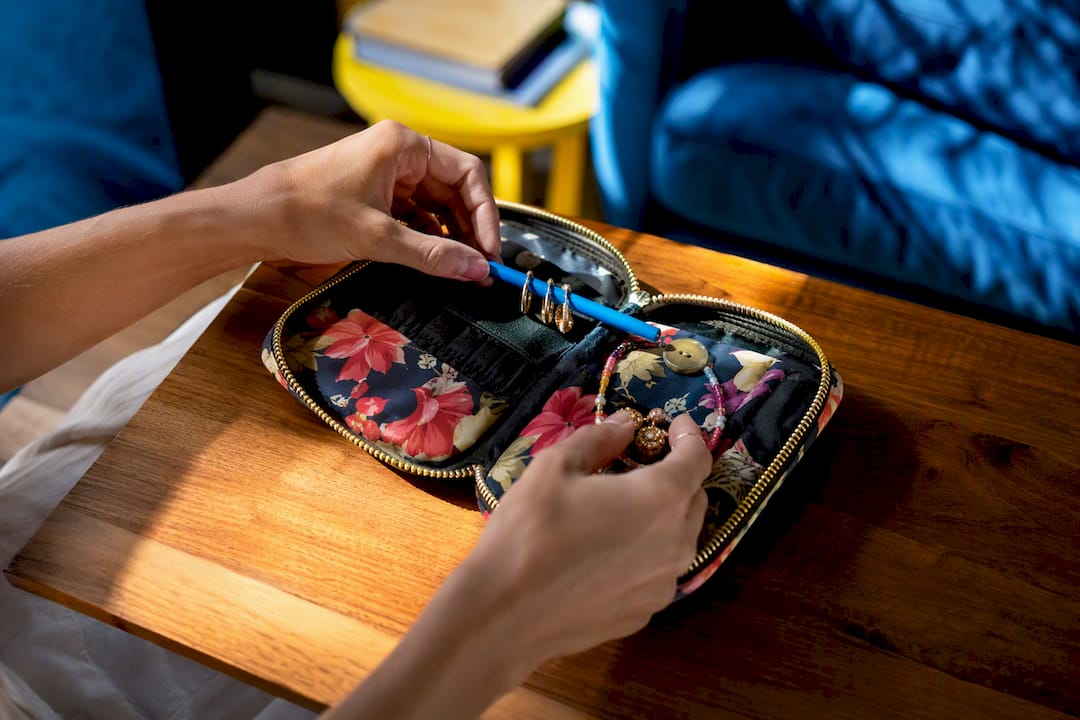
Is Carry-On Really Safer for Jewelry, and How Does TSA Handle It?
Yes. Fine or sentimental jewelry belongs in your carry-on, never checked luggage, where it’s exposed to rough handling, temperature swings, and a much higher chance of going missing entirely.
At the security checkpoint, keep jewelry in a small pouch or bag you can drop straight into a bin rather than digging pieces out of your pockets. Most jewelry doesn’t need to come off for screening, though bulkier metal pieces may trigger a secondary check.
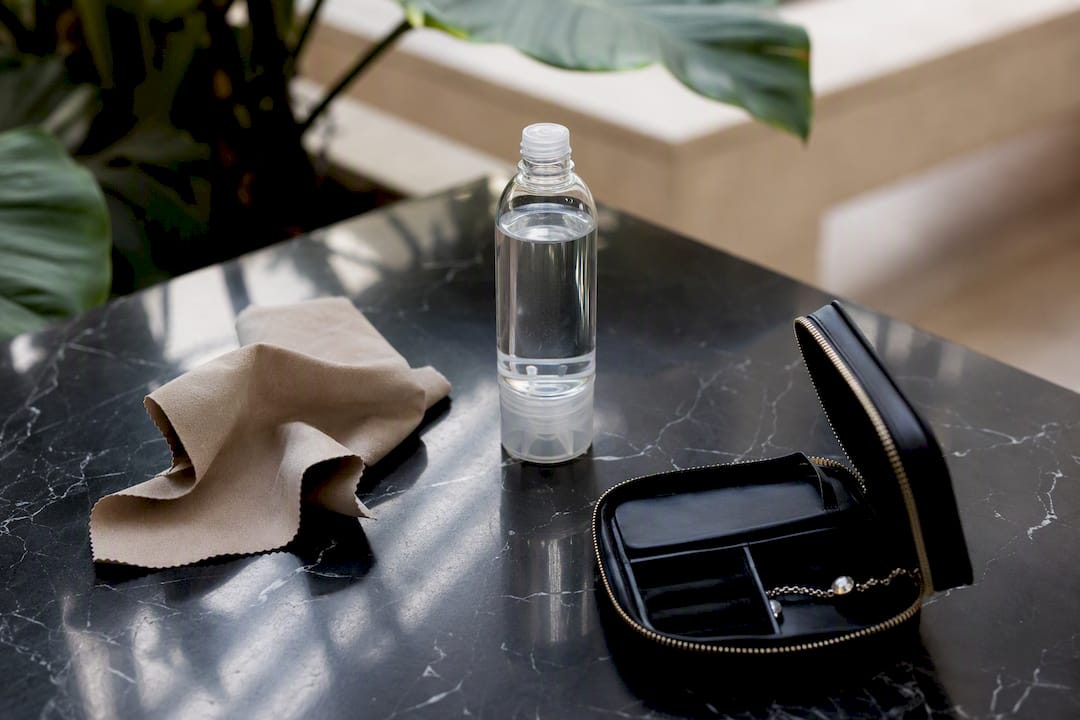
- Wipe pieces with a microfiber cloth before packing to remove oils that speed up tarnish.
- Store silver in an airtight bag with a silica packet to slow oxidation.
- Avoid letting sunscreen or lotion touch jewelry. It’s a common cause of clouding on plated and gemstone pieces.
- Leave true heirlooms at home, or lock them in a hotel safe once you arrive.
Building a small travel jewelry capsule of versatile, durable pieces beats bringing your full collection. Fewer items means less to track, less to tangle, and less risk if a bag goes missing.
How Do WYNWOOD BLVD Pieces Fit a Travel Jewelry Capsule?
Stainless steel and water-resistant construction were the whole point when we designed these pieces, since pool days, humidity, and rushed packing are exactly what a Miami-inspired collection needs to survive. A few practical notes:
- Watches like the Atlantic Blue automatic travel best in a rigid case slot, not loose in a bag, to protect the crystal face.
- Palm tree charms and pendants from the necklaces collection fit inside a small pouch or the straw method described above.
- Stainless steel resists tarnish better than plated metals, so it needs less babying between wears. Our guide on water-resistant gold jewelry covers material choices for beach-heavy itineraries.
A workable capsule: one automatic watch, one charm necklace, and a single pair of earrings covers most trips without overpacking.
Should You Get Travel Insurance for Jewelry?
Standard travel insurance policies typically cap jewelry coverage far below what most travel medical or trip-cancellation plans advertise, often somewhere between $500 and $1,500 per item or per trip depending on the policy. If you’re traveling with anything above that value, a standard plan likely won’t make you whole if it’s lost or stolen.
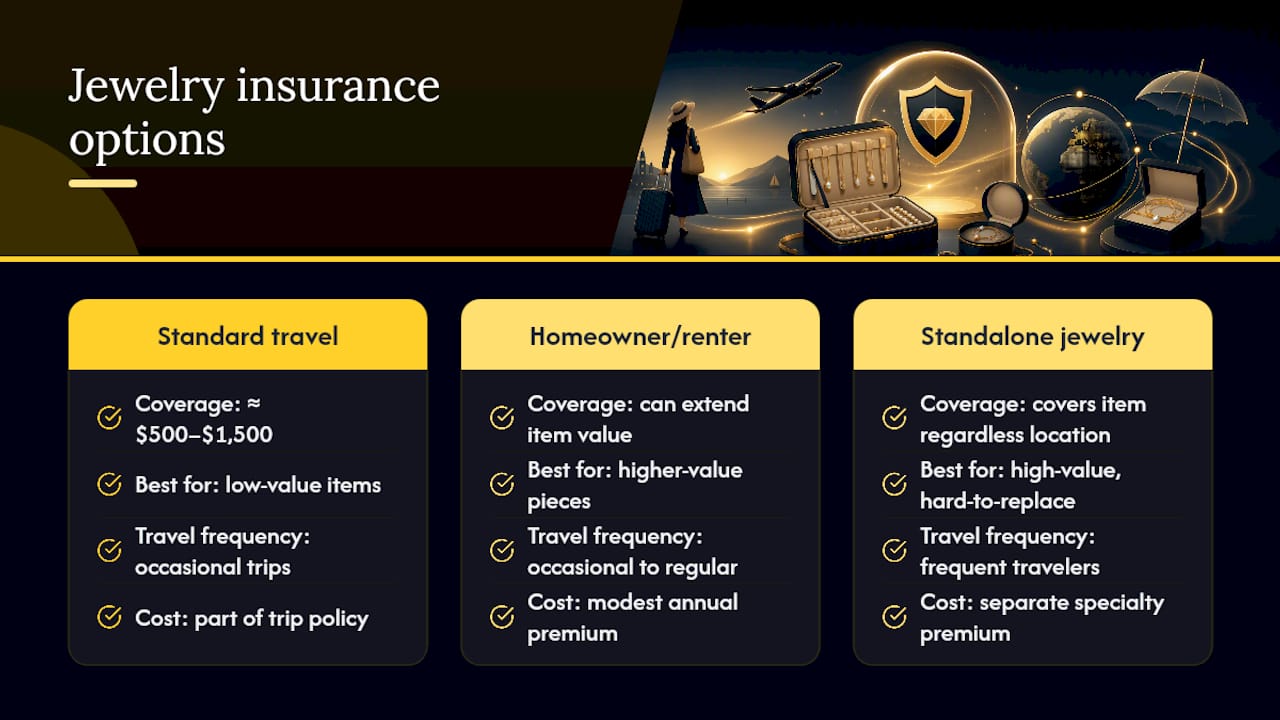
Two routes solve this gap. A rider or endorsement added to your existing homeowners or renters insurance can extend coverage for a specific piece while you’re away, often for a modest annual premium. Alternatively, a standalone jewelry insurance policy through a specialty insurer covers the item regardless of location, which matters if you travel often.
Before you buy anything, get an appraisal or at least clear photos and a receipt for higher-value pieces. Insurers ask for proof of value and ownership when you file a claim, and a phone photo from years ago rarely holds up as documentation. Keep that paperwork separate from the jewelry itself, ideally photographed and stored in cloud storage you can access from anywhere.
If you’re only traveling with your everyday capsule, like a stainless steel watch or a couple of charm necklaces, the replacement cost usually doesn’t justify a separate policy. Insurance makes the most sense for engagement rings, family heirlooms, or anything you’d genuinely struggle to replace.
Do You Need to Declare Jewelry at Customs?
Crossing an international border with valuable jewelry comes with real declaration rules, and getting them wrong can mean delays or penalties on your way back home. The general principle: jewelry you already own and are simply wearing or carrying for personal use typically doesn’t need to be declared when you leave your home country, but returning travelers may need to prove they owned it before departure.
That proof matters most for anything expensive enough to look newly purchased. A receipt, an appraisal document, or even a dated photo wearing the piece before your trip can save you a lot of hassle if a customs officer asks. Some travelers register high-value items with customs before departure specifically to create that paper trail.
Rules vary significantly by country and by the item’s declared value, so treat any specific dollar threshold as something to confirm with your destination’s customs authority rather than assume. A ring that requires no paperwork in one country might trigger a declaration form in another, particularly if it’s being brought in as a gift or appears unworn.
The safest approach: travel with fewer, well-documented pieces, keep proof of ownership accessible on your phone, and check your destination’s customs website before departure if you’re carrying anything with significant resale value.
A Packing Habit Worth Stealing
One habit sticks with me from every trip: I lay out everything I’m bringing the night before, still in its packing method, straw or pouch or case, and take a phone photo. It takes ten seconds and gives you a reference if anything looks off later. Wynwood Blvd’s pieces were designed around real coastal trips, not display cases, which is exactly why durability came before decoration in every design decision.
— Mathias
Which WYNWOOD BLVD Pieces Travel Best
Stainless steel does the heavy lifting here. It shrugs off pool chlorine, humidity, and the occasional bump against a suitcase zipper in ways plated metal never will.
For a watch that can go from a flight to a beach dinner without a second thought, the Sunset Orange automatic or the Keys Blue automatic both hold up to water exposure and don’t need the babying that gold-plated pieces do. Pack either one in its box for the flight, then wear it for the rest of the trip. If you’d rather build a lighter capsule around a pendant instead of a watch, the palm tree charm in gold classic slips into a small pouch and pairs with almost anything in a carry-on. Browse the full watch collection to pick the piece that matches your next trip, and check sizing before you order so it’s ready before you pack.
Sources
- Traveling With Jewelry: DIY Packing Tips & Tricks
- How to Pack Jewelry for Travel Without Arriving in a Tangled Mess
- How to Pack Fine Jewelry for Travel