What Travel-Safe Jewelry Actually Means (And What to Buy)
Travel-safe jewelry is 316L stainless steel, often finished with PVD coating, built for humidity, saltwater, and daily wear without tarnishing or losing shape. It’s not about storage or lockboxes. It’s about pieces you put on once and forget about for the whole trip. Wynwoodblvd’s stainless-steel watches and charms are made to that exact standard.
TL;DR:
- Ensuring jewelry is made from 316L stainless steel with PVD coating optimizes longevity and resistance against saltwater, chlorine, and humidity during travel.
- Hardware quality, including secure clasps and jump rings, is crucial and should be tested manually before packing for a trip to avoid loss or damage.
- Routine aftercare, like rinsing with fresh water and avoiding harsh chemicals, extends the lifespan of travel jewelry, especially PVD-finished pieces.
- When ordering branded jewelry, verify materials, coatings, and component specifications in writing, and request samples to assess durability before large batches.
- The focus should be on material performance during travel rather than just packing convenience, with stainless steel remaining the best option for reliable, low-maintenance wear.
Table of Contents
- What Should You Look for in Travel-Safe Jewelry?
- Why 316L Stainless Steel Is the Travel Standard
- How Do You Care for Travel Jewelry on the Go?
- How Should You Pack and Wear Jewelry to Avoid Loss?
- What Should B2B Buyers Confirm Before Ordering Custom Branded Pieces?
- What Most Travel Jewelry Advice Gets Wrong
- Travel-Ready Watches and Charms Built for Real Wear
- Sources
What Should You Look for in Travel-Safe Jewelry?
Not all stainless steel is equal, and the difference shows up fast once you’re sweating through a hike or swimming off a dock. Here’s what to check before you buy, whether you’re shopping for yourself or sourcing branded pieces for a hotel gift shop.
- Ask for 316L, not 304. The grade matters more than the shine. 316L is the standard buyers should request for skin-contact jewelry because of its corrosion resistance and biocompatibility.
- PVD coating beats electroplating. PVD (physical vapor deposition) bonds color to the metal at a molecular level, while electroplating just sits on the surface and rubs off with friction.
- Check the hardware, not just the finish. Weak clasps, thin jump rings, and loose watch crowns fail long before the metal body does. Give every closure a firm tug before you pack.
- Read water-resistance labels literally. “Water-resistant” means it survives splashes and rinsing. “Waterproof” is a marketing word jewelry brands should not use at all, since no consumer piece is fully impervious to water at every depth and pressure.
- Verify hypoallergenic claims. Ask for a material certificate rather than trusting a label alone. Wynwoodblvd’s guide to hypoallergenic stainless steel walks through what those certificates should include.
Pro Tip: Run a magnet test if you’re unsure of the grade. Both 304 and 316L are only weakly magnetic, but a piece that’s strongly magnetic is likely a cheaper alloy pretending to be stainless steel.
Why 316L Stainless Steel Is the Travel Standard
The molybdenum content in 316L is what separates it from ordinary stainless steel. That element gives it real resistance to chloride, the compound in both saltwater and pool chlorine that eats away at lesser metals. It’s the same reason 316L shows up in marine hardware and surgical implants, not just jewelry counters.
Compared to 304 stainless or sterling silver, 316L holds up dramatically better against everyday exposure. High-quality 316L resists tarnishing far longer than these alternatives, and PVD coatings applied over it are considerably more durable than standard electroplating, which tends to flake within months of regular wear.
Titanium is worth considering if you want something lighter, particularly for larger pendants or bulkier watch cases, though it typically costs more to manufacture. Solid gold still has a place for special-occasion pieces, but it scratches more easily and isn’t the pragmatic choice for daily travel wear.
Here’s where even good stainless steel meets its limit:
- Chlorine pitting happens with prolonged soaking in heavily chlorinated pools, not a quick dip.
- Hot springs and sulfur-heavy water can discolor even 316L over extended exposure.
- Saltwater is generally fine for brief swims, but it should never replace a rinse afterward.
None of this makes 316L fragile. It means the metal has boundaries, and knowing them keeps a piece looking new for years instead of months.
How Do You Care for Travel Jewelry on the Go?
Care doesn’t require a kit the size of a toiletry bag. It requires a habit, repeated consistently, that takes less than a minute.
- Rinse with fresh water after any pool, ocean, or heavy sweat session, ideally the same day.
- Pat dry with a soft cloth rather than letting pieces air dry with salt or chlorine residue still on the surface.
- Avoid harsh chemicals like bleach, chlorine-based cleaners, or perfume sprayed directly onto the metal.
- Wipe PVD-finished pieces gently. Avoid abrasive cloths or anything that could scratch the coating at friction points like clasps and watch bezels.
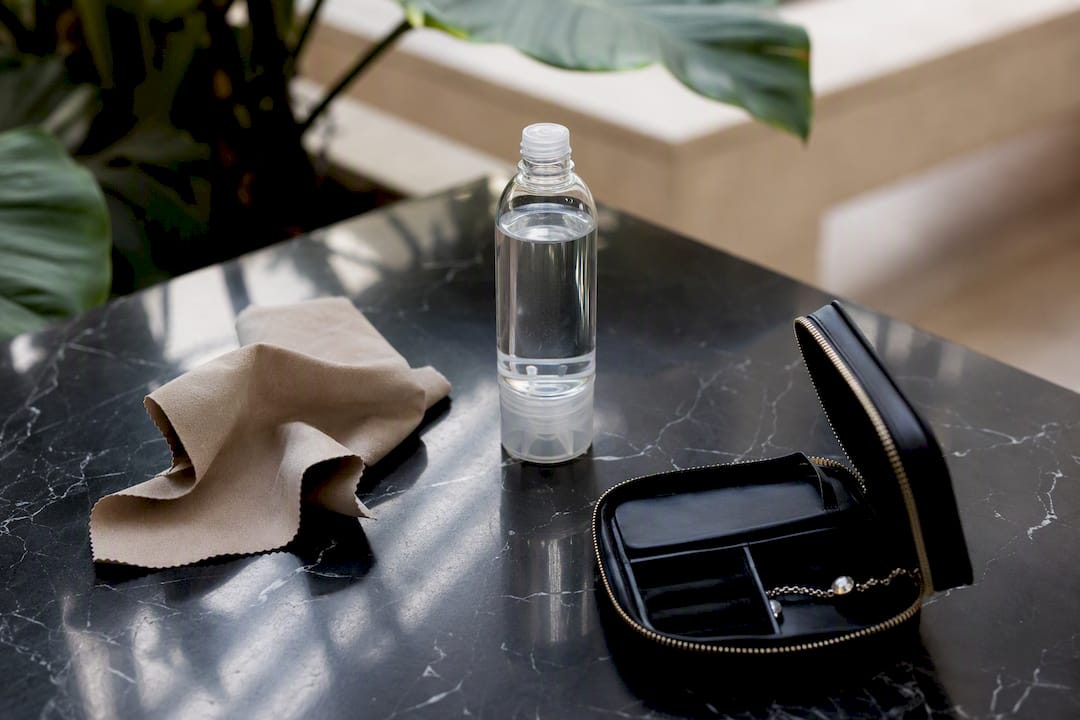
- Pack a mini care kit: a small bar of mild soap, a soft-bristle brush for grooves, and a microfiber cloth cover most trip scenarios.
- Inspect periodically for pitting, discoloration, or a loose clasp, and get a jeweler to look at anything that seems off rather than waiting for it to worsen.
Travel stylists lean toward stainless steel precisely because it survives humidity, ocean swims, and workouts without demanding a bulky organizer or babying routine. Wynwoodblvd’s own guidance on caring for jewelry near the ocean covers the saltwater-specific steps in more depth.
Pro Tip: Keep a travel-size squeeze bottle of distilled water in your dopp kit. Tap water in some regions carries minerals that leave spots on polished finishes, and distilled water avoids that entirely.
How Should You Pack and Wear Jewelry to Avoid Loss?
The safest jewelry strategy for travel isn’t about hiding pieces away. It’s about wearing fewer, smarter ones and packing the rest so nothing tangles or grows legs.
- Favor low-profile pieces in crowded areas. Studs, short hoops, and tuckable pendants draw less attention than statement pieces in a packed metro station or market.
- Check clasps and screw links before you leave, not after you’ve lost an earring on a train platform.
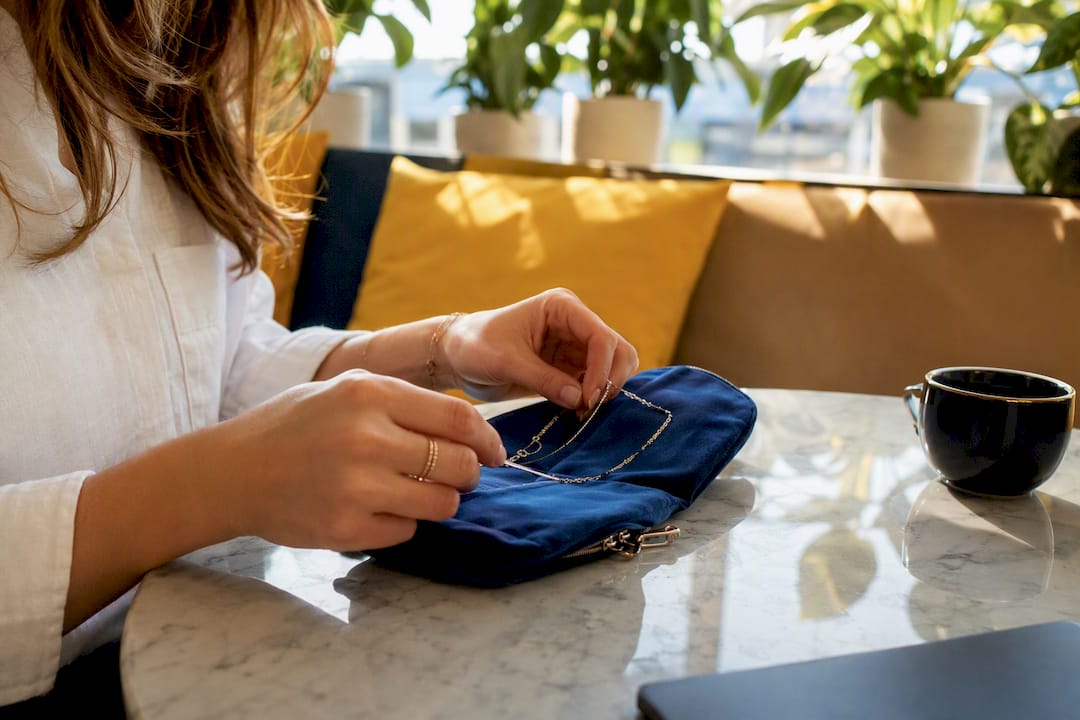
- Use one pouch per piece rather than tossing everything into a single bag, which is how chains end up knotted around earring backs.
- Reserve a hard case for higher-value items like an automatic watch, since soft pouches don’t protect against a dropped suitcase.
- Build a capsule jewelry kit of three or four pieces that mix and match, rather than packing your entire collection for a five-day trip.
- Stay aware in high-traffic tourist zones, and slip valuables into an inside pocket during activities like snorkeling, hiking, or crowded festivals.
Adaptable materials paired with simple silhouettes are what actually reduce tangling and damage in transit. If you’re drawn to a broader minimalist approach to packing, how minimalist dressing simplifies everyday style makes the case for fewer, better pieces beyond just jewelry.
What Should B2B Buyers Confirm Before Ordering Custom Branded Pieces?
Ordering a run of branded watches or charms for a hotel gift shop, a real estate closing gift, or event merchandise is a different exercise than buying one piece for yourself. The specs need to be locked down in writing before production starts.
- Confirm the steel grade in the contract, not just the sales pitch. Ask the supplier to state 316L explicitly, along with the PVD type and coating thickness in microns.
- Request clasp and jump-ring specifications, since these are the components most likely to fail across a large batch if the supplier cuts costs.
- Ask for salt-spray or chloride-exposure test results on a sample batch, plus photographic evidence of the actual production run, not just the prototype.
- Confirm engraved logo placement and depth so branding survives years of wear instead of wearing smooth after a season.
- Request care cards packaged with each piece, which cuts down on returns caused by customers who didn’t know to rinse after the pool.
- Ask about traceability for QA, so a defect in one batch can be tracked back to a specific production run.
- Clarify lead times and minimums early, since branded runs with custom dial colors or engraving typically need longer production windows than stock pieces.
Stainless steel remains the preferred material for high-volume branded merchandise programs because of consistent finishes across large batches and full compatibility with PVD color coding, which matters when a brand needs its exact palette reproduced across hundreds of units. Buyers sourcing hypoallergenic runs should also review Wynwoodblvd’s breakdown of nickel-free stainless steel before finalizing a purchase order.
Pro Tip: Request a physical sample piece before approving a bulk order, and wear it yourself for a week. Spec sheets don’t reveal how a clasp actually feels against skin or how a coating handles a gym bag.
What Most Travel Jewelry Advice Gets Wrong
Most guidance on this topic treats travel jewelry as a packing problem: what fits in the pouch, what won’t set off a scanner. That’s backward. The real question is which materials keep performing after the trip ends, through the fortieth rinse and the second humid climate, not just the first one.
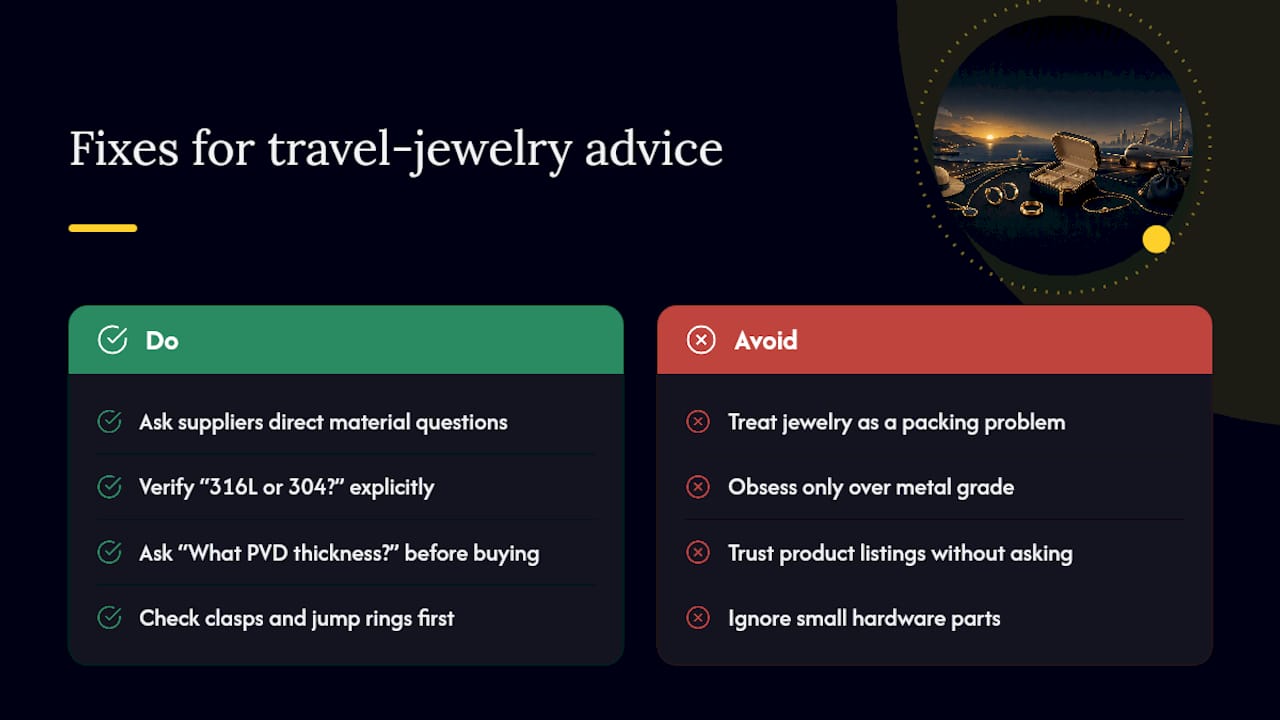
Conventional advice also underplays hardware. Buyers obsess over the metal grade and ignore the clasp, yet a failed jump ring loses more jewelry on trips than any material weakness ever does. Check the small parts first.
If there’s one thing worth prioritizing above all else, it’s asking suppliers direct questions rather than trusting a product listing. “Is this 316L or 304?” and “What PVD thickness?” are two sentences that separate a piece built for years of travel from one that looks identical on day one and dull by day thirty. That’s the same discipline Wynwoodblvd applies internally when specifying materials for its own watches and charms, and it’s the standard both individual shoppers and corporate buyers should hold every supplier to.
— Mathias
Travel-Ready Watches and Charms Built for Real Wear
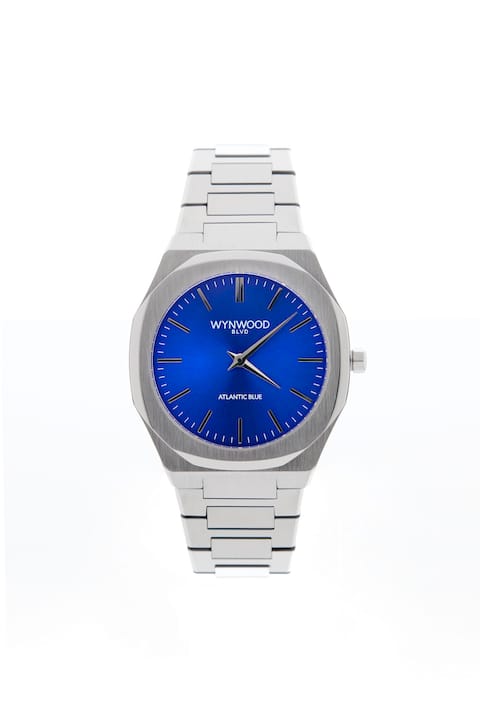
Wynwoodblvd designs every piece around one question: will this survive a week of actual travel, not a photo shoot? The Atlantic Blue automatic watch pairs a 316L stainless steel case with a deep blue dial built for humidity and daily wear. The Keys Blue watch and Sunset Orange watch follow the same construction with different coastal color palettes, so you can match the piece to the trip.
For something lighter, the Palm Tree charm comes in both a silver signature painted finish and a gold classic finish, plus a gold signature painted version. Each uses PVD over stainless steel, so the color holds up against sweat and saltwater instead of fading after a few wears. Care specifics for keeping any of these pieces looking new live on Wynwoodblvd’s blog, including the anti-tarnish alternatives guide.
Companies, hotels, and agencies sourcing branded merchandise can review specs, minimums, and customization options on the B2B custom watches page and request a sample run before committing to a full order.
Sources
- Jewelry Care: How to Prevent Tarnishing and Other Damage While Traveling | Condé Nast Traveler
- How Long Does Stainless Steel Jewelry Last? The 2026 Ultimate Durability Guide – DG Jewelry
- Is Stainless Steel Good for Jewelry? The Full Guide
- Vacation Jewelry: What to Pack for Your Next Trip - Modern Gents