Independent vs Fashion Watches: 3 Collector Checks With Real Proof
An independent watch brand is maker-driven, often owned by its founder or a small group, and built around a mechanism the brand controls or originates. A fashion brand is design and marketing driven, licensing its name to a manufacturing partner or, less often, investing in a real manufacture. Choose an independent when you care about craft and provenance, as explained in Diamond Store vs Independent Jewelers: Which Suits You?. Choose a fashion watch when style and brand story matter more than what’s ticking inside. Wynwood Blvd sits closer to the independent camp, built on design-led collections rather than licensed branding.
TL;DR:
- Most independent watch brands originate their own movements or commission custom-caliber designs, making serviceability and long-term repairs more straightforward than third-party sourced movements.
- Fashion watch brands primarily rely on licensing arrangements, controlling aesthetics and marketing while manufacturing is handled by external partners, with some investing in in-house production capabilities.
- Provenance, production scale, and unique design elements significantly influence a watch’s resale value, with limited editions and documented origins outperforming mass-produced pieces.
- Buyers should verify movement origins, ownership transparency, and manufacturing practices before purchase, especially when considering value and authenticity in independent brands.
- Independent brands tend to innovate faster with niche technologies and complications due to owner control, whereas fashion houses with in-house production are increasingly competing on technical merit.
Table of Contents
- What Does “Independent” Actually Mean in Watchmaking?
- How Do Fashion Brands Approach Watchmaking?
- Movements, Materials, and Serviceability: The Technical Trade-Offs
- What Drives Resale Value and Collectibility?
- How Should You Choose Between an Independent and a Fashion Watch?
- Wynwood Blvd: A Design-Led Independent in Practice
- How Did Independent Watch Brands Become a Movement?
- How Do Marketing and Heritage Shape What You Think You’re Buying?
- Where Do the Real Technical Breakthroughs Come From?
- Are Independent or Fashion Watch Brands More Sustainable?
- When Should You Choose an Independent Over a Fashion Brand?
- Wear the Story, Not Just the Logo
- Sources
- FAQ
What Does “Independent” Actually Mean in Watchmaking?
Watch enthusiasts use “independent” loosely, but the term breaks down into three separate axes, according to EuropeanWatch’s framework. Understanding all three keeps you from mistaking a well-marketed small brand for a genuinely self-directed one.
Commercial and ownership independence comes first. A founder-controlled company answers to its own vision, not to a conglomerate’s quarterly targets. That matters because a brand under private ownership can hold a design for a decade if it wants to, while a brand inside a public group often has to chase trend cycles to justify its place in the portfolio.
Movement origination is the second axis, and it splits three ways: fully in-house calibers, movements commissioned to the brand’s own specifications, or off-the-shelf units bought from a supplier. Each choice affects serviceability years down the line, since in-house parts sometimes require the original maker for repairs while widely used third-party movements have parts and technicians everywhere.
Design independence rounds out the picture. Look across a brand’s whole catalog, not just its hero piece. Does every model chase the same silhouette a bigger name made popular, or does the brand have a visual language nobody else owns?
Quick signals worth checking before you buy:
- Does the brand state its ownership structure openly, or does that information stay vague?
- Is the movement signed, and does the brand explain where it comes from?
- Are specific artisans, designers, or engineers named and credited?
- Does the catalog show a consistent design identity across multiple collections, not just one standout piece?
How Do Fashion Brands Approach Watchmaking?
Fashion houses split into two very different camps, and treating them as one category is a mistake enthusiasts make constantly. Most fashion watches are licensed products: the fashion house rents its name to a specialist manufacturer that designs, builds, and distributes the watch under that logo. The fashion house controls marketing and aesthetics; the manufacturing partner controls everything mechanical.
A smaller group of fashion houses went the other direction and bought their way into real watchmaking. Hodinkee’s reporting points to Chanel’s acquisition of a manufacturing facility in La Chaux-de-Fonds and Hermès taking a stake in movement maker Vaucher as clear examples. Those moves gave both houses genuine production capability, not just a name on a dial.
That split produces two very different products under the same “fashion watch” label:
- Licensed pieces that lean entirely on brand recognition, with movements and cases sourced from contract manufacturers.
- Vertically integrated pieces from houses that invested in manufacture and can turn out technically serious watches.
The lesson: check which category a specific fashion watch falls into before you write off the whole segment. Hodinkee’s own argument is that the industry should retire the blanket dismissal of “fashion watch” as an insult, since some fashion houses now build watches worth taking seriously on technical merit.
Movements, Materials, and Serviceability: The Technical Trade-Offs
The mechanical differences between independent and fashion watches show up in four places: where the movement comes from, how the case and dial are finished, how many units get made, and how easy the watch is to repair years from now.
- Movement provenance. Independents range from fully in-house calibers to movements commissioned to spec, while many fashion watches and even plenty of independents run on widely available third-party movements like ETA, Sellita, or Miyota. Microbrand Watch World’s guide notes that microbrands typically assemble from outside suppliers, while independents more often originate or at least commission their core components. A third-party movement isn’t a red flag on its own. It’s a known quantity, easy to service almost anywhere.
- Materials and finishing. Grade of stainless steel, sapphire versus mineral crystal, and hand-finishing on bridges and dials separate a $300 watch from a $3,000 one regardless of brand type. Independents obsessed with craft often spend disproportionately on finishing details a casual buyer will never notice under a loupe.
- Production scale. Low-volume runs, sometimes numbered on the case back, are common among independents and create scarcity that can matter later on the secondary market.
- Service networks. A big fashion house with global service centers can sometimes turn around repairs faster than a five-person independent workshop, even if the independent’s movement is objectively more interesting.
Statistic to know: Independent brands generated $633.8 million in secondary-market sales in the first half of 2026, up 89 percent year over year, according to EuropeanWatch’s analysis. That kind of growth reflects collectors chasing scarcity and provenance, not just brand names, though exact figures are not specified in verified sources.
What Drives Resale Value and Collectibility?
Scarcity, provenance, and design originality are the three forces that move a used watch’s price, and they apply differently depending on which camp a watch comes from. An independent with a numbered production run and a clearly documented origin story tends to hold interest on the secondary market better than a mass-produced piece from the same price bracket, because collectors can point to exactly what makes that watch scarce.
The 89 percent jump in independent secondary-market sales mentioned above didn’t happen by accident. Buyers are increasingly willing to pay a premium for brands they can research down to the founder’s name and the movement’s origin.
Fashion watches aren’t automatically excluded from that conversation. Design icons and true limited editions from fashion houses can hold or even gain value, particularly when the design connects to a cultural moment rather than just a logo. NSS Magazine’s reporting makes the case that fashion-driven design can create genuine collectibles when the aesthetic itself becomes iconic, independent of the mechanism inside.
A few patterns worth watching before you buy for value, not just wear:
- Numbered or limited editions almost always outperform open-ended production runs on resale.
- A documented ownership and design story adds resale confidence that an anonymous supply chain can’t match.
- Cultural relevance, not just craft, can make a design-first watch collectible on its own terms.
How Should You Choose Between an Independent and a Fashion Watch?
Match the watch to why you’re actually buying it. Someone who wants a reliable daily piece has different priorities than someone building a collection meant to hold value.
- Buying for daily wear: Prioritize water resistance, case durability, and an easy service path over movement pedigree. A fashion watch or a design-focused independent both work fine here.
- Buying for style first: Focus on design language and how the piece fits your wardrobe. This is where fashion-brand licensing and design-led independents like Wynwood Blvd genuinely overlap in what they offer.
- Buying to collect: Ask about production numbers, movement origination, and ownership structure before anything else. Microbrand Watch World points out that brands often evolve from microbrand assembly toward true independent origination over time, so ask where a brand sits on that spectrum right now, not where it started.
Before you buy, ask the retailer or brand directly: Where does the movement come from? What’s the service policy, and how long has it been in place? How many units were made? Is ownership structure public?
Pro Tip: Check the case back or the brand’s own product page for a movement signature or caliber name. If a brand can’t or won’t tell you where the movement originated, treat that as a real red flag, not a minor omission.
For a deeper look at aligning purchase decisions with actual use case before price or hype takes over, this watch buying guide walks through the same checklist in more detail.
Wynwood Blvd: A Design-Led Independent in Practice
Wynwood Blvd operates as a lifestyle brand with a focus on independent design. That distinction matters when you’re weighing ownership and design autonomy against a bigger name’s licensing deal.
- Controlled by its founder rather than owned by a conglomerate, which keeps design decisions tied to a consistent Miami-inspired identity rather than trend-chasing.
- Every collection is inspired by places such as Wynwood, Miami Beach, Key West, or the Florida Everglades, giving each piece a story instead of a generic aesthetic.
- Products are sold direct to consumers, removing intermediary layers common in the fashion industry.
How Did Independent Watch Brands Become a Movement?
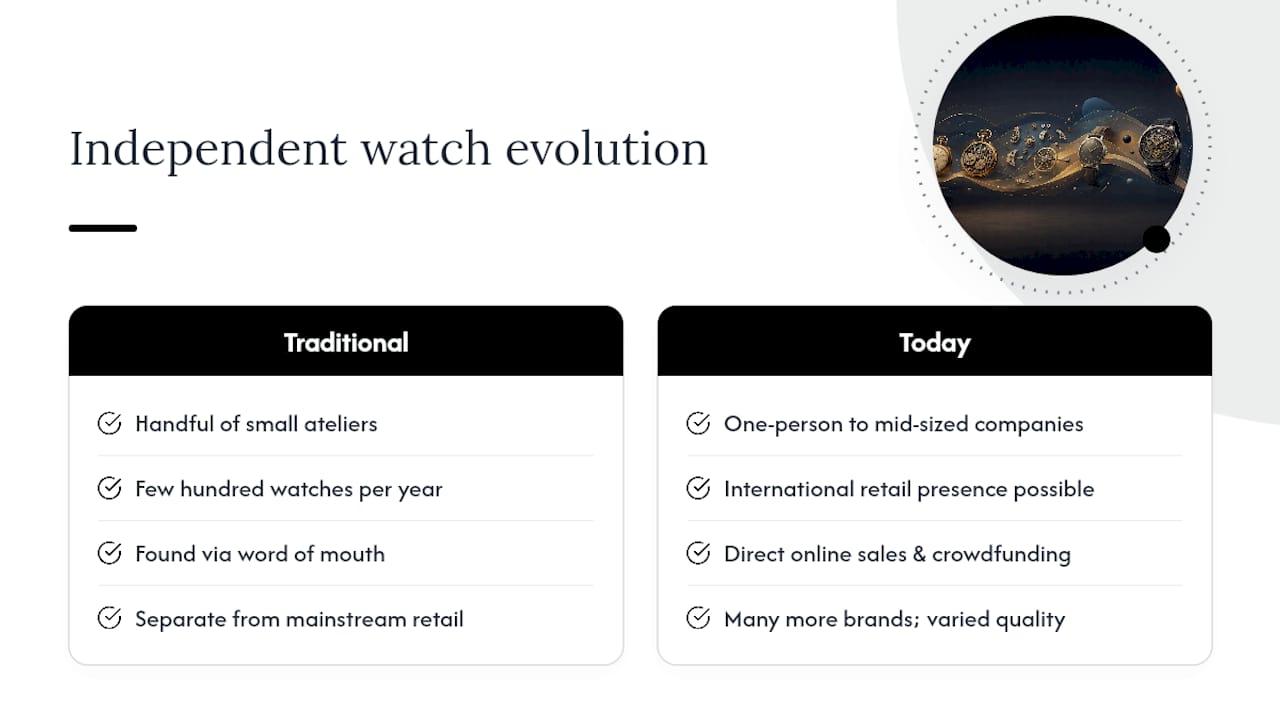
Independent watchmaking used to mean something narrower: a handful of small ateliers in Switzerland and Germany, often family-run, making a few hundred watches a year for a tight circle of collectors who found them through word of mouth rather than advertising. For most of the twentieth century, that world stayed separate from mainstream watch retail almost entirely.
The shift accelerated once online communities gave small brands a direct line to buyers without needing department store shelf space or magazine ad budgets. A founder could design a watch, fund it through crowdfunding or direct pre-orders, and ship it to enthusiasts worldwide without ever negotiating with a distributor. That changed who could start a watch brand and how fast a good idea could find its audience.
Today “independent” covers everything from one-person ateliers producing a handful of pieces a year to mid-sized companies with real manufacturing capability and international retail presence. Microbrand Watch World traces how brands like Christopher Ward moved along that spectrum, starting with sourced components and gradually building toward more in-house capability as the business matured.
The significance for today’s buyer is practical, not just historical: the barrier to entry dropped, which means there are more independent options than ever, but also more variation in quality and follow-through. Origin story alone doesn’t guarantee craft. It just means you’re dealing with someone whose name is directly attached to the product.
How Do Marketing and Heritage Shape What You Think You’re Buying?
A hundred years of brand heritage does something psychological that no spec sheet can replicate: it makes a watch feel inevitable, like it belongs on your wrist because it belonged on wrists before yours. Fashion houses lean on that heritage heavily, often marketing the emotional pull of the name harder than the mechanical details of the watch itself.
Independents don’t have a century of advertising to draw on, so most build trust differently, through transparency about how the watch gets made, who makes it, and why. A founder’s name attached to a design decision reads as more credible than a marketing department’s tagline, even when neither one tells you anything about long-term durability.
This is where enthusiasts need to separate feeling from fact. A brand’s storytelling can be completely genuine and still say nothing about movement quality or service support. It can also be marketing gloss over a licensed product with no real mechanical distinction. The only way to know which one you’re looking at is to check the same three axes covered earlier: ownership, movement origination, and design consistency, regardless of how good the brand’s story sounds.
Where Do the Real Technical Breakthroughs Come From?
Independents tend to win on niche technical achievements because a small, founder-controlled operation can chase one unusual idea for years without a board demanding it hit mass-market numbers. Complications, unusual case constructions, and finishing techniques that would never clear a corporate approval process at a larger company often show up first at the independent level.
Fashion houses that invested in real manufacture play a different game. Hermès’ stake in movement maker Vaucher and Chanel’s manufacturing facility in La Chaux-de-Fonds, both noted in Hodinkee’s coverage, gave those two houses actual production capability rather than just licensing rights. That kind of investment lets a fashion brand pursue technical work that a purely licensed competitor can’t touch, since the licensed brand has no manufacturing say at all.
The practical difference for buyers: independents innovate faster on niche mechanical ideas because they don’t answer to a marketing calendar, while a handful of vertically integrated fashion houses can now compete on genuine technical merit because they bought their way into the capability to do so. Everything else in the fashion watch category, the purely licensed pieces, isn’t competing on innovation at all. It’s competing on name recognition, which is a different business entirely.
Are Independent or Fashion Watch Brands More Sustainable?
Neither category has a clean advantage here, and the honest answer depends on the specific brand rather than which camp it belongs to. Independents often produce in low volumes, which naturally limits waste and overproduction, and founder-controlled companies can make sourcing decisions without needing sign-off from a larger parent company’s supply chain policy.
That said, small scale doesn’t automatically mean ethical sourcing. A tiny independent workshop still needs to disclose where its steel, straps, and movement components come from, and plenty don’t volunteer that information unless a buyer asks directly.
Larger fashion houses that invested in manufacture, the same ones building real production capability rather than just licensing a name, sometimes have more resources to run formal sustainability programs, audit suppliers, and publish materials sourcing. Whether they actually do it is a separate question from whether they could.
The practical takeaway for a buyer who cares about this: ask directly, regardless of brand size or type. Ask where the stainless steel comes from, whether the company publishes any sourcing information, and how the brand handles packaging waste. A brand’s willingness to answer specifically, rather than with a vague sustainability statement, tells you more than its size or category ever will.
When Should You Choose an Independent Over a Fashion Brand?
If you’re buying to build a collection or you want a mechanism you can research down to its origin, favor independents. If you want a watch that matches your wardrobe first and the movement is a secondary concern, a well-made fashion watch does the job. Most serious collectors eventually own both.
— Mathias
Wear the Story, Not Just the Logo
Wynwood Blvd exists as a direct-to-consumer brand offering a specific design story rather than a licensed name stretched across someone else’s production line. Many pieces are inspired by places such as Wynwood, Miami Beach, Key West, or the Everglades, giving the designs a rationale beyond trends.
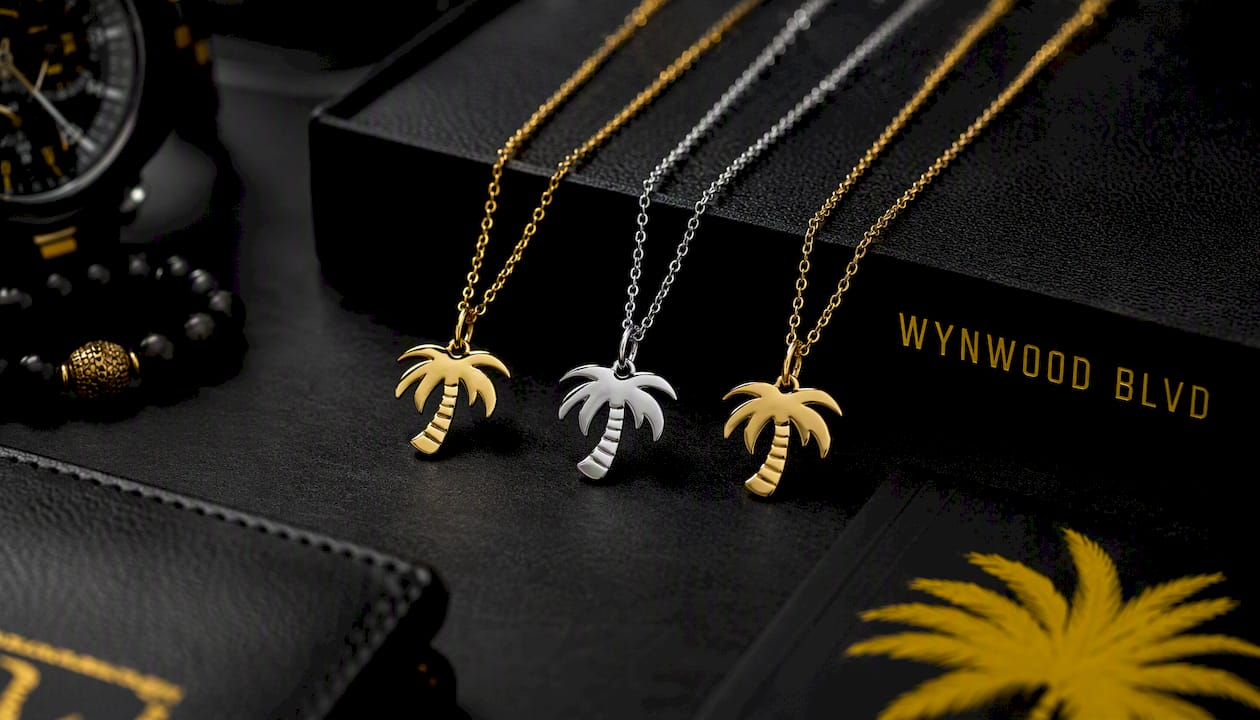
If daily style is your priority rather than movement pedigree, the Palm Tree Charm in gold signature paint works as an everyday statement piece in stainless steel, built to handle real wear without losing its color or finish. The silver signature version suits buyers who want the same Miami-inspired design language in a cooler tone, and it makes a solid gift for someone who already loves coastal style. For a slightly more understated take on the same motif, the gold classic Palm Tree Charm fits corporate gifting and branded merchandise programs just as well as personal wear. If you’re deciding between minimalist aesthetics more broadly, browse the minimalist automatic watch picks for pieces that pair well with any of the charm designs above. Businesses looking at bulk or branded orders can start by checking current pendant and charm availability directly on the product pages linked here.
Sources
- It’s time to redefine—and embrace—the ‘fashion watch’ | Hodinkee
- Independent watches guide — What ‘Independent’ Actually Means | EuropeanWatch
- What Is a Microbrand Watch? The Definitive Guide | Microbrand Watch World
FAQ
What Are the Top Independent Watch Brands?
There’s no single agreed-upon top ten, since the independent category spans everything from one-person ateliers to mid-sized manufacturers, but the strongest names typically share founder control, documented movement origination, and a consistent design identity across their catalog.
What Is a “Poor Man’s Rolex”?
The phrase describes an affordable watch that echoes the design cues of a famous luxury sports watch, usually the Submariner or Datejust, without the price tag or the brand name. It’s a nickname enthusiasts use informally, not an official category, and it applies mostly to budget and microbrand pieces rather than true independents with their own design language.
What Is the Three-Watch Rule?
It’s an informal collecting guideline suggesting three watches cover most needs: one for daily wear, one for dress occasions, and one for sport or activity use. It’s a popular starting framework rather than a strict rule, and plenty of collectors mix independent and fashion pieces across those three roles.
Which Watch Brands Are Still Truly Independent?
A brand stays independent when it remains privately or founder controlled, originates or commissions its own movements rather than relying purely on rebadged third-party units, and maintains a design identity that doesn’t chase whatever a larger competitor released last season. Wynwood Blvd fits that description as a founder-led, direct-to-consumer brand built around original design storytelling rather than licensing.