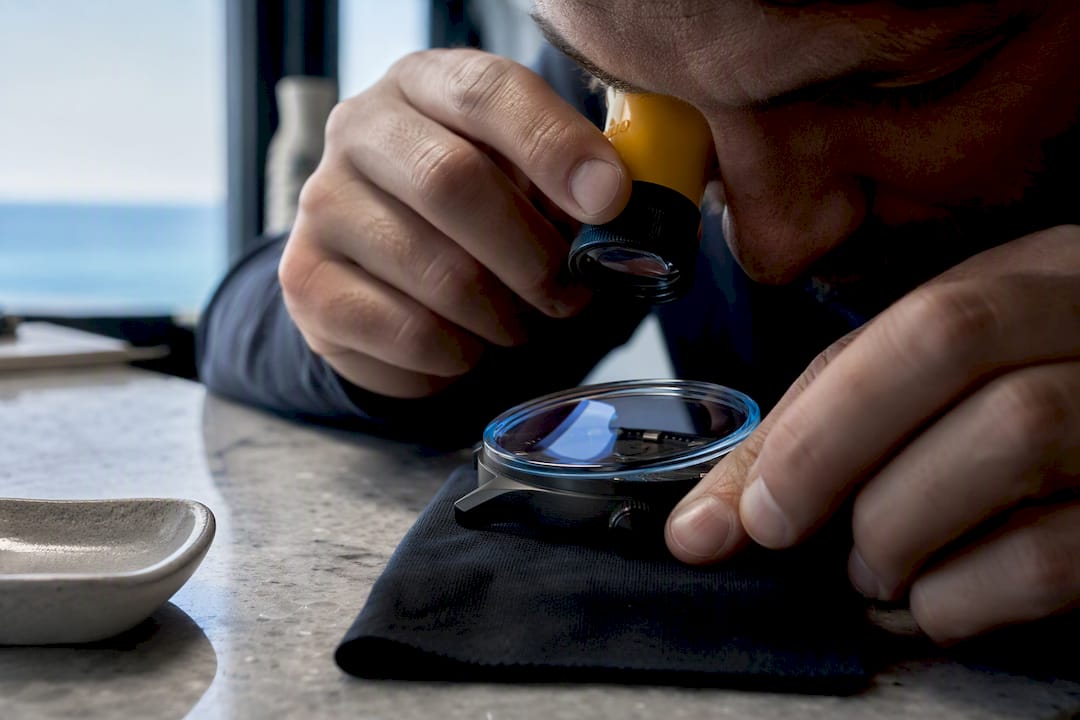
Avoid Costly Replacements: Wynwoodblvd on Which Watch Crystal to Buy
Watch crystals come in three main types: acrylic (hesalite), mineral (including hardened variants like Hardlex), and sapphire. Pick sapphire if scratch resistance is your top priority, mineral glass if you want a balance of durability and cost, and acrylic if you value shatter resistance or a vintage look. Hybrid coatings and Gorilla Glass exist too, but these three cover almost every watch you’ll consider.
TL;DR:
- Acrylic crystals are highly shatter resistant and easy to polish out scratches, making them ideal for vintage-style or rough-use watches.
- Mineral and Hardlex glass offer a balance of impact resistance and scratch durability, suitable for daily wear and outdoor activities, with moderate replacement costs.
- Sapphire crystals provide superior scratch resistance with a Mohs rating near 9 but are more brittle and costly to replace after impact damage.
- Coatings on sapphire crystals, especially outer anti-reflective layers, can wear over time, reducing glare reduction and optical clarity.
- The choice of crystal should be based on whether your priority is avoiding scratches or preventing shattering, depending on your usage environment.
Table of Contents
- What Is a Watch Crystal, and How Did the Options Change Over Time?
- Acrylic (Hesalite) Crystal: Why Vintage Fans Still Love It
- Mineral and Hardlex Crystal: The Middle-Ground Workhorse
- Sapphire Crystal: The Scratch-Resistance Standard
- Gorilla Glass, Hybrid Crystals, and How Shape Changes Durability
- How to Choose the Right Watch Crystal for Your Needs
- How Wynwoodblvd Thinks About Crystal Choice
- When Aesthetics Should Beat the Spec Sheet
- Why the Keys Blue Watch Uses a Scratch Resistant Crystal
- Sources
- FAQ
What Is a Watch Crystal, and How Did the Options Change Over Time?
The crystal is the transparent cover protecting your watch dial, sometimes called “watch glass” even when it isn’t made of glass at all. It sits between you and the movement, taking every scratch, knock, and splash so the dial underneath stays readable and intact.
Early wristwatches used actual mineral glass, which cracked easily and offered little scratch protection. By the mid-20th century, manufacturers switched to acrylic (also called plexiglass or hesalite), a lightweight plastic that resisted shattering during rough use. NASA’s Speedmaster program famously kept hesalite for exactly that reason.
As manufacturing improved, tempered mineral glass became the default for mid-range watches, offering better scratch resistance than acrylic without the fragility of early glass. Sapphire crystal, once reserved for high-end pieces because synthetic sapphire production was expensive, became viable at lower price points as manufacturing scaled up. Today sapphire shows up on many microbrands and mid-range watches that would have used mineral glass a decade ago. Each shift came down to the same trade-off: durability against impact versus resistance to scratching, and manufacturers still balance that equation differently depending on the watch’s purpose.
Acrylic (Hesalite) Crystal: Why Vintage Fans Still Love It
Acrylic, sold under names like Plexiglas or hesalite, is a polymethyl methacrylate (PMMA) plastic with a Mohs hardness of about 3, making it considerably softer than the other materials discussed and susceptible to scratches from everyday contact with harder objects. But hardness is only half the story.
What acrylic lacks in scratch resistance, it makes up for in toughness. It flexes slightly under impact instead of cracking, which is why Omega kept hesalite on the Speedmaster for missions where a shattered crystal could mean floating glass shards inside a spacesuit. That shatter resistance still matters for anyone who works with their hands or plays contact sports.
The other advantage is repairability. Scratches on acrylic aren’t permanent. A product like Polywatch, a mild abrasive polish, buffs light scratches out in minutes, and deeper scratches respond to progressively finer sandpaper before a final polish. Try that on sapphire and you’ll just dull the surface further.
Benefits and drawbacks of acrylic crystal:
- Highly shatter resistant, even under sharp impact
- Scratches can be polished out at home, cheaply and repeatedly
- Inexpensive to replace when polishing isn’t enough
- Warm, slightly domed optical look that vintage collectors specifically seek out
- Scratches easily and can yellow with age or UV exposure
- Lower optical clarity than glass or sapphire, especially under bright light
Replacement cost for a full acrylic crystal swap typically runs on the low end compared to the other materials, and a bottle of Polywatch costs less than a coffee. Choose acrylic if you want a vintage-correct restoration, if you’re rough on watches and hate the idea of a chipped crystal, or if you’d rather spend five minutes polishing than pay a repair shop.
Pro Tip: Keep a small tube of Polywatch in your watch box even if your current watch has a mineral or sapphire crystal. If you ever buy a vintage piece, you’ll want it on hand before the first scratch shows up.
Mineral and Hardlex Crystal: The Middle-Ground Workhorse
Mineral crystal is tempered silica glass, chemically or heat treated to improve its resistance to cracking. Its Mohs hardness typically ranges between 5 and 6, which is harder than acrylic but less hard than sapphire. That middle position is exactly why it shows up on the widest range of watches, from $50 fashion pieces to $500 dive watches.
The trade-off against acrylic is straightforward: better scratch resistance, but less give under impact. Mineral glass can crack or chip on a hard strike where acrylic would just flex. Against sapphire, mineral glass wins on impact tolerance and cost, but loses badly on scratch resistance. A watch case that spends a week in a tool bag will show hairline scratches on mineral glass within a year that sapphire wouldn’t pick up in a decade.
Some brands push mineral glass further with proprietary hardening processes. Seiko’s Hardlex is the best-known example: chemically strengthened mineral glass that sits between standard mineral glass and sapphire in both scratch and impact behavior. It’s not sapphire hard, but it noticeably outperforms basic K1 mineral glass while staying far cheaper to produce and replace.
Where mineral and Hardlex crystals make sense:
- Everyday watches worn during manual labor, sports, or outdoor work
- Dive and field watches where a cracked crystal is a bigger problem than a scratched one
- Buyers who want better durability than acrylic without paying sapphire prices
- Brands like Citizen, which note that mineral glass suits everyday wear better than sapphire on certain models because it’s less prone to shattering
Replacement runs moderately priced at most repair shops, well above an acrylic swap but usually a fraction of a sapphire replacement. Unlike acrylic, mineral glass generally can’t be polished back to clarity at home. Once it’s scratched, you’re looking at replacement, not restoration.
Sapphire Crystal: The Scratch-Resistance Standard
Sapphire crystal is synthetic corundum, the same aluminum oxide compound as natural sapphire gemstones, grown in a lab and cut into wafers. It has a Mohs hardness rating of approximately 9, making it highly scratch-resistant under normal daily wear, significantly harder than acrylic and notably harder than standard mineral glass on the same scale. source Only diamond, at Mohs 10, sits above it in common use.
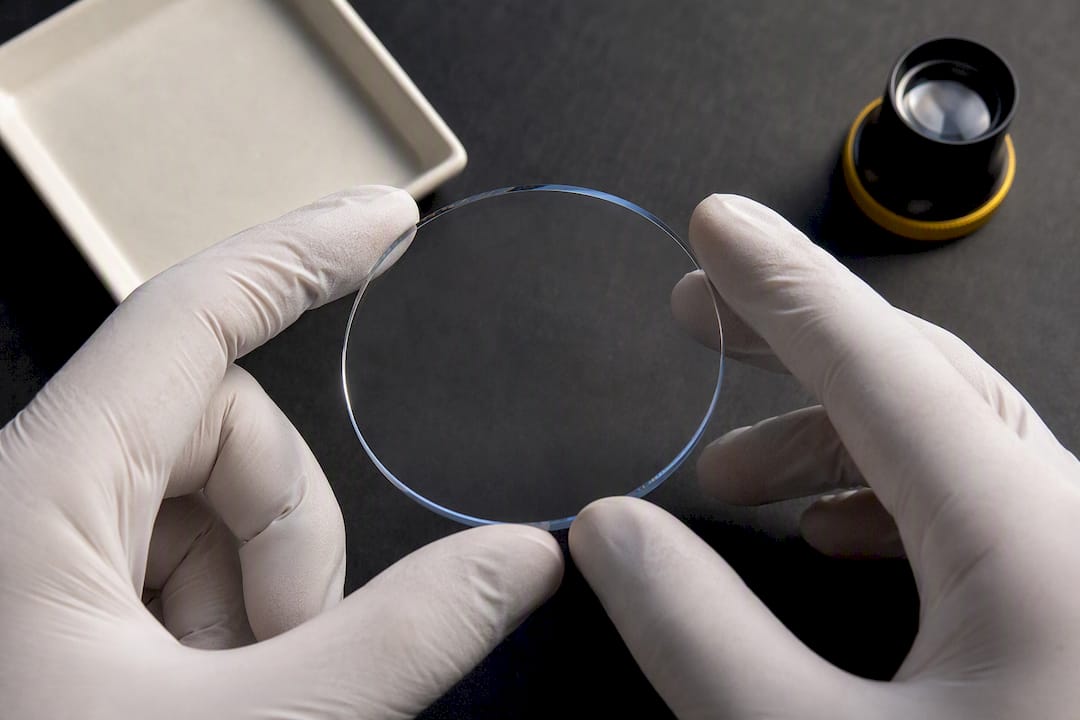
That scratch resistance comes with a catch that a lot of buyers miss: hardness and toughness aren’t the same property. Sapphire resists scratching better than anything else on this list, but it’s also more brittle, meaning a sharp, concentrated impact (dropping the watch on a corner, a hard strike against concrete) can chip or crack it where mineral glass might just scuff. Hardness measures resistance to scratching; toughness measures resistance to fracture, and sapphire trades one for the other.
Because sapphire is so reflective, most sapphire crystals get an anti-reflective (AR) coating applied through a vapor deposition process. That coating cuts glare dramatically and makes the dial easier to read in bright light, but it introduces its own weak point. Outer AR coatings are more vulnerable to abrasion than the sapphire underneath, so a coating on the outer surface can wear thin or show faint scuffing over years of wrist contact, even while the sapphire itself stays scratch free. Inner coatings avoid that wear but do less to cut reflections you actually see.
What to know before buying a sapphire-crystal watch:
- Mohs hardness around 9 means everyday scratches are essentially a non-issue
- Cannot be polished at home the way acrylic can. A chip or deep scratch means a full crystal replacement
- Replacement cost sits well above mineral or acrylic, and can run high on models requiring proprietary parts
- AR coating quality varies by brand. Ask whether it’s applied to the inner or outer surface
- Best suited to buyers who wear one watch daily and want to never think about scratches again
Sapphire fits daily-wear watches, dress pieces you don’t want to baby, and anyone who’s tired of scratched crystals on past watches. It’s a worse fit for anyone who drops things often or works in environments with hard, sharp edges nearby.
Gorilla Glass, Hybrid Crystals, and How Shape Changes Durability
Sapphire and mineral aren’t the only options anymore. Corning’s Gorilla Glass, the chemically strengthened glass best known from smartphone screens, now shows up on most smartwatches and a small but growing number of traditional mechanical watches, usually from microbrands looking for a lighter, cheaper alternative to sapphire with better scratch resistance than basic mineral glass.
Some manufacturers laminate coated mineral glass with a thin sapphire layer, sometimes marketed loosely as “sapphlex,” aiming for sapphire-like surface hardness at a lower cost than a solid sapphire crystal. Results vary by brand, and there’s no single industry standard defining what qualifies.
Crystal shape matters as much as material in real-world durability:
- A flat crystal sitting flush inside a raised bezel gets real protection from side impacts
- A domed crystal looks striking but sits higher, more exposed to knocks from above
- A boxed crystal (steeply domed with flat edges) splits the difference, common on vintage-styled reissues
AR coating placement follows the same logic as with sapphire. Outer coatings cut more glare but wear faster; inner coatings last longer but reduce less reflection. None of these alternatives replace the core three, but they widen what’s available between the extremes of acrylic and sapphire.
How to Choose the Right Watch Crystal for Your Needs
The right crystal depends on which failure mode worries you more: scratches or shattering. Here’s how the three main types stack up across the factors that actually matter when you’re buying or repairing a watch.
| Factor | Acrylic | Mineral / Hardlex | Sapphire |
|---|---|---|---|
| Mohs hardness | ~3 | ~5 to 6 | ~9 |
| Impact resistance | Excellent, flexes rather than cracks | Good, moderate crack risk | Lower, prone to chipping under sharp impact |
| Optical clarity, AR need | Warm, lower clarity, rarely coated | Clear, occasionally coated | Highest clarity, usually needs AR coating |
| Repairability | Polishable at home | Not polishable, needs replacement | Not polishable, needs replacement |
| Typical replacement cost | Low | Moderate | High |
| Best for | Vintage restorations, rough use, budget repairs | Daily-wear tool watches, dive and field watches | Daily wear where scratches are the main concern |
Run through this before you buy or send a watch in for repair:
- Identify your main risk. Do you work with your hands, play sports, or drop things often? Lean toward acrylic or hardened mineral. Do you just hate scratches? Lean sapphire.
- Check the case design. A recessed crystal protected by a raised bezel survives impacts better regardless of material, which can offset a harder crystal’s brittleness.
- Ask about AR coating placement. Inner coatings last longer; outer coatings look better but wear faster.
- Get the replacement price before you buy. Sapphire replacements vary widely by brand and availability of proprietary parts.
- Decide how much you value originality. If you’re restoring a vintage piece, an acrylic crystal often matters more for authenticity than a sapphire upgrade would for durability.
Pro Tip: Separate “scratch worry” from “impact worry” before you shop. If you’re anxious about scratches, sapphire solves that completely. If you’re anxious about a shattered crystal on a hard knock, acrylic or a hardened mineral variant with good bezel protection is the safer bet.
How Wynwoodblvd Thinks About Crystal Choice
The product design approach builds every watch around a simple question: what will this piece actually be worn through? That question drives crystal selection on stainless steel collections designed for daily wear in coastal, humid, and sand-exposed environments where scratch resistance and water resistance both matter.
Two internal deep dives shaped that approach. Sapphire vs Mineral Glass breaks down which watches benefit from sapphire’s hardness versus where mineral glass’s impact tolerance makes more sense. Scratch Resistant Watch Materials goes further into how Mohs hardness comparisons, including DLC coatings rated near 1,200 HV on the Vickers scale, inform case and crystal pairing decisions. Between them, they explain why Wynwoodblvd leans toward sapphire and hardened options on pieces meant for daily rotation.
When Aesthetics Should Beat the Spec Sheet
Here’s an unpopular opinion: the “best” crystal on paper is often the wrong choice for the watch in front of you. A reissued dive watch or field watch loses something real when sapphire replaces the acrylic that made the original iconic. The warmth, the slight distortion, the fact that you can polish out a scratch yourself. That’s not a downgrade. It’s the point.
Sapphire earns its place when the watch is a daily driver and you genuinely never want to think about scratches again, even on a modest budget watch, as highlighted in these top luxury scent picks: accessible options for every budget that balance quality with cost. But when a piece is built around vintage character, hardness stops being the deciding factor. Choose the crystal that matches how you’ll actually wear the watch, not just the one with the highest number on a hardness chart.
— Mathias
Why the Keys Blue Watch Uses a Scratch Resistant Crystal
Daily wear near saltwater, sand, and sunscreen is exactly the environment that punishes a soft crystal, which is why the Keys Blue Miami Inspired Watch pairs its stainless steel automatic case with a crystal chosen for scratch resistance rather than a budget mineral swap. You get a coastal-inspired dial you can actually wear on the boat, at the beach, or at dinner after, without babying it.
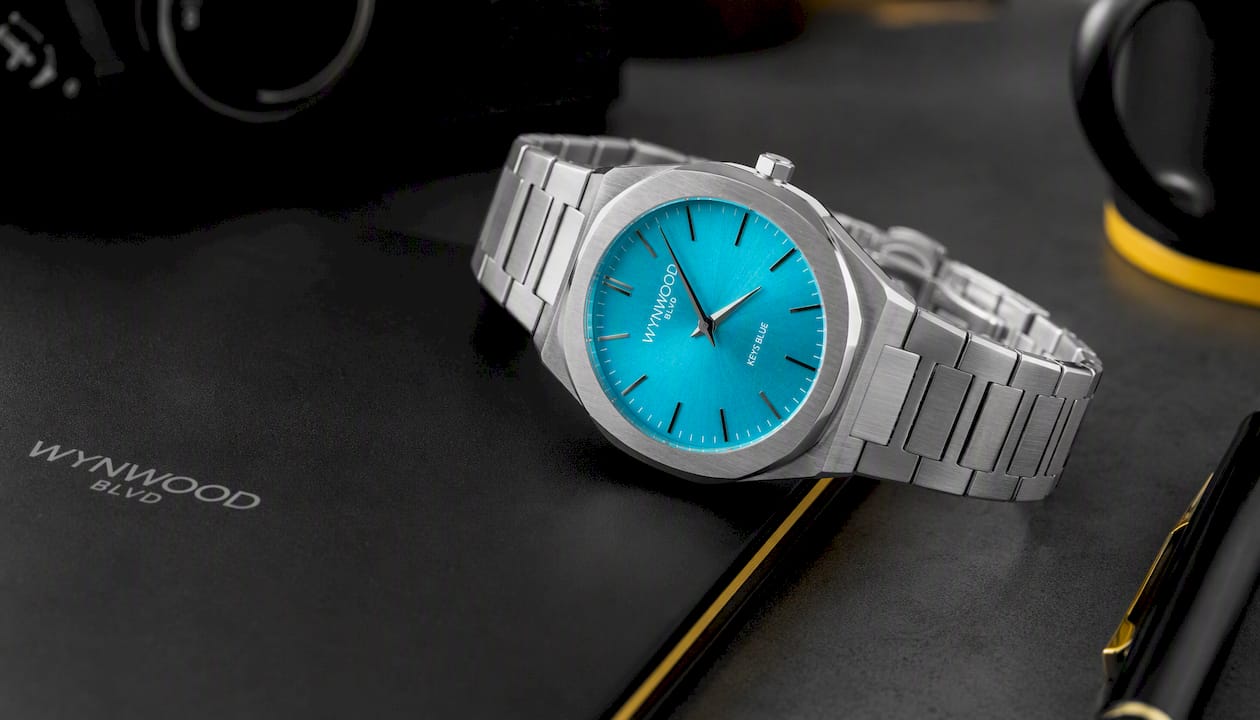
The Keys Blue draws its color palette straight from the Florida Keys, and it’s part of Wynwoodblvd’s broader Miami-inspired lineup built for people who want a watch that holds up to real life, not just a display case. If you’re weighing crystal durability against everyday wear, the product page lays out the full case specs, water resistance rating, and strap options. Businesses looking to put a similar build on a corporate gift or branded merchandise line can also request custom dial and packaging options through the company.
Sources
- The ABCs of Time: All About the Different Crystals Used in Watches Today
- Crystal clear — more than you ever wanted to know about the watch crystal | Hodinkee
- Watch Crystal Guide: Sapphire vs Mineral vs Acrylic | WatchPolice
FAQ
What is the best crystal for watches?
Sapphire is the best choice for scratch resistance, with a Mohs hardness around 9, but it’s also the most brittle under sharp impact and the most expensive to replace. The “best” crystal really depends on whether you’re more worried about scratches or shattering.
What type of crystal is used in most watches?
Mineral glass is the most common crystal type on mainstream and mid-range watches, since it balances scratch resistance and impact tolerance at a lower cost than sapphire. Higher-end and daily-wear watches increasingly use sapphire as production costs have dropped.
Is Hardlex as good as sapphire?
No. Hardlex is a hardened mineral glass, so it outperforms standard mineral glass but still falls well short of sapphire’s scratch resistance, while offering better impact tolerance in exchange.
Can a scratched sapphire crystal be fixed?
Not at home. Sapphire can’t be polished the way acrylic can, so a scratched or chipped sapphire crystal typically needs full replacement rather than repair.
Does AR coating wear off?
Yes, particularly outer AR coatings, which sit exposed to daily abrasion and can thin or show light wear over years, even though the sapphire underneath stays scratch free.
,%20mineral%20(including%20hardened%20variants%20like%20Hardlex),%20and%20sapphire.%20Pick%20sapphire%20if%20scratch%20resistance%20is%20your%20top%20priority,%20mineral%20gl...)