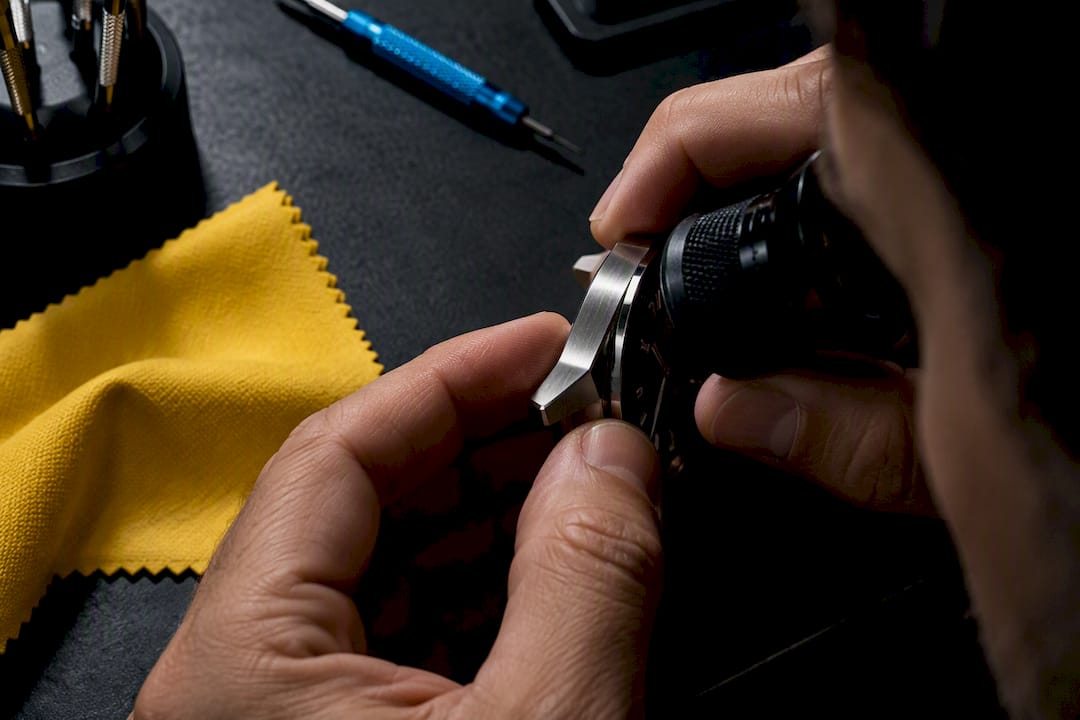
Prevent Customs Delays: Design a Custom Watch for Corporate Gifting
Design a custom watch by choosing a premium, wearable base model first and treating branding as a secondary detail, not the headline. Recipients keep and use watches they’d wear without a logo, then engage with your brand afterward. Build a one-page design brief, confirm origin marking and durability wording with your supplier, and require a physical sample before you approve full production.
TL;DR:
- Providing a detailed design brief with exact quantities, packaging, artwork, and placement is essential for accurate quotes and timely production.
- Logo placement should match the gifting goal, with dial printing for maximum visibility or case back engraving for a premium, discreet look.
- Confirm the country’s origin based on movement manufacturing and ensure compliance with customs markings to avoid shipment delays or legal issues.
- Bulk pricing decreases per unit with higher quantities, but setup and tooling fees remain fixed, so larger orders are generally more cost-effective.
- Require a physical sample showing final logo placement, markings, and packaging before approving full production to prevent costly mistakes.
Table of Contents
- How Do You Design a Custom Watch That Vendors Can Quote Accurately?
- Where Should Your Logo Go: Dial, Case Back, or Packaging?
- What Legal Marking and Durability Rules Apply to Custom Watches?
- What Does a Bulk Custom Watch Order Actually Cost?
- What Should Your Sample Approval and QC Checklist Include?
- A Design-Led Approach to Corporate Watches
- How Wynwoodblvd Turns Your Brief Into a Finished Watch
- Where to Verify These Rules Yourself
- Sources
- FAQ
How Do You Design a Custom Watch That Vendors Can Quote Accurately?
A vague request gets a vague quote. Watch manufacturers need specific inputs before they can price your order or produce a real sample, and skipping any of them adds weeks to your timeline. A procurement-ready design brief is the single input that most affects speed and accuracy.
Cover these items before you send an inquiry:
- Recipient profile and occasion. An employee milestone gift needs different finish and packaging than a mass event giveaway.
- Exact quantities and delivery splits. Note if units ship to one warehouse or get distributed across multiple offices or events.
- Packaging and gift messaging. Decide whether the box, sleeve, or card carries your logo or a personal message.
- Artwork package. Vector logo files (AI or EPS), Pantone color codes, and minimum legible logo size at watch scale.
- Decoration placement. Dial, case back, clasp, or packaging, ranked by priority.
- Deadlines and inspection points. Proof approval date, sample ship date, and final delivery date, with room for one revision round.
Pro Tip: Send your logo file at the actual millimeter size it will print or engrave, not just at high resolution. A logo that looks crisp on a screen can lose all detail once reduced to a 12mm dial imprint.
Where Should Your Logo Go: Dial, Case Back, or Packaging?
Placement decides whether your brand feels like a badge or a bonus. Dial printing gives maximum visibility every time the recipient checks the time, but it also risks looking like a giveaway rather than a personal timepiece. Case-back engraving keeps the face clean and reads as premium, since the branding only shows when the wearer chooses to reveal it.
Clasp or buckle marks split the difference: understated during wear, still discoverable up close. For high-value gifts, many buyers let the watch face stay untouched and put the primary brand message on the packaging insert instead, which preserves the product’s standalone appeal.
Match placement to the gifting goal:
- Mass event giveaway: packaging-forward branding, minimal watch marking.
- VIP or executive gift: case-back engraving with a premium finish, dial left clean.
- Employee milestone award: engraving with the recipient’s name and date on the case back or clasp.
This isn’t a cosmetic preference. In PPAI’s 2026 consumer study of over 3,400 U.S. respondents, 68% said usefulness makes a promotional item feel valuable, and 65% said the same about quality. A watch someone wears daily earns far more of those moments than a heavily logoed item that gets shelved.
Before you approve any design, request physical sample photos at actual scale, not renderings. A dial customization guide can help you judge readability tradeoffs before committing to a print method.
What Legal Marking and Durability Rules Apply to Custom Watches?
Two federal frameworks govern what you can print on a watch and what you can claim about it, and both carry real financial risk if ignored. Skipping either one can mean a held shipment or a false-advertising complaint.
- Country-of-origin marking. U.S. Customs and Border Protection treats the country where the movement was manufactured as the watch’s country of origin for marking purposes, not necessarily where the case was assembled or where your logo was applied.
- Chapter 91 Note 4 special marking. Watches fall under special tariff schedule rules requiring specific, conspicuous, legible, and permanent markings on both the movement and the case, separate from your branding.
- Durability and corrosion claims. The FTC Jewelry Guides warn against unqualified claims like “rust proof.” Even genuinely corrosion-resistant stainless steel doesn’t automatically justify broad durability language on your packaging or marketing copy.
Customs guidance is clear that a small artwork or sourcing decision, like where a movement gets manufactured, can determine the origin marking your entire shipment needs to carry. Confirm the movement’s origin with your importer before finalizing any packaging copy or shipment paperwork.
Build these checks into your purchase order: require sample photos showing every mark together, have your importer confirm marking compliance in writing, and keep that documentation attached to the contract. It’s far cheaper to catch a marking gap on a sample than on a released customs shipment.
What Does a Bulk Custom Watch Order Actually Cost?
Five levers drive your per-unit price: the base watch model, the decoration method, packaging choice, one-time tooling or setup fees, and total quantity. A quartz movement in a standard case costs less than an automatic movement with a sapphire crystal, and laser engraving typically costs less per unit than multicolor dial printing once setup is factored in.
Per-piece pricing usually drops at defined quantity tiers, often in the range of 50, 100, 250, and 500+ units, while setup and tooling fees stay flat regardless of order size. That means a 50-unit order absorbs a much higher per-unit tooling cost than a 500-unit order using the same die or template.
Expect this general timeline sequence:
- Digital proof: design mockup approval, typically the fastest step.
- Physical sample: production-intent unit for hands-on review.
- Full production run: once the sample is signed off.
- Pre-shipment inspection: quality check before goods leave the factory.
- Delivery: shipping and customs clearance to final destination.
Rushing this line item is the most common reason bulk orders miss their intended launch date. For a full breakdown by quantity tier, a cost band reference for finance teams can help you set realistic expectations before requesting quotes.
What Should Your Sample Approval and QC Checklist Include?
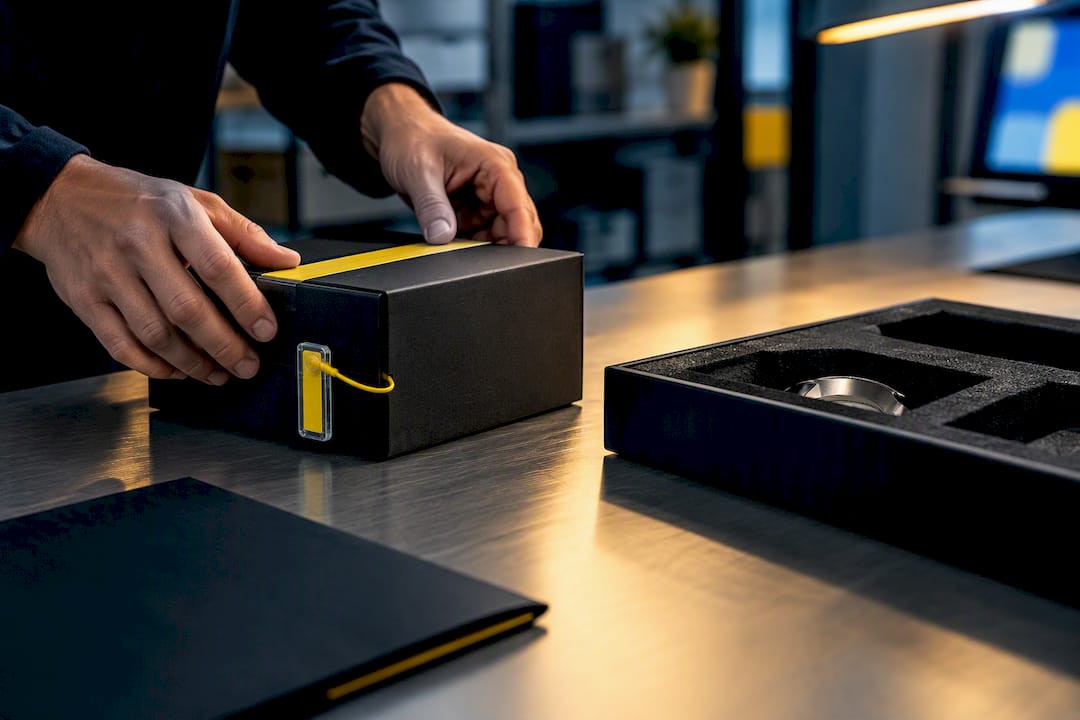
Never approve full production from a rendering alone. Require one production-intent physical sample that shows the final logo placement, all required markings, and actual retail packaging together, exactly as the finished units will ship.
Check the sample against this list before signing off:
- Contrast and readability of the logo at actual size and lighting.
- Engraving depth and consistency across the sample batch.
- Origin and movement markings present, legible, and correctly placed.
- Water resistance labeling matches the tested rating, not an assumed one.
- Packaging contents complete: box, card, warranty information, and any gift messaging.
Define acceptance and rejection thresholds in writing before production starts, including acceptable engraving variance and finish tolerance. Request a pre-shipment inspection report and hold back one sample per production lot for warranty reference or dispute resolution. Two-line or three-line engraving text needs its own layout check, since character limits affect legibility more than most buyers expect.
Pro Tip: Build a rework allowance into your contract, typically 2 to 5% of units, so a handful of cosmetic defects don’t force a renegotiation mid-shipment.
A Design-Led Approach to Corporate Watches
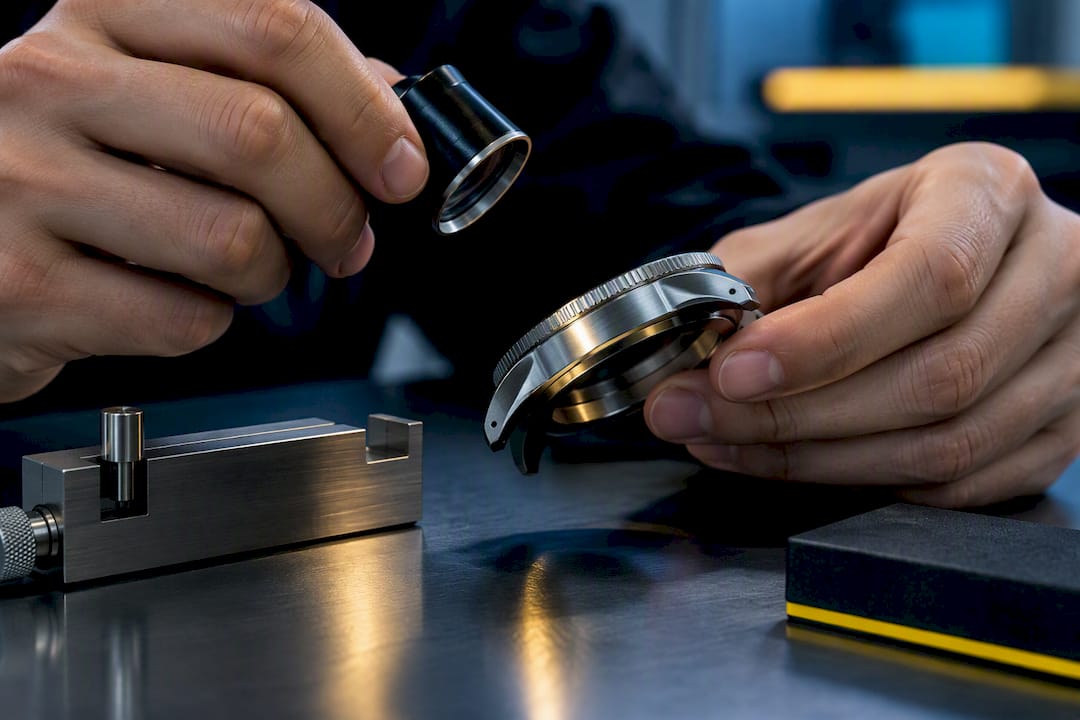
Restrained branding isn’t a compromise. It’s the strategy that actually gets your logo remembered. Wynwoodblvd builds every watch around a Miami-inspired colorway and premium stainless steel finish first, then treats the logo placement as a detail that fits the design rather than fights it.
That order of priorities lines up with what the data shows: usefulness and quality, not logo size, are what make recipients hold onto an item and act on it afterward, as highlighted in influencer marketing unveiled. A watch someone chooses to wear every day delivers far more brand exposure than one that gets buried in a desk drawer after the event ends. Design-first branding isn’t the safe choice. It’s the one backed by how recipients actually behave.
— Mathias
How Wynwoodblvd Turns Your Brief Into a Finished Watch
Wynwoodblvd is the alternative to a generic promotional-products catalog for businesses that want a watch people actually choose to wear. Instead of picking from stock giveaway items, you start from real, design-forward base models and customize from there, with a design team that has already solved the placement and material tradeoffs covered above.

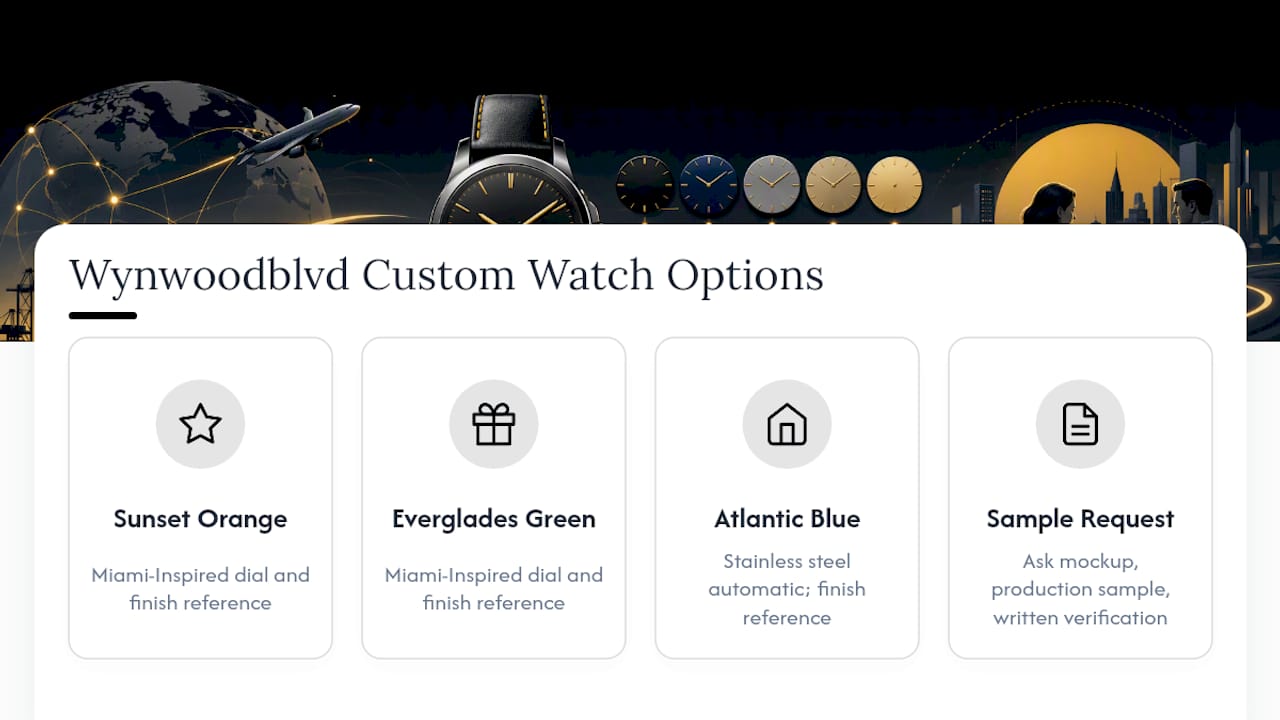
Three current models work well as starting points for a custom-bridging conversation: the Sunset Orange Miami Inspired Watch, the Everglades Green Miami Inspired Watch, and the Atlantic Blue Stainless Steel Automatic Watch. Each shows a different dial and finish combination, useful reference points when you’re deciding how visible your branding should be. Browse the full range of Miami Inspired Watches or the Miami Inspired Charms and Palm Tree Charms collections if jewelry fits your gifting program better than a watch.
When you request a sample, ask for a mockup render, a production-intent physical sample with your actual logo and markings applied, and written marking verification confirming origin and movement compliance. That’s the same standard covered earlier in this guide, applied to your own order. Visit the Corporate Custom Watches page to start your brief and request a sample.
Where to Verify These Rules Yourself
Check origin marking requirements directly through CBP’s informed compliance guidance, and confirm durability wording against the FTC Jewelry Guides before finalizing packaging copy. The PPAI consumer study and ASI’s promotional-product carbon research are useful talking points when discussing sustainability or retention data with your supplier.
Sources
- The Things We Don’t Throw Away - PPAI
- Landmark Study Shows Promotional Products Drive High Marketing Impact With a Low Carbon Footprint • ASI
- Marking country of origin — U.S. Customs and Border Protection informed compliance publications
- FTC Jewelry Guides
FAQ
What Information Do I Need Before Requesting a Quote?
You need recipient profile, exact quantity, packaging preference, vector logo files with Pantone codes, and preferred decoration placement. Suppliers can’t price accurately or produce a sample without this brief, and missing pieces are the most common cause of quoting delays.
Should the Logo Go on the Dial or the Case Back?
It depends on your gifting goal. Dial placement maximizes visibility but can feel like a giveaway, while case-back engraving keeps the face premium and works well for VIP or executive gifts.
What Marking Rules Apply to Imported Custom Watches?
The country of origin generally follows where the movement was manufactured, and Chapter 91 Note 4 requires specific markings on both the movement and case. Confirm these markings appear correctly on your physical sample before approving production.
Can I Advertise My Custom Watch as “Rust Proof”?
No. The FTC Jewelry Guides prohibit unqualified durability claims like “rust proof,” and even corrosion-resistant stainless steel needs substantiated, qualified language rather than a blanket guarantee.
How Much Does a Bulk Custom Watch Order Cost?
Pricing depends on the base model, decoration method, packaging, and quantity tier, with per-unit costs dropping at higher volumes. Wynwoodblvd’s Corporate Custom Watches program has no published flat price online, so current pricing is available directly through a sample request.
Why Choose a Premium Watch Over a Cheaper Giveaway Item?
Recipients keep and use items they find useful and well made, and that drives more post-gift brand engagement than a low-cost item with a large logo. PPAI’s research found 68% of recipients said usefulness makes merchandise feel valuable, with meaningful percentages later looking up the brand or making a purchase.