$10–$28 Clasp Choices: Deployant vs. Butterfly for Wynwoodblvd Watches
A deployant clasp usually wins for everyday wear and strap longevity, especially with leather, while a butterfly clasp usually wins for a clean, symmetrical dress look when your wrist size stays stable. Both beat a plain tang buckle for daily comfort. The right pick depends on your strap material, wrist consistency, and how active you are, which the sections below break down.
TL;DR:
- Deployant clasps typically last longer on leather straps due to reduced hole stress, nearly doubling the strap’s lifespan compared to tang buckles.
- Butterfly clasps sit flatter against the wrist and are preferred on dress watches for a seamless, jewelry-like appearance, especially when wrist size remains stable.
- Dual push-button releases on either clasp type significantly decrease the risk of accidental opening during daily or active wear.
- Expect genuine stainless steel deployant or butterfly clasps priced between $10 and $28, with lower-cost options often made of zinc alloy that corrode faster.
- For active or sporty use, prioritize stainless steel clasps with dual safety buttons and match clasp finish to the watch case for optimal durability and aesthetic consistency.
Table of Contents
- Deployant vs. Butterfly Clasp: Quick Pros and Cons
- How Deployant and Butterfly Clasps Actually Work
- Comfort and On-Wrist Feel: Which Sits Flatter
- Security: Accidental Release and Failure Risks
- How Each Clasp Affects Strap Lifespan
- Sizing and Micro-Adjustment: What You Can Actually Change
- What Deployant and Butterfly Clasps Actually Cost
- Which Clasp Fits Your Buying Profile
- How Wynwoodblvd Chooses Clasps for Its Watches
- Deployant vs. Butterfly Clasp: The Basic Definitions
- Mathias’s Fitting Trick and Shopper’s Checklist
- Wynwoodblvd Watches and the Clasp That Fits Each One
- Sources
Deployant vs. Butterfly Clasp: Quick Pros and Cons
Before you get into hinge counts and finish types, here’s the short version of the deployant vs. butterfly clasp debate.
Deployant clasp strengths:
- Single fold design that protects leather from repeated hole stress
- Works well with leather and rubber straps, especially on watches you wear daily
- Easier to service or replace one side without disturbing the whole strap
Butterfly clasp strengths:
- Double-fold construction that disappears under the wrist for a seamless strap line
- Common on dress watches and integrated bracelets where looks matter most
- Feels like an extension of the bracelet rather than a visible buckle
One safety note before you buy either: look for dual push-button releases. Two buttons that need simultaneous pressure are far less likely to pop open by accident than a single-button or friction-fit design, which matters whether you’re at a desk or on a trail.
How Deployant and Butterfly Clasps Actually Work
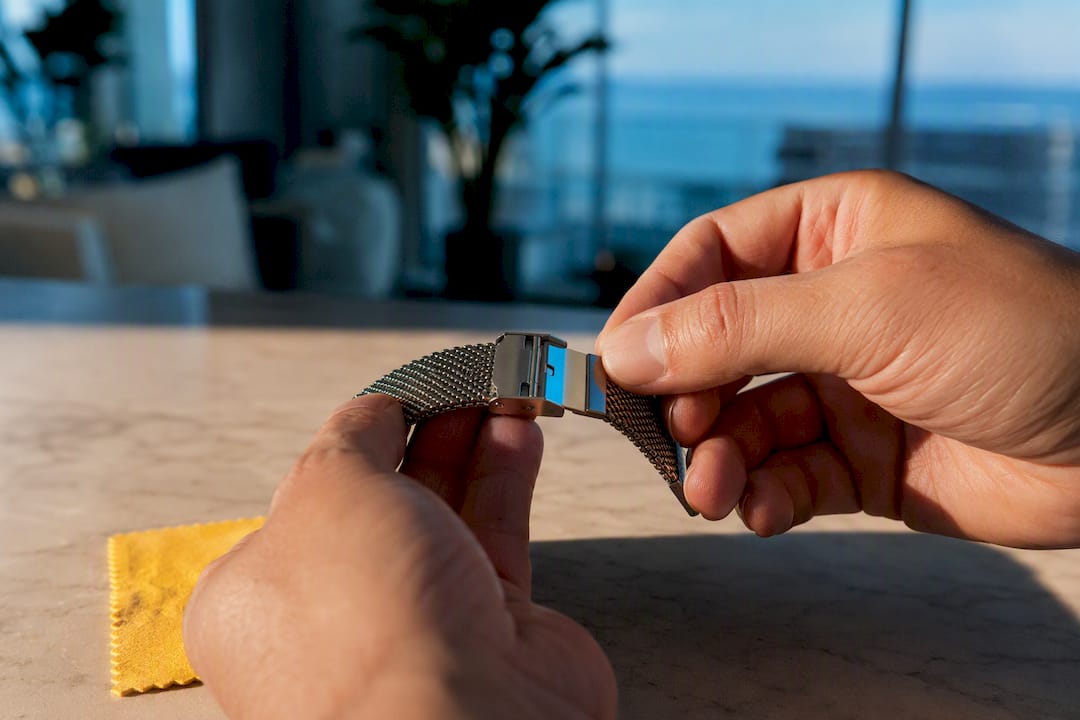
A single-fold deployant clasp attaches to one strap end, folds once, and tucks an extension piece under the opposite end to close the loop. Most versions use one or two hinges and a locking arm, and the terminology varies by brand, with “deployment” and “déployante” describing the same folding family.
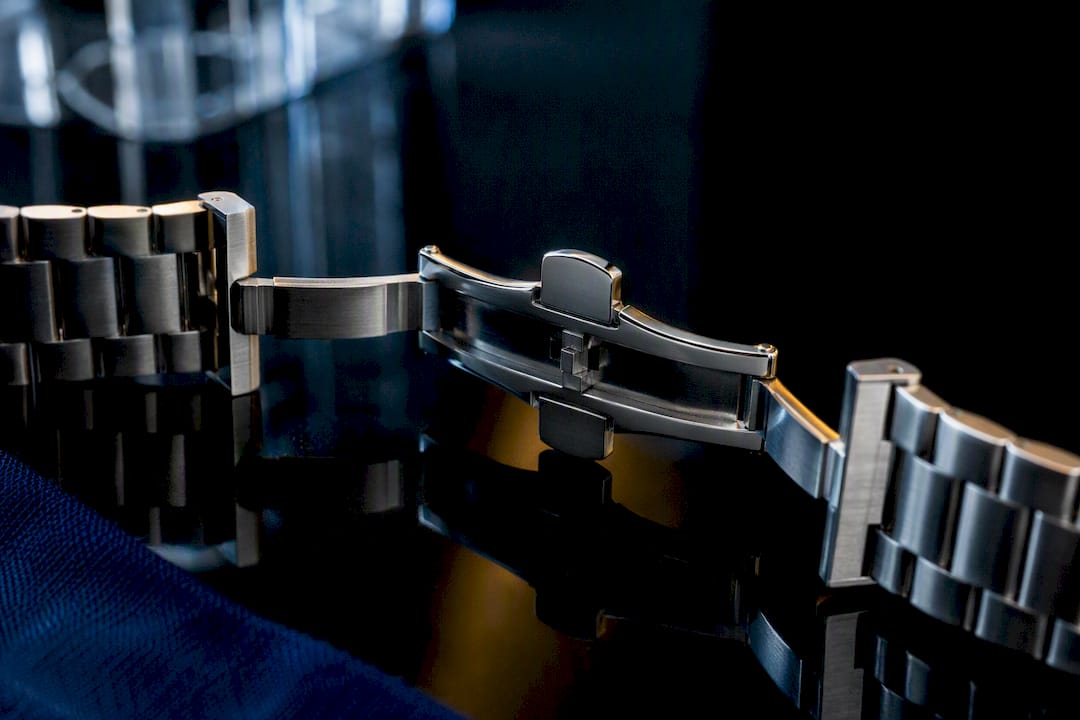
A butterfly clasp is more elaborate. Two wings fold inward from both strap ends simultaneously, meeting in the middle so the entire mechanism hides flat against your wrist. That takes more hinges and moving parts than a deployant, which is part of why it costs more to produce.
Material matters as much as design. Look for 316L stainless steel or a PVD-coated 316L base. Skip unbranded clasps that don’t list their alloy. Cheap zinc alloy substitutes corrode faster and feel noticeably lighter in hand.
Comfort and On-Wrist Feel: Which Sits Flatter
Butterfly clasps generally sit flatter against the wrist because both wings fold symmetrically into the same plane, distributing bulk evenly instead of stacking it on one side. A deployant clasp folds to one side, which can create a slightly raised profile under the closure point, though quality construction keeps this minimal.
Strap thickness changes the equation. A thick leather strap with a bulky deployant can feel stacked at the wrist bone, while that same clasp on a thinner rubber or canvas strap barely registers. Lug-to-lug length plays a role too. Longer cases distribute clasp weight differently than compact ones.
Pro Tip: Try this test before buying: close the clasp, then rotate your wrist as if checking the time repeatedly for a minute. If you feel a pinch point or a hard edge digging into your wrist bone, that’s a sizing or profile issue worth addressing before you commit.
Security: Accidental Release and Failure Risks
Push-button mechanisms are where deployant vs. butterfly clasp security really gets decided. Dual push-button releases, which require pressing two points at once, cut down on accidental openings compared to single-button or spring-tension designs that can pop with one snag on a doorframe or gym bag.
Material failure is the other risk. Cheap alloy hinges wear out and develop play over time, which loosens the locking action. Spring bars, the small pins connecting clasp to strap, can also fail if undersized for the lug width. For sports watches or tool watches you wear during activity, prioritize dual push-button designs in 316L stainless over single-release mechanisms, regardless of which clasp family you choose.
How Each Clasp Affects Strap Lifespan
This is where the deployant clasp advantage becomes hard to ignore. A tang buckle forces the same one or two holes to bear repeated stress every time you fasten it, which stretches and eventually tears the leather around that spot. A deployant clasp eliminates that entirely by folding shut instead of piercing the same holes over and over.
Leather straps paired with a deployant clasp generally last significantly longer under regular wear compared to standard tang buckles, according to reported wear comparisons from dupe.watch.
That’s close to double the usable life for the price of one clasp upgrade, and it’s part of why upgrading a leather strap to a deployant is a common recommendation for protecting resale value. Rubber straps benefit less dramatically since they don’t wear at fixed holes the same way, but they still gain from reduced flex stress at a single point.
Sizing and Micro-Adjustment: What You Can Actually Change
Sizing works differently depending on which clasp you own, and it affects how much day-to-day flexibility you get.
- Measure the buckle-end strap width where the clasp attaches, since deployant and butterfly clasps are sold to match specific millimeter widths.
- Test the fit at rest and in motion. A clasp that feels fine standing still can feel tight after your wrist swells slightly during the day.
- Check for micro-adjustment holes. Pin buckles often have three to five holes for per-wear adjustment; most butterfly and deployant clasps come pre-set to one fit, with adjustment requiring a strap swap or a trip to a watchmaker.
- Account for seasonal swelling. If your wrist changes noticeably with heat or activity, a pin buckle or a deployant with a half-link adjustment gives you more room than a fixed butterfly clasp.
Small wrists should double-check the minimum closed circumference before ordering, since some butterfly designs run larger at the folded point than expected.
What Deployant and Butterfly Clasps Actually Cost
Expect aftermarket 316L stainless deployant or butterfly clasps in the $10 to $28 range, depending on width, finish, and hinge count. OEM clasps sold directly by a watch brand often run several times that, since you’re paying for exact fitment and brand markings, not just material.
Treat any listing priced under roughly $6 as a warning sign. That price point almost always means zinc alloy dressed up to look like stainless steel, and it will show plating wear within months. Also check that the listing specifies end-width in millimeters. A clasp without that spec is a gamble on fit.
For a straightforward swap, aftermarket sellers are fine if they list material and width clearly. For anything involving your original bracelet fitment or a warranty concern, brand service is the safer route.
Which Clasp Fits Your Buying Profile
Match your habits to the mechanism, not the other way around.
- Everyday wearer: A deployant clasp on leather or rubber protects your strap through daily use and is easy to size once and forget.
- Dress watch owner: A butterfly clasp gives you that seamless, jewelry-like line under a cuff, ideal if your wrist size doesn’t fluctuate much.
- Sport or active wearer: Either family works, but insist on a dual push-button release in 316L stainless to guard against accidental openings during movement.
- Budget-conscious buyer: A single-fold deployant is usually the cheaper upgrade path and delivers most of the strap-protection benefit without the higher part count of a butterfly design.
Pro Tip: Match the clasp finish to your case finish, not just your strap color. A brushed clasp against a polished case (or vice versa) is a small detail, but it’s the kind of mismatch that stands out once you notice it. Before buying, confirm the end-width measurement twice, once from the listing and once with your own strap.
How Wynwoodblvd Chooses Clasps for Its Watches
Clasp selection often starts with how the watch gets worn, not just how it looks in photos. A design leader may pair each model with a clasp built for its intended use rather than defaulting to whatever’s cheapest to source.
Some automatic collections lean toward secure, dual push-button deployant style closures on stainless steel bracelets, designed for coastal living rather than display only. The goal is a clasp that holds up through saltwater air, daily wear, and travel without loosening over time. That reasoning shapes the current lineup.
Deployant vs. Butterfly Clasp: The Basic Definitions
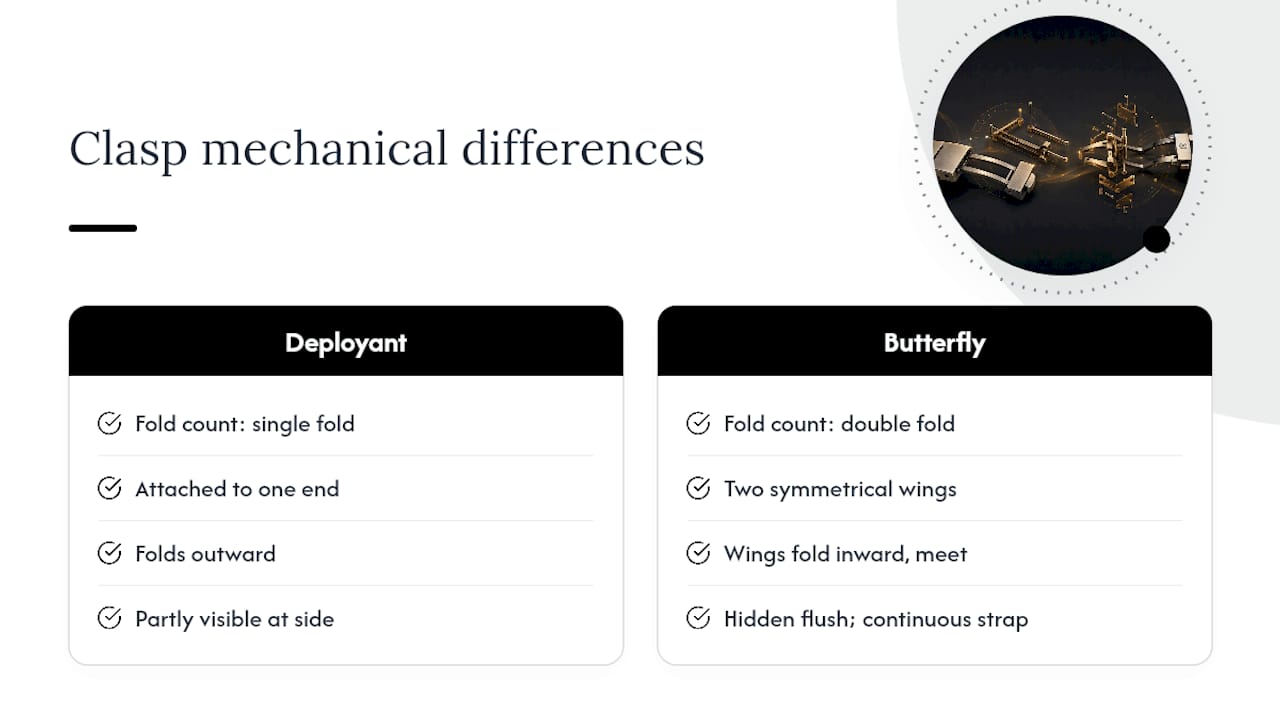
A deployant clasp (also spelled deployment clasp, or “déployante” in French) is a single-fold mechanism that attaches to one end of a strap, folds outward, and locks a hinged extension over the opposite end. The name comes from its function: instead of piercing the strap through a fixed hole like a tang buckle, it deploys shut, keeping the strap at a consistent wear position every time.
A butterfly clasp is a double-fold design where two symmetrical wings, one on each strap end, fold inward and meet in the middle. When closed, both wings tuck flush against your wrist, hiding the entire mechanism and creating one continuous strap line with no visible buckle or hardware showing.
Both fall under the broader “fold-over clasp” category, distinct from a tang buckle (the classic pin-and-hole design) and a pin buckle (a refined tang buckle with a folding cover). The deployant vs. butterfly clasp choice really comes down to fold count and how much of the mechanism you want visible. One fold and it shows a little on the side. Two folds and it disappears completely.
Confusingly, some brands market butterfly clasps as a type of “deployment clasp” since both fold to close, which is technically accurate but glosses over the real mechanical difference. If a listing just says “deployment clasp” without specifying single or double fold, ask before you buy. For a broader look at how these compare to bracelet-style closures, this clasp selection guide covers the wider category.
Mathias’s Fitting Trick and Shopper’s Checklist
Here’s a mistake I see constantly: people size a clasp once, standing still, in a cool store, then wonder why it feels tight on a hot afternoon walk. Wrists change size throughout the day more than most buyers expect.
My trick: size the clasp slightly looser than feels perfect at rest. You want one finger of play, not zero. Before you buy in-store or order online, bring or check three things: your exact wrist measurement at its largest point in a day, the strap’s end-width in millimeters, and a note of whether you want dual push-button security. If you’re resizing a bracelet permanently, don’t guess. A watchmaker or this step-by-step guide will get it right the first time.
— Mathias
Wynwoodblvd Watches and the Clasp That Fits Each One
Some automatic watches are built around a secure, comfortable clasp because a watch that restricts wrist movement defeats the point of daily wear.
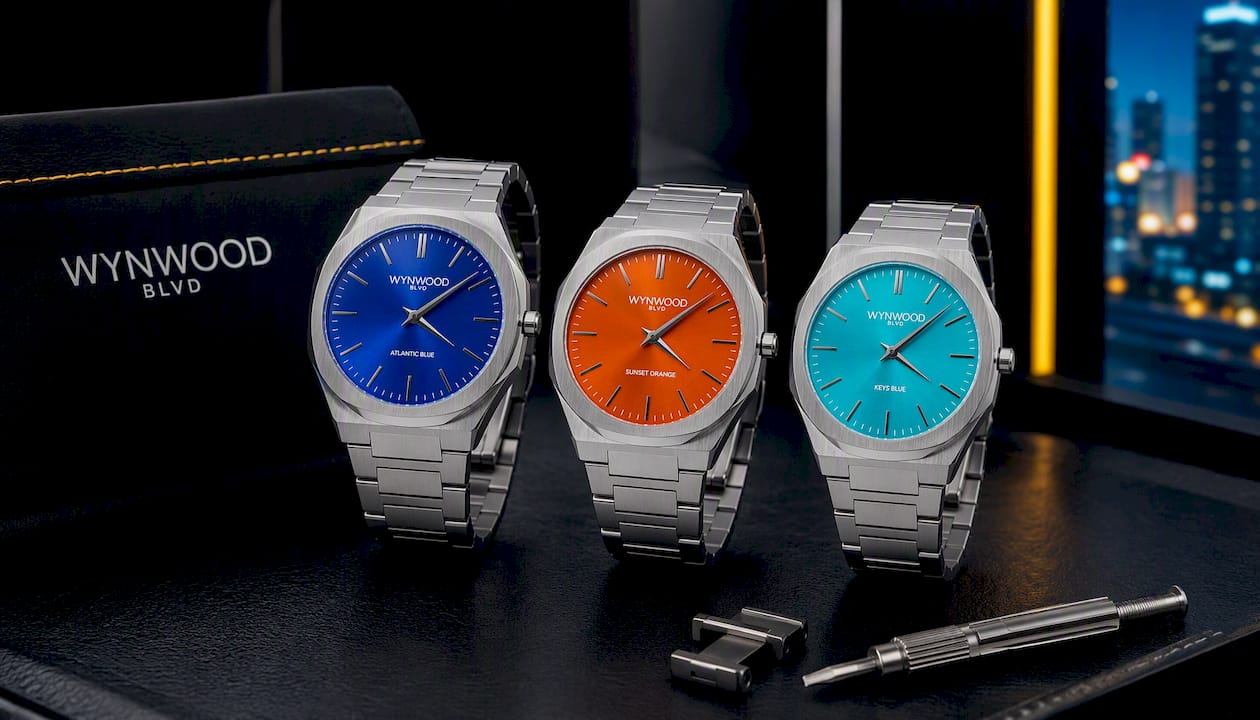
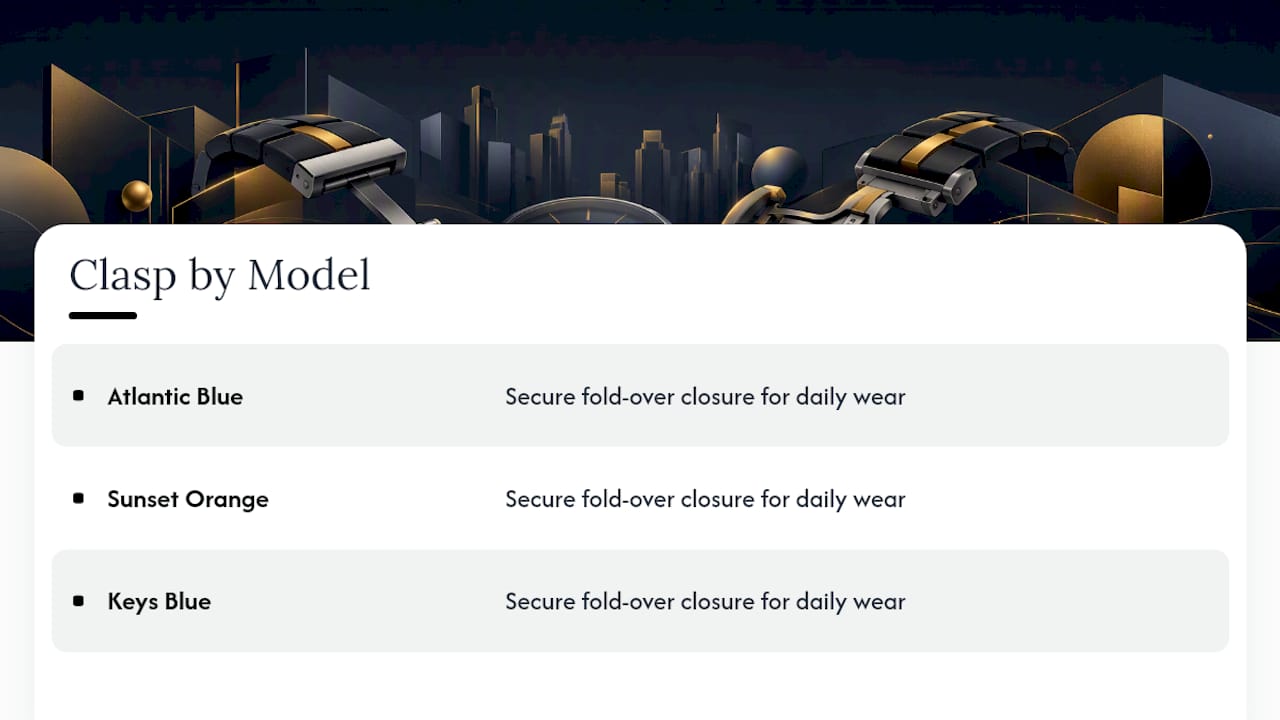
The Atlantic Blue Stainless Steel Automatic pairs its bracelet with a secure fold-over closure built for daily wear, no fumbling required before you head out the door. The Sunset Orange model uses the same reliable clasp architecture, matched to a dial bold enough to wear from morning meetings into evening plans. The Keys Blue automatic rounds out the lineup with the same fit philosophy: a bracelet that stays put, a clasp that won’t loosen on you mid-week.
If you’re comparing options across the full Miami-inspired watch collection, check the fit and sizing notes on each product page before ordering, and reach out if you need help matching wrist measurements to the right fit.
Sources
For more on clasp mechanics and options, see the deployant clasp guide from dupe.watch, the clasp types breakdown from WatchPolice, and this bracelet clasp overview from Jewels by Ares for shoppers and makers.
- Dupe
- Watch Clasp Types Explained: Tang Buckle, Deployment, Butterfly, and More | WatchPolice
- Butterfly Clasp: The Hidden Dress-Watch Folding Closure
- Deployant clasp · Time Boutique Watch Glossary