Protect Your Clasp: 5 Steps to Adjust a Mesh Strap
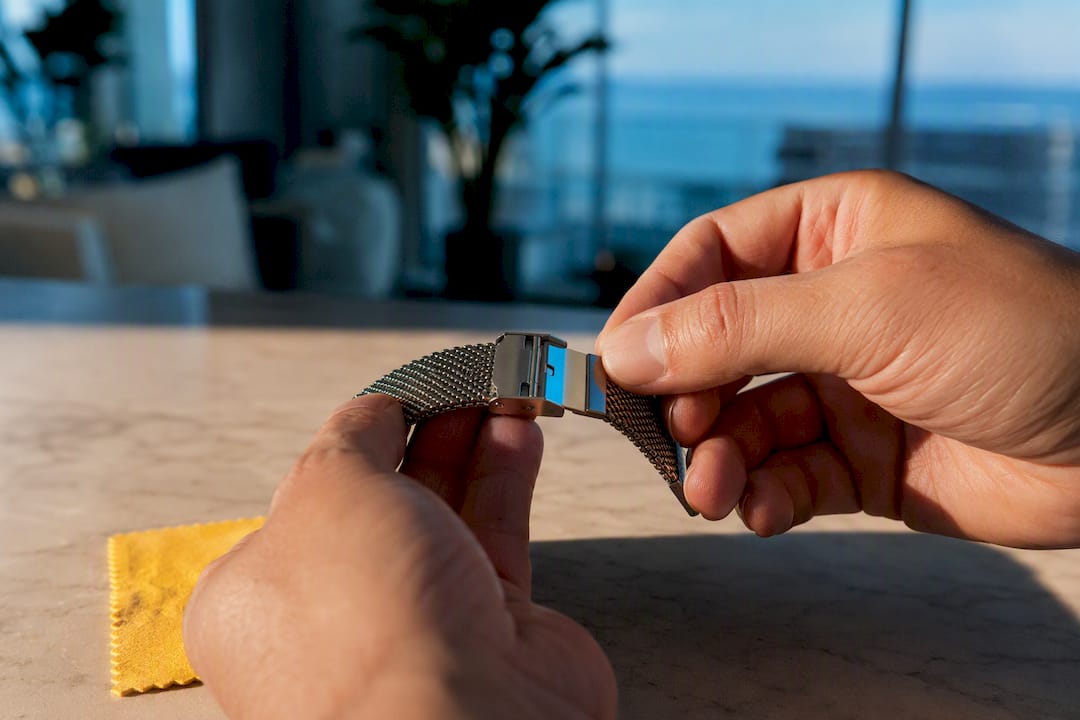
Yes, you can adjust a mesh watch strap at home. Most mesh (Milanese) bands use a sliding clasp that you unlock, move to a new position, and re-lock, all with a small flathead screwdriver or spring-bar tool. Work slowly and use light, even pressure. The clasp hinge is the weakest part of the strap, and rushing this step is the main reason it wears out early.
TL;DR:
- Proper adjustment requires gentle, steady pressure to avoid stressing the small hinge in the clasp, which is the most vulnerable part of the strap.
- Correct alignment of the protrusion with the mesh groove is critical for a secure fit, and it can take several nudges to find the proper placement.
- Regular cleaning and slow, careful adjustments extend the clasp’s lifespan and prevent issues like slipping, pinching, or failure to lock.
- Using the correct tools, avoiding forceful prying, and working in good light can prevent damage and ensure precise seating of the clasp.
- Misalignment or repeated forceful adjustments are common causes of early hardware wear, so patience and proper technique are essential for long-term durability.
Table of Contents
- How Do You Adjust a Mesh Watch Strap?
- Why Won’t My Mesh Clasp Open, Lock, or Stay Closed?
- How Do You Keep a Mesh Strap and Clasp in Good Shape?
- A Note From Mathias on Getting This Right the First Time
- What People Get Wrong About Adjusting a Mesh Strap
- Want a Mesh Strap That’s Already Dialed In?
- Where to Find Visual Guides for Mesh Strap Adjustment
- Sources
How Do You Adjust a Mesh Watch Strap?
Adjusting a mesh strap is a five-step process, and none of the steps require specialty gear. Here’s what to gather before you start, then the sequence to follow.
Tools you need:
- A small flathead screwdriver (an eyeglass repair screwdriver works well)
- A spring-bar tool, if you have one on hand
- A soft cloth or microfiber towel
- A flat, well-lit surface to work on
Pro Tip: Check the box your watch came in. Some brands include a small flathead screwdriver sized specifically for their clasp, and that beats any generic tool you’ll find in a junk drawer.
Step 1: Protect the watch and set up your workspace
Lay the watch face down on the soft cloth. This keeps the case and dial from picking up scratches while you’re working, and it stops any tiny screws or pins from bouncing off a hard counter and rolling under the couch.
Step 2: Open the clasp
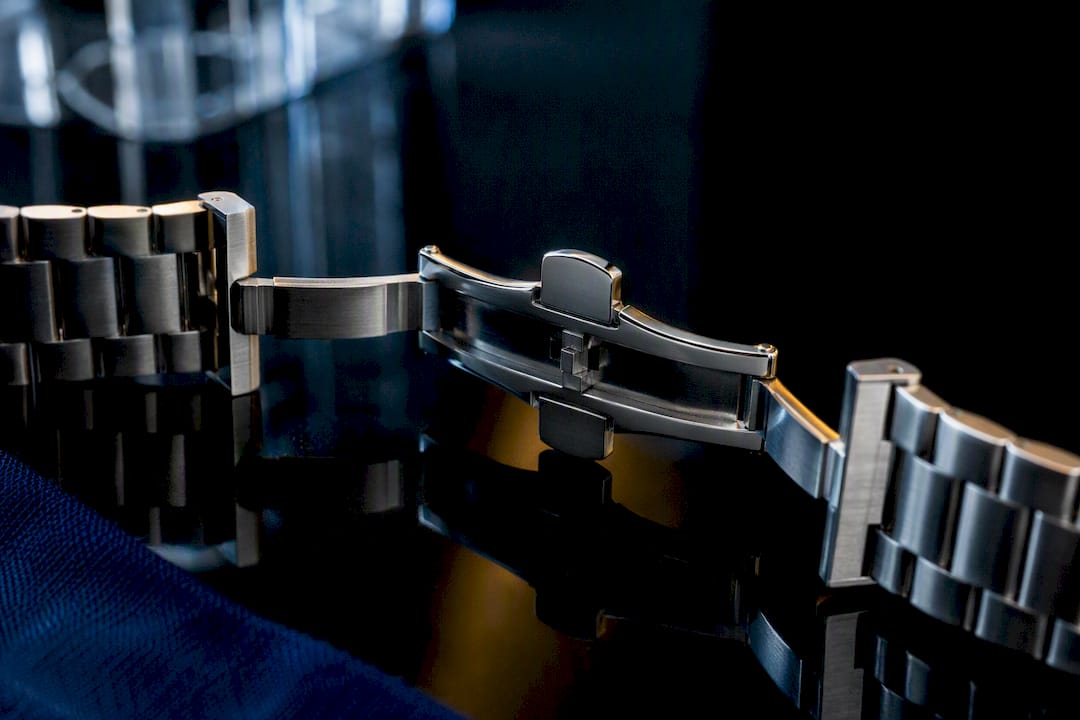
Mesh clasps typically have two parts: an outer latch and an inner latch. Lift the outer latch first, then slide your screwdriver or spring-bar tool under the inner latch and apply steady downward pressure until it releases. Don’t pry sideways. That twisting motion is exactly what stresses the tiny hinge that holds the clasp together.
Step 3: Slide the clasp to the new position
With both latches open, slide the clasp body along the mesh. Move it toward the watch head to tighten the strap, or away from the head to loosen it. Keep your fingers away from the mesh itself while you do this. Mesh links can pinch skin if you grip too close to the moving clasp.
Step 4: Align the protrusion with a groove
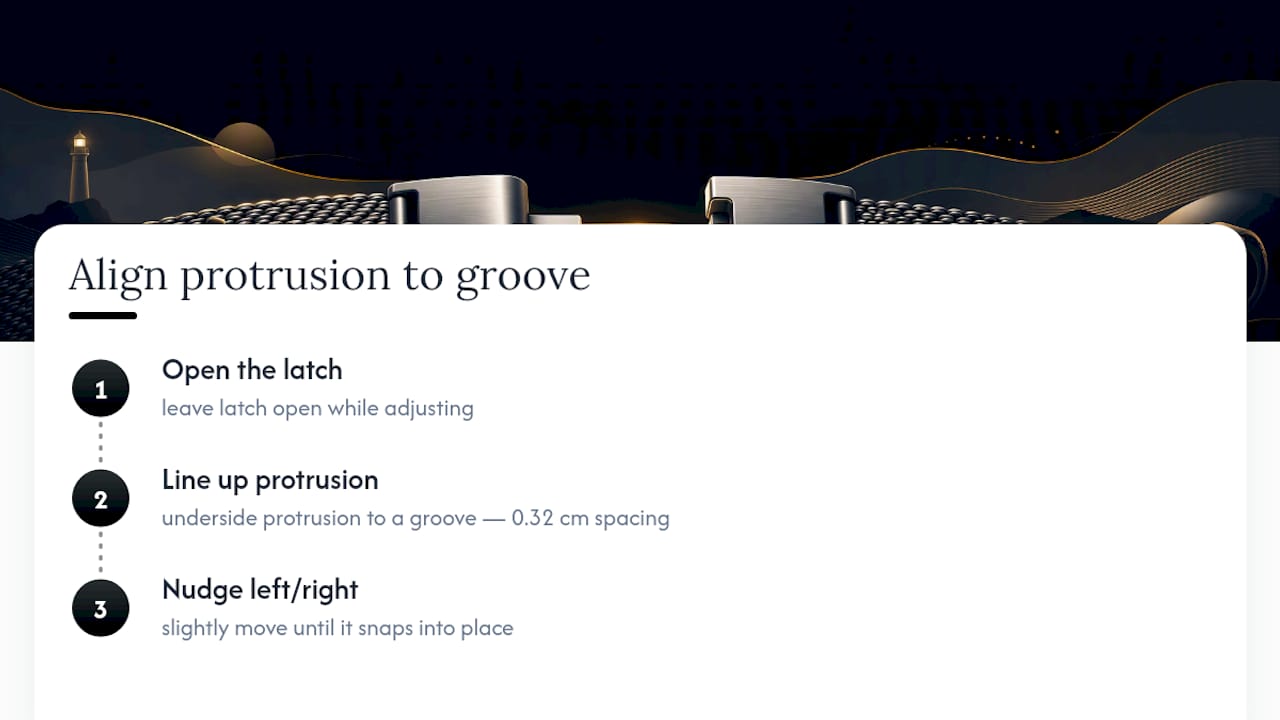
This is the step most people rush, and it’s why clasps end up loose or crooked. The underside of the clasp has a small protrusion that has to drop into one of the grooves running along the back of the mesh. Those grooves sit roughly 0.32 cm apart, so you have plenty of adjustment points to find a comfortable fit. If it doesn’t snap into place immediately, nudge the clasp slightly left and right while the latch is still open. The protrusion will settle into the nearest groove once it lines up.
Step 5: Close the clasp and test the fit
Press the inner latch closed first, then fold the outer latch over it until you hear or feel a click. Before you walk away, put the watch on and move your wrist around, rotate it, flex it, shake it gently. If the clasp holds and the strap sits comfortably with about a finger’s width of slack, you’re done.
For the full mechanical breakdown of this sequence, StrapsCo’s step-by-step guide is worth a look, particularly if you’re adjusting a mesh strap for the first time and want to see the latch mechanism up close.
Why Won’t My Mesh Clasp Open, Lock, or Stay Closed?
Most mesh strap problems trace back to one of four issues, and all of them are fixable without replacing hardware.
- Clasp won’t open: Your tool is probably too small or too large for the latch gap. Switch tools before you apply more force, and press straight down rather than at an angle.
- Clasp won’t lock: The protrusion isn’t seated in a groove. Reopen the latch slightly and nudge the clasp back and forth in small increments until it drops in and clicks.
- Clasp slips after closing: Grit and skin oil buildup can keep the protrusion from seating fully. Clean the mesh and clasp, then try again. If a latch or hinge looks visibly bent, stop adjusting and get it looked at professionally.
- Pinched skin or hair: Open the clasp more slowly next time, and keep a soft cloth between your wrist and the strap while you work.
Pro Tip: If the clasp slips even after you’ve cleaned it and confirmed the protrusion is seated, the hardware itself may be worn rather than misaligned. Repeated forcing at that point does more harm than good.
How Do You Keep a Mesh Strap and Clasp in Good Shape?
A little routine care keeps the clasp hinge from becoming the point of failure.
- Use only small, blunt tools made for watches or eyeglasses. Never use a knife blade or a box cutter to pry the latch open.
- Clean grit out of the mesh links and clasp with a soft brush and mild soap, then rinse and dry the strap fully before wearing it again.
- Once a month, give the clasp a quick security check. Bending, stiffness, or repeated slipping after correct seating are signs it’s time for professional repair rather than another adjustment.
- Store the watch flat or on a stand. Coiling a mesh strap tightly in a drawer stresses the links and can warp the clasp over time.
If you’re not sure whether your strap even uses a sliding clasp, Wynwoodblvd’s guide to bracelet clasp types walks through the differences, since fold-over and magnetic clasps need slightly different handling than a standard mesh slide.
A Note From Mathias on Getting This Right the First Time
The single biggest mistake I see is people treating the screwdriver like a lever instead of a guide. You’re not trying to pry the clasp apart with force, you’re applying gentle, steady pressure while the mesh does the actual moving. Keep a cloth between the tool and the case, work in good light, and if something feels stuck, stop and re-check the groove alignment instead of pushing harder.
If your strap still feels off after adjusting it, the issue might not be the clasp at all. Wynwoodblvd’s watch size guide can help you figure out whether you need a different band length entirely, and the watch rash guide covers why an over-tightened strap causes irritation even when the clasp itself is working fine.
What People Get Wrong About Adjusting a Mesh Strap
Most guides treat this like a one-and-done mechanical task: open, slide, close, walk away. That’s incomplete advice. The real skill isn’t the sliding, it’s the seating. A clasp that clicks shut without the protrusion fully dropped into a groove will feel secure for a day and then slip loose on a bus handrail or a gym bar, and most people blame the strap instead of the half second they skipped during alignment.
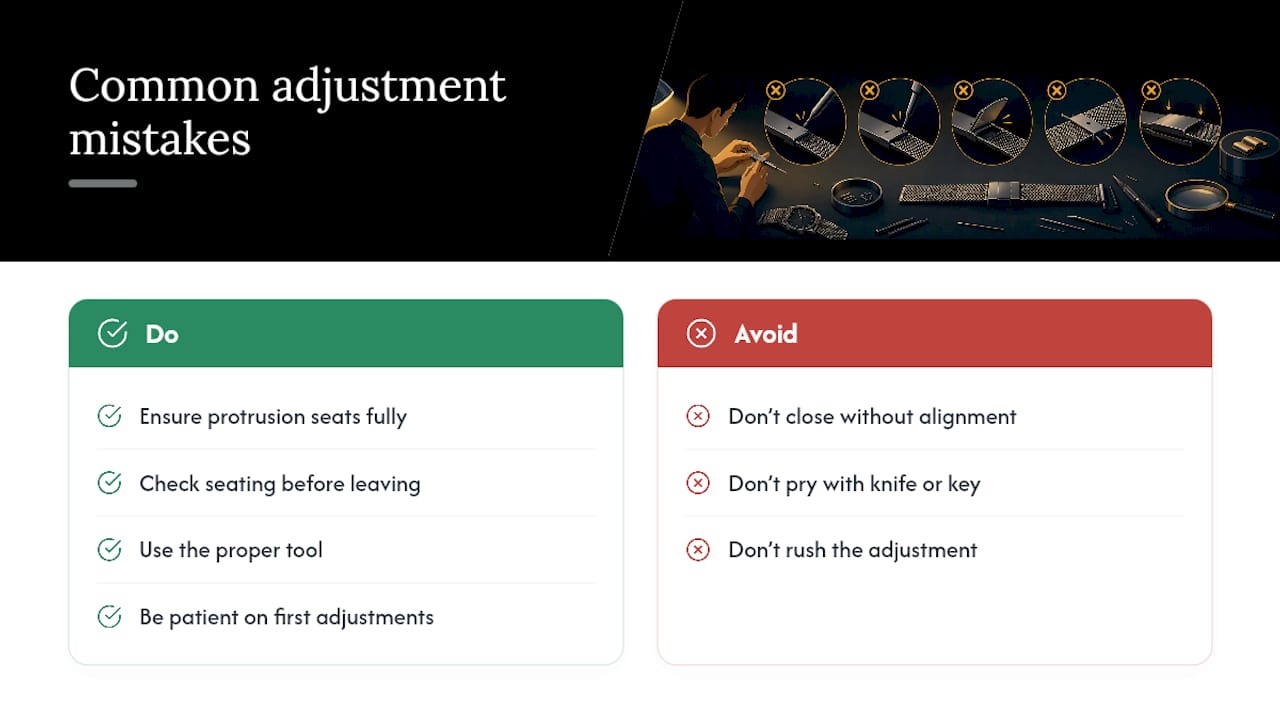
The other overlooked piece is technique consistency. One rough adjustment with a knife tip or a car key won’t destroy a hinge outright, but repeated prying with the wrong tool wears it down gradually until the latch won’t hold tension anymore. That failure looks sudden. It isn’t.
Prioritize patience over speed on your first few adjustments. Once you know what a properly seated clasp feels like, resizing takes under a minute and the strap holds that fit for months.
— Mathias
Want a Mesh Strap That’s Already Dialed In?
If you’d rather start with a mesh strap built for a precise, comfortable fit from day one, We offer stainless steel automatic watches with adjustable mesh bands that are sized for everyday wear. The Atlantic Blue Stainless Steel Automatic Watch pairs a Miami-inspired dial with a mesh strap you can size using the same steps above.

Prefer a different look? The Keys Blue watch and the Sunset Orange watch offer the same stainless steel build in different colorways, and both product pages list sizing details up front. If you get stuck mid-adjustment or want help choosing the right fit before you buy, reach out to the customer support team directly. They can walk you through strap questions or point you toward a replacement if your current clasp is past saving. Browse the full lineup on the watches collection page to compare options before you decide.
Where to Find Visual Guides for Mesh Strap Adjustment
Photos and video help if you want to see the clasp mechanism before you touch your own watch.
- WikiHow’s tutorial walks through the sliding-clasp process with step photos.
- StrapsCo’s guide includes tool recommendations and a clear breakdown of the latch sequence.
- For a broader look at clasp mechanisms across jewelry, Jewels by Ares’ clasp guide breaks down 16 clasp types and how each one handles.
Sources
- How to Adjust a Mesh Watch Strap: Easy Step-by-Step Tutorial
- How To Adjust Mesh Watch Strap Length | StrapsCo

%20bands%20use%20a%20sliding%20clasp%20that%20you%20unlock,%20move%20to%20a%20new%20position,%20and%20re-lock,%20all%20with%20a%20small%20flathead%20screwdriver%20or%20sprin...)