Wynwoodblvd: 2–8 Year Watch Warranty Explained for Buyers
A watch warranty covers manufacturing defects, not drops, spilled water, lost straps, or unauthorized repairs. It protects the movement, materials, and workmanship, not the way you treat the watch day to day. Keep your receipt and stamped warranty card, register the watch if the brand offers it, and use an authorized service center for any repair.
TL;DR:
- Most manufacturers only cover factory defects in movement, materials, and workmanship, not damage from impacts, water, or unauthorized repairs.
- Warranty claims are rarely denied if the damage stems from manufacturing issues and all documentation, like receipts and stamps, are properly provided.
- Warranty length varies from two to eight years, but registration is often required to extend coverage beyond the base period.
- Damage resulting from accidents, improper water exposure, aftermarket repairs, or missing documentation typically voids warranty coverage.
- Filing a claim successfully relies on thorough documentation, proper packaging, and adherence to the brand’s authorized repair procedures.
Table of Contents
- What a Watch Warranty Covers: Movement, Materials, and Factory Defects
- What Voids a Watch Warranty: Exclusions and Gray Areas
- How Long Watch Warranties Last and How Registration Extends Them
- Brand Warranty Patterns: Rolex, Apple, and Richemont Comparisons
- How to File a Watch Warranty Claim Step by Step
- Verifying Warranty Coverage on a Pre-Owned Watch
- Simple Habits That Keep Your Watch Warranty Valid
- When You Need More Than a Manufacturer Warranty
- How Wynwoodblvd Handles Warranty, Registration, and Care
- Why the Fine Print Matters More Than the Marketing
- Explore Wynwoodblvd’s Miami-Inspired Watches and Jewelry
- Where to Verify the Details
- Sources
What a Watch Warranty Covers: Movement, Materials, and Factory Defects
A warranty exists to catch problems that came from the factory, not problems that came from you. If a component fails because of how it was made rather than how it was used, the brand fixes it.
Movement issues make up the bulk of legitimate claims. An automatic movement that stops keeping accurate time within weeks of purchase, or a quartz movement that dies well before its battery should, points to a defect rather than wear. Brands typically inspect the movement first, since that inspection determines whether the rest of the claim moves forward.
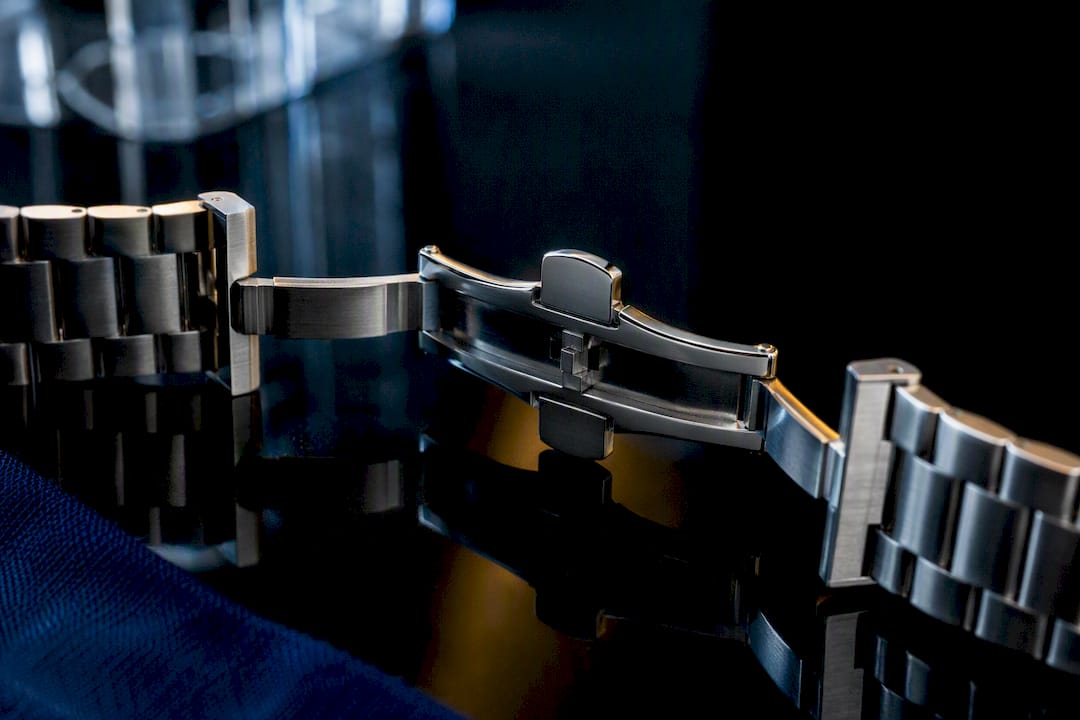
Materials and workmanship cover a wider net: a case back that won’t seal properly, a dial with printing defects, hands that fall out of alignment, a crystal with an air bubble trapped under the surface, or a clasp that fails at the weld. None of these are things you did. They’re things that shouldn’t have left the factory that way.
Water resistance sits in a gray zone worth calling out separately. If a watch rated for 100 meters fails a pressure test with no signs of impact or misuse, that’s a factory seal problem, and it’s covered. If the same watch fails because someone showered with a compromised gasket that hadn’t been serviced in six years, that’s wear, and it isn’t.
What you can typically expect a brand to do once a claim is approved:
- Repair using original manufacturer parts whenever those parts are available.
- Replace the component (movement, crystal, clasp) if a repair isn’t feasible.
- Full watch replacement in rare cases where a defect is systemic to a production batch.
- Re-inspection and testing before the watch ships back to you, including a fresh water-resistance check.
A manufacturing defect claim rarely gets denied outright when the paperwork is solid and the damage pattern matches a factory issue rather than an accident.
What Voids a Watch Warranty: Exclusions and Gray Areas
Most warranty denials come down to one of four things, and understanding them ahead of time saves you a frustrating shipping round trip.
- Accidental damage. A cracked crystal from a fall, a bent lug from an impact, or a dial cracked from thermal shock reads as trauma, not defect, and gets excluded almost every time.
- Improper water exposure. Wearing a 30-meter rated watch in a pool or diving with a watch never rated for diving voids coverage even if the watch looks undamaged.
- Consumables. Batteries, straps, and bracelets wear out on a schedule and are treated as maintenance items rather than defects.
- Unauthorized repairs. Opening the case yourself, or having a non-authorized jeweler touch the movement, typically ends coverage immediately, even for an unrelated future problem.
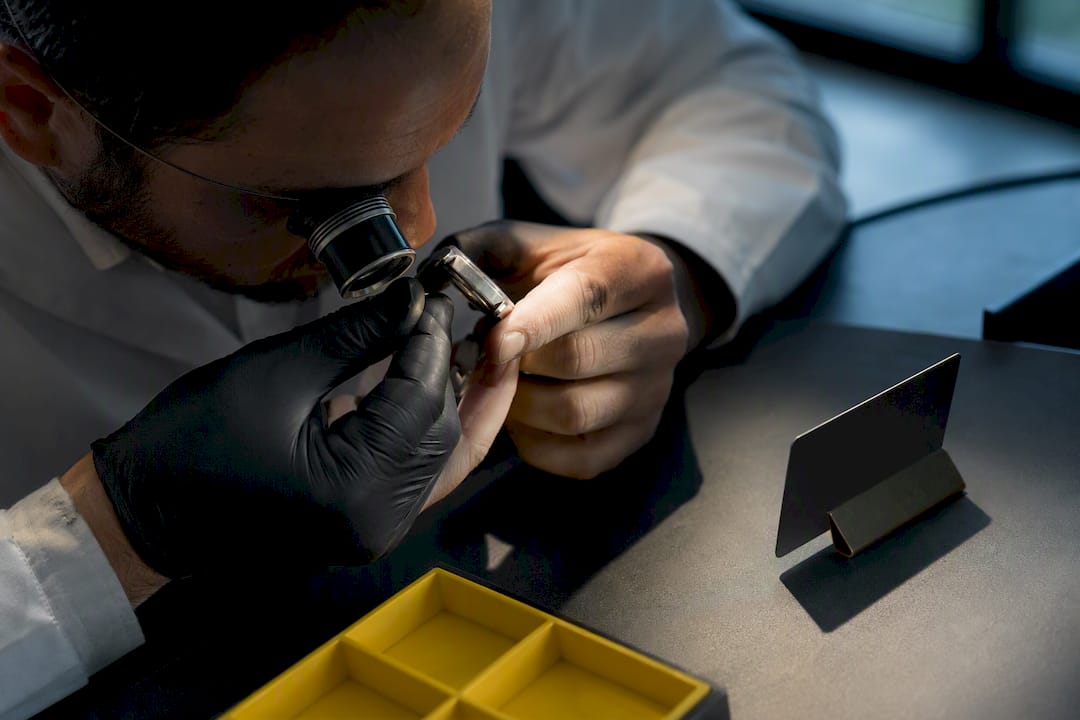
The gray areas are where documentation earns its keep. A watch that stops running with no visible damage puts the burden on the authorized service center to determine whether the failure looks like a defect or concealed misuse. Technicians examine the case for micro scratches consistent with a drop, check the movement for water intrusion, and look for aftermarket parts that suggest a prior repair outside the network.
Pro Tip: Never let a local jeweler “just take a quick look” at a warrantied watch, even for something as simple as a stuck crown. That single visit can be enough for a brand to flag the case as tampered with, and there’s rarely a way to undo that flag once it’s on file.
When the evidence is ambiguous and the watch shows no impact damage, brands often lean toward giving the owner the benefit of the doubt, particularly when the service history and documentation are complete and consistent.
How Long Watch Warranties Last and How Registration Extends Them
Warranty length varies more than most buyers expect, and the range tells you something about how a brand thinks about long-term ownership.
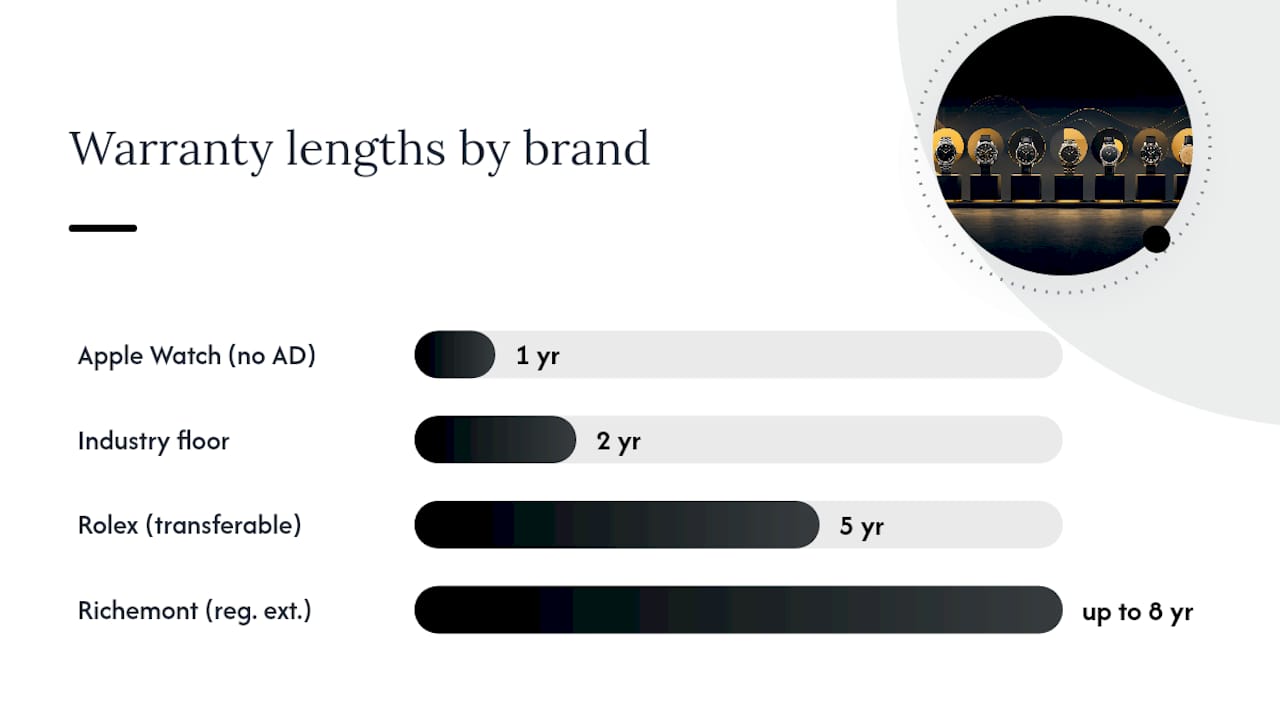
The typical span runs from two to eight years, depending on the brand and category. Mainstream fashion and fine watches often sit at the two-year floor, mirroring general consumer-goods expectations. Mid-tier and luxury Swiss brands push further out, and some Richemont-group brands now extend coverage up to eight years through their registration programs, while Rolex and Omega generally sit around five years as their standard baseline.
Registration is the mechanism that turns a short base warranty into a longer one. Oris, for example, offers a base warranty that extends to 3, 5, or even 10 years depending on the model, but only when the watch is registered and, in some cases, only when it was purchased through an authorized dealer in the first place. Skip the registration step, and you’re left with whatever the shorter default term happens to be.
A few things worth knowing about how registration actually works:
- Most brands give you a window (often 30 to 90 days from purchase) to register online before the extended terms lock in.
- Registration usually requires the serial number, purchase date, and dealer name, all of which should match your receipt exactly.
- Some programs tie the extension to your first authorized service visit rather than the purchase date itself.
- A missed registration window doesn’t always mean permanent loss of the extension. Some brands allow late registration with proof of purchase.
There’s also a distinction worth separating clearly: a manufacturer warranty comes from the brand itself and follows the watch regardless of where you bought it, while a retailer or dealer warranty is a separate promise from the store, layered on top. A dealer warranty might cover things the manufacturer doesn’t, like a 30-day exchange window, but it disappears the moment you resell the watch. Before buying, check the product page for the manufacturer’s stated term and any registration deadline. If those details aren’t listed, ask the dealer directly. A watch marketed as having lifetime warranty coverage deserves particular scrutiny, since “lifetime” almost always comes with conditions worth reading before you buy.
Brand Warranty Patterns: Rolex, Apple, and Richemont Comparisons
Looking at how specific brands structure their warranties makes the general rules concrete.
Rolex offers a five-year international warranty on new watches, and it’s transferable, meaning a pre-owned Rolex can still carry active coverage if it’s within that five-year window from the original purchase date and the paperwork supports it. Rolex doesn’t require separate registration for the base term, which is part of why the brand’s warranty card carries so much weight in resale.
Apple Watch runs on a completely different model, since it’s an electronic device with a mechanical case rather than a watch with electronics inside it. Apple provides a one-year limited hardware warranty in the U.S., covering defects in materials and workmanship, not battery degradation from normal use or cracked screens from drops. AppleCare extends that window and changes what repair options are available, including accidental damage coverage that a standard manufacturer warranty never includes.
Richemont-group brands (which include several well-known Swiss houses) tend to favor registration-based extension programs that reward owners who service through the authorized network, often stretching base coverage well past the industry’s typical two-year floor.
What this comparison tells buyers: mainstream electronics warranties are short and narrow by design, expecting you to buy a separate protection plan if you want real coverage. Traditional mechanical watch warranties run longer and often expect nothing from you beyond keeping your paperwork and registering promptly. If you’re comparing a Miami-inspired automatic against a smartwatch on warranty terms alone, the mechanical watch usually wins on both length and simplicity, though it demands more discipline in service and record-keeping to keep that coverage active.
How to File a Watch Warranty Claim Step by Step
Filing a claim goes faster when you treat it like a paperwork exercise first and a repair request second.
- Gather your documentation. You need the original sales receipt, the stamped warranty card (the authorized-dealer stamp matters as much as the card itself), and any prior service records if the watch has been serviced before.
- Contact the authorized dealer or brand service center first. Don’t ship a watch cold. Most brands want you to open a case number or get a return authorization before anything moves.
- Package and ship using the brand’s specified method. This almost always means insured, tracked shipping, sometimes through a prepaid label the brand provides once your case is confirmed.
- Wait for inspection. The service center examines the watch, confirms the defect matches a covered category, and issues either a warranty repair order or a paid-repair estimate if it falls outside coverage.
- Track the turnaround. Simple warranty repairs might take a few weeks. Complex movement issues, or repairs waiting on a back-ordered part, can stretch into a few months.
- Review the outcome. If the repair is denied, you’ll typically get a written estimate for paid repair. You’re not obligated to accept it, and you can request the watch back unrepaired if you want a second opinion elsewhere.
Documentation is the single strongest predictor of a smooth claim. Owners who show up with a complete receipt, an authorized-dealer stamp, and a clean service history rarely get stuck arguing about fault. Owners missing any one of those three pieces face a slower, more skeptical review, even when the defect itself is obvious.
Set your expectations for timing accordingly. A watch that needs a new crystal might come back in two weeks. A watch needing a movement replacement, especially on a model no longer in current production, can sit for months while parts get sourced.
Verifying Warranty Coverage on a Pre-Owned Watch
Buying secondhand means the warranty question isn’t abstract anymore. It’s the first thing you should check before you check the price.
Start with the card itself. The stamped date should be legible, match the receipt if one exists, and carry an actual authorized-dealer stamp rather than a blank space where one should be. A warranty card with no stamp is a red flag regardless of how convincing the rest of the listing looks, since unstamped cards are one of the most common signs of a gray-market sale even when the watch itself is authentic.
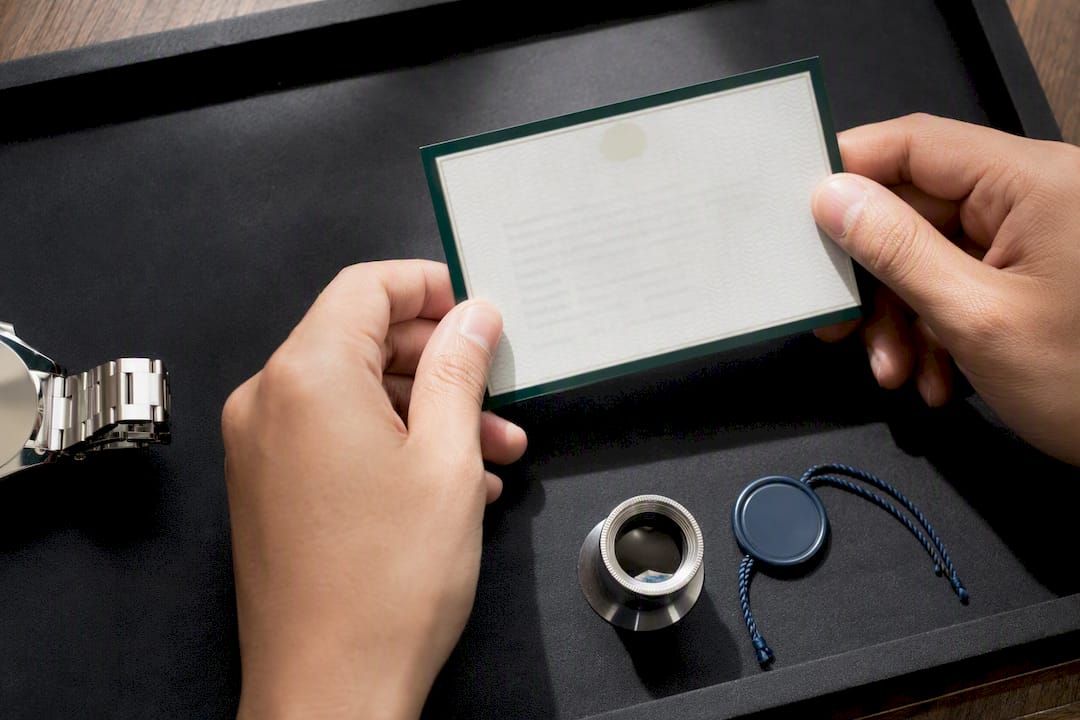
Transferability rules vary by brand. Some, like Rolex, let coverage follow the watch to a new owner automatically within the original term. Others tie the warranty to the original purchaser and require a formal transfer request, sometimes with a fee, before a new owner is recognized.
Gray-market watches (those sold outside a brand’s authorized retail network) frequently carry no honorable warranty at all, even with a card in the box. Watch for these signs before buying pre-owned:
- A warranty card with no authorized-dealer stamp or an illegible one.
- A seller who can’t produce an original receipt or explain the sales history.
- A price that seems too low for the model, often a hint the watch came through unauthorized channels.
- No service records despite the seller claiming multiple years of ownership.
If you’re selling rather than buying, keeping that paperwork organized also matters for trade-in and resale value. Services that buy used electronics, including smartwatches sold for cash, typically ask for proof of ownership and original documentation before finalizing an offer, which is the same standard a private buyer should expect from you.
Simple Habits That Keep Your Watch Warranty Valid
Coverage stays active largely because of what you don’t do, not because of anything dramatic you have to remember.
Stick to authorized service centers for anything beyond a battery swap on a quartz piece, and get water resistance tested every one to two years if you swim or shower with the watch regularly, since gasket seals degrade slowly and invisibly. Keep every service receipt in one folder, physical or digital, alongside the original warranty card. That folder becomes your evidence file the moment anything goes wrong.
Day-to-day habits matter more than people expect. Always pull the crown out fully before adjusting the date or time rather than forcing it in a partial position, since that single habit accounts for a surprising share of crown-stem failures. Avoid setting the watch down hard on stone or tile counters. Rinse it after saltwater exposure even if it’s rated for swimming.
Pro Tip: A complete service history doesn’t just protect your warranty. It becomes a resale asset. A watch with three documented authorized visits sells faster and for more than an identical model with no paper trail, because the next buyer is inheriting your due diligence, not gambling on it.
When You Need More Than a Manufacturer Warranty
A manufacturer warranty and a protection plan solve different problems, and confusing the two is where a lot of owners get caught off guard.
Retailer protection plans typically pick up where the manufacturer warranty leaves off, covering mechanical or electronic failures for an extended period after the original term expires. What they exclude is just as important: loss, theft, and accidental damage almost never fall under a standard protection plan, even though those are the failures owners worry about most.
That gap is exactly what insurance is for. A dedicated policy, whether a rider on homeowner’s insurance or a standalone jewelry policy, covers the drop, the theft, and the lost strap that no warranty or protection plan will touch.
A few things worth weighing before you buy either:
- Protection plans can sometimes cover pre-owned or refurbished watches, but eligibility rules vary and should be confirmed before purchase, not after a failure.
- Claims on protection plans generally require the same documentation as a manufacturer claim: receipt, plan agreement, and sometimes proof of prior service.
- For a watch under roughly $2,000, a protection plan’s cost may not justify the payout ceiling.
- For higher-value pieces, insurance tends to make more financial sense than a protection plan, since the coverage scope is broader.
How Wynwoodblvd Handles Warranty, Registration, and Care
Every watch is built from stainless steel with consistent manufacturing standards that support reliable movement and materials. Warranty details for each piece, including coverage and support contact information, are usually provided on product pages to inform buyers.
If you own a Wynwoodblvd watch, the same rules in this guide apply. Register your purchase promptly, keep your receipt in a place you’ll actually remember, and route any repair need through the brand’s own support channel rather than a local jeweler. That keeps your options open if a movement or material issue ever comes up. Because the case and bracelet on every Wynwoodblvd model are built from the same 316L stainless steel used across the line, corrosion and finishing defects are treated the same way regardless of which colorway or collection you’re wearing. The same standard applies to Wynwoodblvd’s custom-branded corporate orders, where bulk buyers receive the same documentation practices as individual customers, just scaled to order size.
Why the Fine Print Matters More Than the Marketing
The biggest misconception buyers carry into a warranty conversation is that “warranty” means “insurance.” It doesn’t, and treating it that way is how people end up angry at a brand for denying a claim the brand never promised to cover in the first place. A warranty is a narrow promise about manufacturing quality, not a broad promise about your watch’s future.
The conventional advice, buy from a brand with a long warranty term, isn’t wrong, but it’s incomplete. A ten-year warranty you never register is worth exactly as much as a two-year warranty, which is to say, not much. The length on the box means nothing without the paperwork behind it.
If there’s one thing worth prioritizing above all else, it’s building the habit of documentation from day one: register immediately, keep the receipt somewhere you won’t lose it, and use authorized service every time. That habit does more for your coverage than any brand’s stated warranty term ever will, and it’s also the single biggest factor in what a pre-owned buyer will pay for your watch down the line.
— Mathias
Explore Wynwoodblvd’s Miami-Inspired Watches and Jewelry
Every automatic watch and pendant is sold with recommended documentation practices included from the start. Warranty terms and registration information are typically presented on product pages to clarify coverage details.
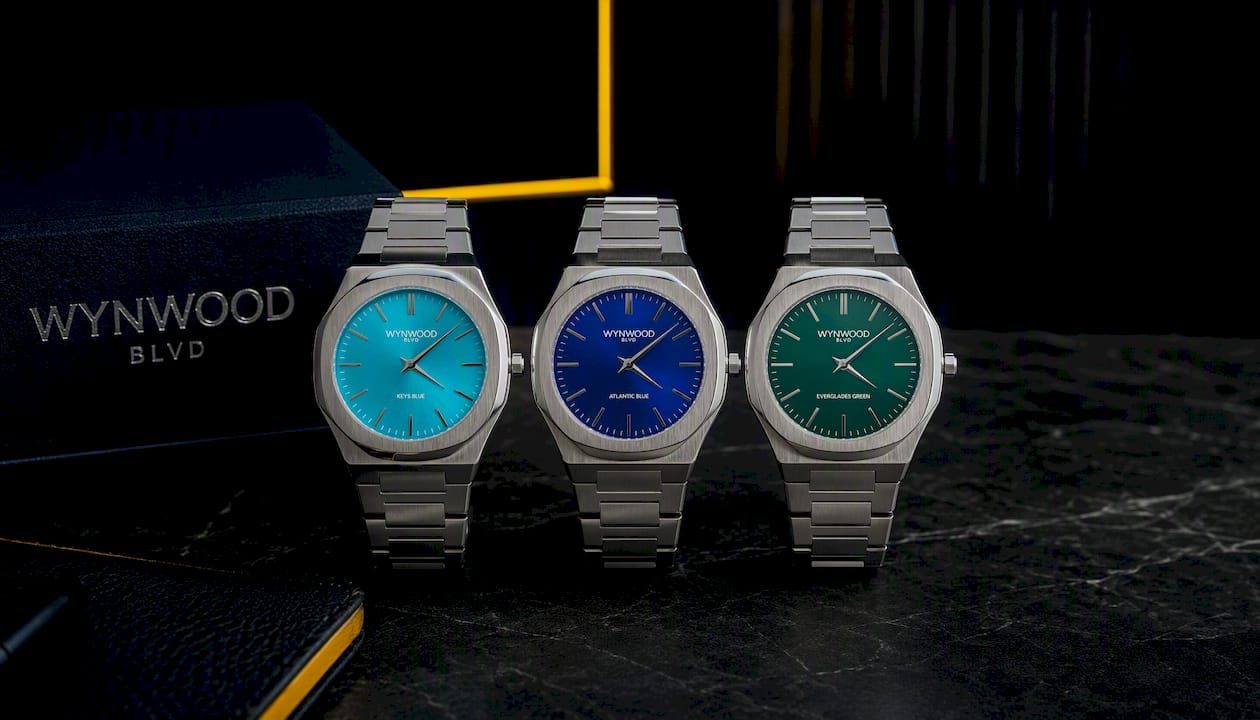
If you’re drawn to the coastal color story, the Atlantic Blue Stainless Steel Automatic Watch and the Keys Blue automatic both carry the brand’s standard stainless steel build. For something warmer, the Sunset Orange automatic pairs the same movement quality with a bolder dial. If jewelry fits your style better than a watch, the Palm Tree Charm in signature silver and the gold classic palm tree pendant are built from the same premium stainless steel as the watch line.
Customers are advised to register their purchases through provided confirmation links and to contact support for any warranty questions. Browse the full watch collection to compare models side by side before you decide.
Where to Verify the Details
For the exact wording on any brand’s coverage, treat the manufacturer’s own legal warranty page as the final word over any third-party summary, including this one. Useful starting points include Apple’s official U.S. warranty terms and Oris’s warranty help center, both of which lay out registration requirements in plain language.
Sources
- Guide to Understanding Watch Warranties - Chronoexpert
- Watch warranties & what they mean - FASHIONPHILE Academy
- What does the warranty cover? – Oris helpcenter