When 5 ATM Is Enough and When 10 ATM Matters for Everyday Watches
For everyday non-swimming use, 5 ATM is usually enough. For regular swimming or snorkeling, choose 10 ATM instead. Both numbers come from the same lab standard, ISO 22810, which tests watches under still water pressure, not real swimming conditions. This guide breaks down what the numbers mean and how to match one to your routine.
TL;DR:
- Watches rated at 5 ATM are suitable for rain, hand-washing, and light splashes but should not be used for regular swimming or diving activities.
- A 10 ATM rating provides safer protection for swimming, snorkeling, and water sports by handling active water contact better than 5 ATM, but is not suitable for diving.
- The pressure tested during lab ratings does not account for dynamic forces like waves or impact, so real-world activity often exceeds the watch’s tested depth by at least one rating tier.
- Proper maintenance, including rinsing and resealing every few years, is essential to preserve water resistance as gasket performance degrades with age and exposure.
- When selecting a watch, consider your actual water activities rather than just the marketing rating, and prioritize features like screw-down crowns for better long-term water sealing.
Table of Contents
- What ATM and bar actually mean on a watch dial
- How 5 ATM and 10 ATM perform activity by activity
- How to pick the right rating for your routine
- Why water resistance fades and how to protect yours
- Why WYNWOOD BLVD builds water resistance into everyday design
- What actually matters when you’re comparing ratings
- Watches and charms built for your water habits
- Sources
- FAQ
What ATM and bar actually mean on a watch dial
ATM stands for atmosphere, a pressure unit. One ATM equals one bar, and both describe the pressure a watch case can handle in a controlled lab test, not a depth you can safely reach with it on your wrist.
Here is what the two common ratings translate to:
- 5 ATM equals 5 bar and about 506.6 kilopascals of test pressure, according to a pressure conversion reference. This nominal 50 meters figure is a pressure-equivalent lab test value, not a guaranteed safe depth.
- 10 ATM equals 10 bar and about 1,013.3 kilopascals of test pressure, based on the same conversion source. This nominal 100 meters figure is a pressure-equivalent lab test value, not a guaranteed safe depth.
- Both figures come from ISO 22810, the standard for ordinary water-resistant watches, which is different from ISO 6425, the standard written specifically for scuba diving watches.
The meter number on your dial is a pressure-equivalent test result, not a depth rating. A watch marked 100 m was tested against pressure similar to 100 meters of still water, but that does not mean you should wear it 100 meters underwater. ISO’s own explanation draws a clear line: ISO 22810 covers watches meant for daily use and swimming, while ISO 6425 covers instruments built for actual diving.
How 5 ATM and 10 ATM perform activity by activity
The clearest way to choose a rating is to match it to what you actually do, not to the biggest number you can find.
- Rain and washing hands: both 5 ATM and 10 ATM handle this without concern.
- Showering: 5 ATM can usually take an occasional splash, but soap and heat speed up seal wear, so it is not ideal for daily showers.
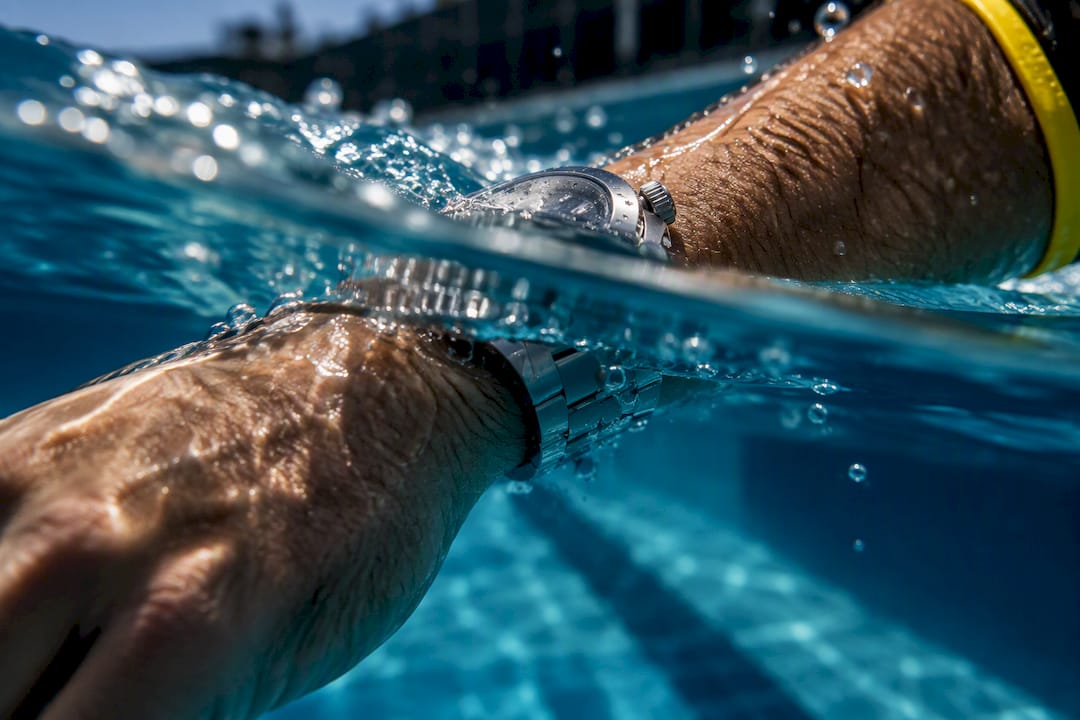
- Pool swimming: 10 ATM is the safer minimum; 5 ATM is commonly considered unsuitable for regular swimming.
- Snorkeling: 10 ATM is the practical floor, since surface swimming adds constant arm movement and wave contact.
- Scuba diving: neither rating qualifies a watch for diving. That requires a watch built and tested to ISO 6425, according to ISO’s guidance.
- High-impact watersports like jet skiing or water skiing: 10 ATM or higher is advisable, since impact forces on entry spike well past still-water pressure.
The gap between the lab number and real life comes down to dynamic pressure. A static test measures pressure in calm water at a fixed temperature. Swimming does not work that way: every stroke, jump, or wave hit creates a pressure spike far above what the still-water test measured. A watch resistance guide notes that a 5 ATM watch surviving a lab test equal to 50 meters of static pressure does not mean it can handle the repeated force of active swimming.
A useful rule of thumb: treat your watch’s real-world safe activity as one tier below its lab rating. A practical guide to water resistance ratings backs this up, recommending 10 BAR or higher for confident swimming and snorkeling, while reserving 5 ATM for rain, sinks, and light surface contact rather than repeated active swimming.
If you swim on a regular basis, pick 10 ATM or higher and skip the guesswork entirely.
How to pick the right rating for your routine
Match your habits to a rating before you fall in love with a dial color.
- Desk-based, rarely near water: 5 ATM covers rain, hand-washing, and the occasional splash without issue.
- Occasional swimmer, a few pool days a year: lean toward 10 ATM for margin, since you cannot always predict how active you will be in the water.
- Regular swimmer or snorkeler: 10 ATM is close to the practical minimum, based on the activity guidance above.
- Water-sports enthusiast, jet skiing or wakeboarding: look for 10 ATM or higher, since impact entries push pressure past a calm-water test.
Before buying, ask yourself a few direct questions: Will you shower with the watch on? Do you swim laps or just wade? Do you ride jet skis or boats where you might take a splash at speed? Your honest answers, not the biggest number on the box, should decide the rating you need.
Beyond the number itself, a few features affect how well a watch actually holds up to water exposure: a screw-down crown that seals tighter than a push-pull crown, sealed pushers on any chronograph buttons, and solid stainless steel case construction. Our guide to scratch-resistant watch materials covers how case finish plays into long-term durability alongside water resistance.
Pro Tip: Check the spec sheet for both the ATM number and the crown type before you buy: a screw-down crown at 5 ATM often performs more reliably day to day than a push-pull crown rated 10 ATM.
Why water resistance fades and how to protect yours
Water resistance is not permanent. The rubber gaskets that seal the case, crown, and back compress and harden over years, and heat, soap, and sudden temperature swings speed that up.
A few habits protect your rating over time:
- Rinse the case with fresh water after any saltwater exposure.
- Skip hot showers and saunas with the watch on, since heat accelerates gasket wear.
- Never operate the crown or pushers while the watch is wet or submerged.
- Get the case pressure-tested after a battery change, a service, or a hard knock.
- Plan for a reseal roughly every 2 to 3 years if you swim often, a maintenance window suggested by watch care guidance.
If you spend time around boats, the same logic applies to gear beyond your watch. Sailboat safety guidance for new owners makes a similar point about routine checks before problems show up.
Why WYNWOOD BLVD builds water resistance into everyday design
We design every WYNWOOD BLVD watch with real days in mind, not just a spec sheet. A watch inspired by Miami should survive a beach afternoon, a boat ride, or a sudden downpour without a second thought. That means picking case construction and seals that match how our pieces actually get worn, from office days to Key West weekends.
A guide to water-resistance ratings walks through how different models handle everyday exposure versus more active water use.
— Mathias
What actually matters when you’re comparing ratings
The biggest mistake in this decision is treating the meter number as a promise instead of a test result. A watch marked 100 m sounds like a depth guarantee, and that framing sells watches, but it does not describe what happens when you dive into a pool or get knocked by a wave. The honest comparison is not “5 ATM versus 10 ATM” as abstract numbers. It is “occasional splashes versus active water time.”

Conventional advice often stops at the conversion table: here is what ATM means, here is the meter equivalent, done. That misses the part that actually protects your watch: aging seals, forgotten reseals, and crowns pressed underwater out of habit. A watch bought with the right rating can still fail early if nobody checks the gaskets for three years.
If you take one thing from this guide, prioritize honesty about your own habits over the number on the box. Buy for how you actually live near water, then maintain the watch like the rating has an expiration date, because it does.
— Mathias
Watches and charms built for your water habits
Once you know your rating, matching a piece to your lifestyle gets simple. For everyday wear with light water exposure, the Sunset Orange Miami Inspired Watch and the Keys Blue Miami Inspired Watch bring Miami-inspired color to daily rotation.

- For beach days and casual water contact, the Atlantic Blue Stainless Steel Automatic Watch and the Everglades Green Miami Inspired Watch pair color with practical build quality.
- For jewelry that skips the water question entirely, the Palm Tree Charm in Silver Signature and Palm Tree Charm in Gold Classic add a Miami accent without a water rating to track.
Always check the specific spec sheet on the product page and follow the aftercare steps above. Browse the full Miami Inspired Watches collection to find the rating and style that fits your routine.
Sources
- ISO 22810:2010 - Horology — Water-resistant watches
- Watch Water Resistance: ATM 5 vs ATM 10 vs ATM 100 | Compare Smartwatch
- IP67 vs 5ATM vs 10BAR Water Resistance Guide
FAQ
Can I swim with a 5 ATM watch?
A 5 ATM watch can usually handle light splashes and short, casual contact with water, but it is not built for regular swimming. Active movement in water creates pressure spikes beyond what the static lab test covers, so 10 ATM is the safer choice for swimmers.
Is a 5 ATM water rating good?
A 5 ATM rating is good for daily life: rain, hand-washing, and the occasional light splash. It falls short for swimming or snorkeling, where 10 ATM is the more appropriate minimum.
Can you swim with 10 ATM?
Yes, a 10 ATM watch is generally suitable for pool swimming and snorkeling. It is still not a diving watch, since that requires certification under ISO 6425 rather than the ISO 22810 standard that governs ordinary water-resistant watches.
How deep in the ocean is 5 ATM?
The 5 ATM rating corresponds to a nominal 50 meters of static test pressure, not a safe ocean depth. ISO 22810 treats this figure as a lab equivalent, and real ocean conditions with waves and currents behave very differently from a still water tank.