Does Stainless Steel Tarnish? Jewelry Care Made Simple
Stainless steel does not tarnish the way silver or brass does, but it can develop surface discoloration under specific conditions. That discoloration is almost always cosmetic and reversible with the right cleaning approach.
- The passive film protects it. Stainless steel contains at least 10.5% chromium, which reacts with oxygen to form an invisible chromium oxide layer that blocks classic tarnish and rust.
- Most discoloration is surface-level. Sweat, mineral deposits, transferred iron particles, or chemical exposure cause the majority of what people call stainless steel tarnish. None of these affect the metal underneath.
- Your immediate move: wipe the piece with a damp soft cloth. If the mark lifts, it is a deposit. If it stays, read on.
Key Takeaways
Stainless steel resists tarnish because of a self-healing chromium oxide passive film, and most discoloration you see on jewelry is cosmetic, reversible, and caused by surface contaminants rather than corrosion of the metal itself.
| Point | Details |
|---|---|
| Passive film is self-healing | The chromium oxide layer rebuilds when exposed to oxygen; store pieces in breathable pouches, not sealed bags. |
| Grade 316L outperforms 304 | Molybdenum in 316L improves chloride resistance, making it better for daily wear, sweat, and water exposure. |
| Clean monthly, prevent daily | A soft cloth wipe after each wear and a soap-and-brush clean monthly prevents most buildup. |
| Never use steel wool or bleach | Steel wool deposits iron particles that rust; bleach attacks the passive film directly. |
| Wynwoodblvd uses stainless steel | Wynwoodblvd designs watches and jewelry in stainless steel built for coastal and active wear, with care guidance available on request. |
Table of Contents
- Why does stainless steel resist tarnish?
- Common causes of discoloration on stainless steel jewelry
- Which stainless steel grades resist tarnish best?
- How to remove discoloration from stainless steel jewelry
- A simple cleaning protocol you can follow right now
- How to prevent stainless steel from tarnishing
- When is discoloration more than surface tarnish?
- The iron-transfer mistake most people never catch
- Why Wynwoodblvd chooses stainless steel for every piece
- Wynwoodblvd stainless steel jewelry built for real wear
- A note on this guide
- The part most care guides skip
- Sources
Why does stainless steel resist tarnish?
The answer is one thin, invisible layer. When chromium in the alloy meets oxygen in the air, it forms a chromium oxide film on the surface. That film sits between the metal and everything that would normally corrode it: moisture, acids, salts. You cannot see it, feel it, or scratch it off with your fingernail. It is simply there, doing its job.
What makes it remarkable is that it self-heals. Scratch the surface and the chromium in the exposed metal reacts with oxygen again, rebuilding the protective layer within hours. No intervention needed, as long as oxygen can reach the surface.
That last part matters for how you store your jewelry.
- Airtight, moisture-trapping containers slow re-passivation because oxygen cannot circulate freely.
- Dry, open-air storage (a soft pouch left slightly open, a jewelry tray) lets the film rebuild after everyday wear.
- Prolonged contact with damp materials, like a wet cloth left wrapped around a bracelet, works against the same process.
Pro Tip: Store stainless steel pieces in a soft, breathable pouch rather than a sealed plastic bag. Airflow lets the passive film stay active and self-repair between wears.
Common causes of discoloration on stainless steel jewelry
Not every dark spot or dull patch means the metal is failing. Most of the time, something external landed on the surface. Here is how to read what you are seeing.
Surface contamination from iron particles is the most misunderstood cause. If you cleaned a piece with steel wool or stored it near carbon steel tools, tiny iron fragments can embed in the surface. Those fragments rust on their own and leave orange-brown streaks that look exactly like stainless steel tarnish. The stainless steel itself is fine. The rust belongs to the foreign particles.
Sweat and body oils leave a film that dulls the finish over time. The salt in sweat is mildly corrosive, especially on lower-grade alloys. Pieces worn daily during workouts or in hot weather show this faster.
Chlorine and salt water are more aggressive. Pool chemicals and ocean spray can degrade the passive film on prolonged or repeated exposure, particularly on grade 304 pieces.
Harsh chemicals such as bleach, concentrated acids, and alcohol-heavy perfumes attack the surface directly. Even a brief splash can leave a dull patch.
Plating wear applies to gold-plated or PVD-coated stainless steel. The base metal underneath is fine, but the coating thins over time and the color shifts.
Quick diagnostic:
- Does the mark wipe off with a damp cloth? It is likely a mineral deposit or surface dirt.
- Is it orange-brown and slightly raised? Likely transferred iron, not corrosion of the steel itself.
- Is it a dull, flat gray that covers a wide area? Chemical exposure or plating wear.
- Is the surface pitted or rough to the touch? That is actual localized corrosion and needs professional attention.
Warning: Never use steel wool, abrasive scouring pads, or bleach on stainless steel jewelry. Steel wool deposits iron particles that rust. Bleach attacks the passive film directly.
Which stainless steel grades resist tarnish best?
Grade matters more than most product listings admit, according to industry sources. The two grades you will encounter most often in jewelry are 304 and 316, both austenitic stainless steels. Austenitic grades outperform ferritic and martensitic grades in corrosion resistance because of their higher chromium and nickel content.
| Grade | Chromium | Molybdenum | Best for | Weakness |
|---|---|---|---|---|
| 304 | 10.5% | None | Everyday indoor wear | Sensitive to chlorides (sweat, pools) |
| 316 / 316L | 10.5% | Yes (~2–3%) | Active wear, coastal, water exposure | Slightly higher cost |
The molybdenum in 316 strengthens the passive film against chloride attack, which is beneficial for environments similar to those created by skin. For jewelry worn daily, especially during exercise or near salt water, 316L is generally considered a better choice.
Buying tips:
- Look for “316L” or “surgical stainless steel” in the product description. The “L” means low carbon, which reduces the risk of sensitization at welds and improves long-term corrosion resistance.
- Prefer polished or electropolished finishes. A smoother surface gives contaminants fewer places to grip, and electropolishing measurably improves corrosion resistance beyond what mechanical polishing achieves.
- Avoid unspecified “stainless steel” with no grade listed. That usually means 430, a ferritic grade with lower nickel and no molybdenum.
If you want waterproof anti-tarnish jewelry that holds up to coastal conditions, 316L with a polished finish is the standard to look for.
How to remove discoloration from stainless steel jewelry
Before you start, two quick checks. First, test any cleaning method on a small, hidden area of the piece. Second, if the jewelry has gemstones, check whether they are glued or set. Soaking can loosen adhesive. Ultrasonic cleaners are fine for solid stainless steel but can crack certain stones.
Home remedies that work
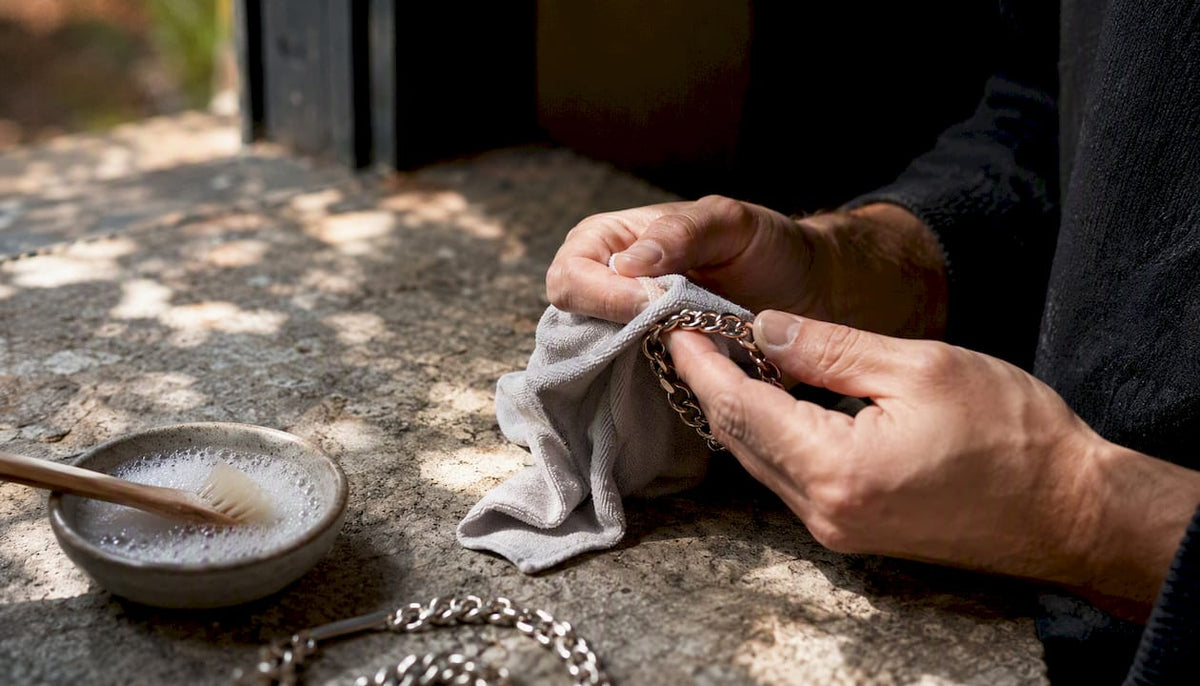
- Mild dish soap soak: Add a few drops of dish soap to warm water. Soak the piece for 5–10 minutes, then scrub gently with a soft-bristle toothbrush. Rinse thoroughly and dry with a microfiber cloth.
- Baking soda paste: Mix baking soda with just enough water to form a paste. Apply with a soft cloth or toothbrush, rub gently in the direction of the grain, rinse well, and dry. Good for stubborn mineral deposits.
- White vinegar soak: Soak for 5 minutes in undiluted white vinegar, then scrub lightly and rinse. Effective on water spots and light discoloration. Do not leave acidic solutions on the piece for longer than 10 minutes.
- Salt and lemon: A small amount of lemon juice with a pinch of salt works on surface oxidation. Rinse immediately after and dry fully. Skip this on plated pieces.
Household remedies like these handle the vast majority of cosmetic deposits when applied with a soft brush and rinsed completely.
Commercial cleaner options
Dedicated stainless steel jewelry cleaners and polishing cloths are widely available at hardware and jewelry supply stores. They work faster than home remedies and are safe for most finishes. Avoid any product labeled for silver or brass, as those often contain chemicals calibrated for different metals.
Pro Tip: Use a toothbrush with soft bristles, not medium or hard. The bristles reach into chain links and engraved details without scratching the surface or embedding particles.
Warning: Skip ultrasonic cleaners if the piece has glued stones, enamel, or PVD coating. The vibration can loosen settings and lift coatings.
A simple cleaning protocol you can follow right now
You do not need special equipment. This sequence works for stainless steel jewelry and watches alike.
What you need:
- Soft microfiber cloth
- Soft-bristle toothbrush
- Mild dish soap
- Small bowl
- Warm water (distilled water for the final rinse if your tap water is hard)
Steps:
- Rinse the piece briefly under warm running water to remove loose dirt.
- Add two drops of mild dish soap to a bowl of warm water.
- Submerge the piece and let it soak for 5 minutes.
- Scrub gently with the soft-bristle toothbrush, paying attention to links, clasps, and engraved areas.
- Rinse thoroughly under clean water. Soap residue left behind dulls the finish.
- Pat dry with a microfiber cloth. Do not air-dry; water spots form quickly.
- Buff lightly with a dry section of the cloth to restore shine.
For watches, keep the crown closed and avoid submerging the case unless the watch is rated water-resistant. To polish a stainless steel watch case, use the same cloth and soap method on the bracelet and wipe the case with a barely damp cloth.
When to stop and call a professional: persistent pitting, deep discoloration that does not respond to cleaning, texture changes on the surface, or any structural damage. These are signs of real corrosion, not cosmetic deposits.
How to prevent stainless steel from tarnishing
Prevention takes less effort than cleaning. Most discoloration is avoidable with a few consistent habits.
Daily habits:
- Remove jewelry before swimming in pools or the ocean. Chlorine and salt water degrade the passive film with repeated exposure.
- Put jewelry on after applying perfume, hairspray, and lotion. Let products dry on your skin first.
- Dry pieces fully after any water exposure, including showering. Trapped moisture under clasps and in chain links accelerates surface deposits.
What to avoid:
- Bleach and chlorine-based household cleaners near jewelry.
- Abrasive pads, steel wool, or metal-bristle brushes.
- Storing pieces in sealed plastic bags with no airflow.
- Contact with carbon steel tools or objects that shed iron particles.
Storage:
- Use individual soft pouches or a lined jewelry box with separate compartments.
- Keep stainless steel pieces away from carbon steel objects. Even brief contact can transfer iron particles.
- Leave pouches slightly open so air can circulate and the passive film can stay active.
Cleaning cadence: a quick wipe with a microfiber cloth after each wear handles most buildup. A full soap-and-brush clean once a month is enough for typical daily wear. Go deeper quarterly or whenever you notice visible dullness.
For readers interested in water-resistant necklaces that hold up to active lifestyles, choosing 316L from the start reduces how often you need to clean at all.
When is discoloration more than surface tarnish?
Most marks on stainless steel jewelry clean off. A few do not, and those deserve a closer look.
Signs of real corrosion:
- Pitting: small, irregular craters in the surface that feel rough. Pitting is localized corrosion that has broken through the passive film.
- Deep black or gray spots that do not respond to any cleaning method.
- A rainbow or blue-gold discoloration that covers a wide area. This is heat tint, caused by high-temperature exposure, and it signals a change in the surface chemistry.
- White haze that does not wipe off. Mineral scale from hard water can calcify into the surface over time.
- Any change in surface texture: roughness, flaking, or material loss.
Professional options:
- Jeweler repolish: removes surface scratches and light discoloration by buffing. Restores shine but does not address underlying corrosion.
- Electropolishing: smooths microscopic surface roughness and improves corrosion resistance beyond what mechanical polishing achieves. Best for pieces with persistent staining or pitting.
- Passivation/pickling: a chemical treatment that removes embedded iron particles and restores the passive film. Used when contamination is the root cause.
When you contact a jeweler or metal treatment shop, bring photos of the discoloration. Ask specifically whether they offer electropolishing versus surface polishing, and request a cost estimate before any work begins. Environmental factors like coastal humidity or industrial air can accelerate corrosion, so mention where and how you wear the piece.
The iron-transfer mistake most people never catch
Here is the one thing that trips up even careful owners. You notice rust-colored streaks on your stainless steel bracelet. You did not leave it near water. You did not use bleach. The piece looks like it is corroding, but stainless steel is supposed to be rust-proof.
The culprit is almost always iron transfer from abrasive cleaning. Steel wool, metal-bristle brushes, and even some scouring pads shed tiny carbon-steel particles. Those particles embed in the surface of the stainless steel and rust on their own. The stainless steel underneath is untouched. The rust belongs entirely to the foreign metal.
The fix is straightforward: remove the particles with a baking soda paste or a commercial passivation treatment, then switch to non-metallic cleaning tools permanently.
The second issue is storage. The passive film needs oxygen to rebuild after any abrasion. Sealed plastic bags, airtight containers with trapped moisture, or pieces wrapped tightly in damp cloth all slow that process. The film cannot heal if oxygen cannot reach the surface.
- Use only non-metallic pads: soft cloths, silicone-tipped brushes, or natural-bristle toothbrushes.
- After cleaning, let the piece sit in open air for at least an hour before storing.
- Occasionally take stored pieces out of their pouches for a few hours to let the passive film stay active.
Pro Tip: If you see rust-colored streaks on a piece you know is stainless steel, test with a magnet before assuming corrosion. Embedded iron particles are often weakly magnetic. True austenitic stainless steel (304, 316) is not.
Why Wynwoodblvd chooses stainless steel for every piece
At Wynwoodblvd, stainless steel is not a budget compromise. It is the material that makes sense for jewelry and watches designed around Miami, the ocean, and an active lifestyle. The alloy holds up to humidity, salt air, and daily wear in a way that silver or brass simply does not. Every watch and piece of jewelry we make is built to be worn, not stored.
For watches, the case and bracelet are stainless steel with polished and brushed finish options. For pendants, bracelets, and rings, the same material keeps the look clean and the maintenance low. You can browse the full stainless steel watch collection or explore our necklaces and rings if you want pieces that match the care routine you just read about.
If you have a specific care question about a Wynwoodblvd piece, whether it is about a finish, a coating, or what to do after salt water exposure, reach out to our customer support team directly. We are happy to give you guidance specific to your piece.
Wynwoodblvd stainless steel jewelry built for real wear
If you want jewelry that holds its look without a complicated care routine, Wynwoodblvd’s stainless steel pieces are built for exactly that. Each design uses premium stainless steel with finishes chosen for durability as much as aesthetics, inspired by Miami’s coastline and the kind of life that involves sun, water, and movement.
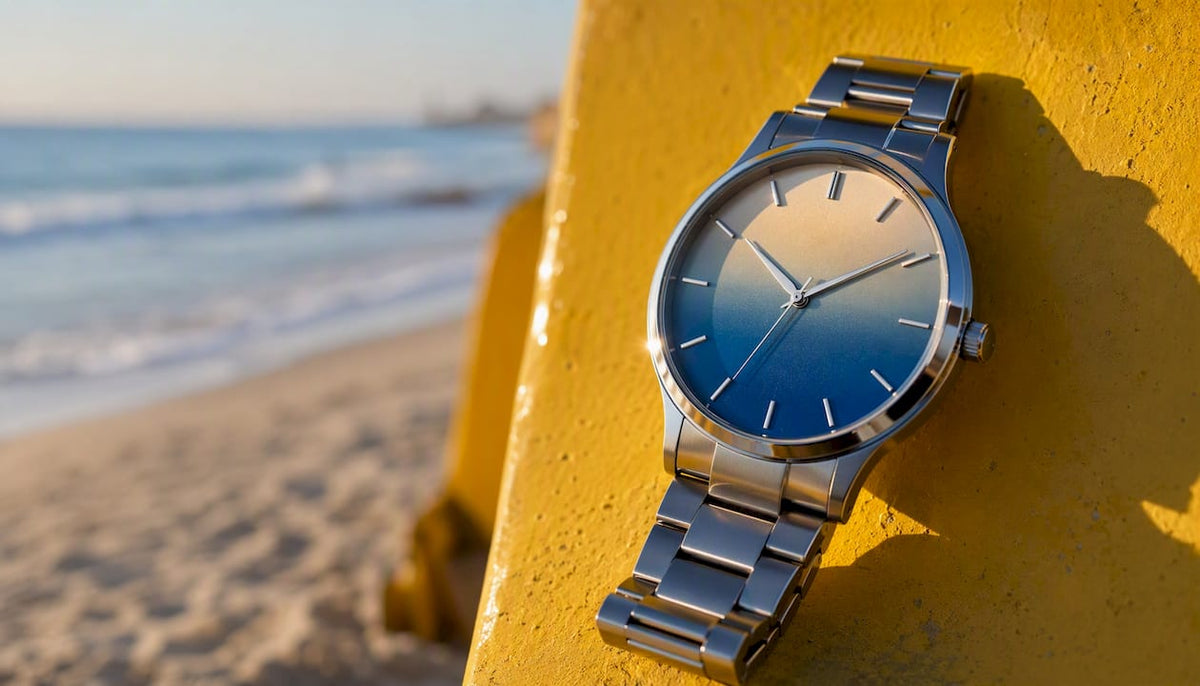
The Atlantic Blue Automatic Watch and the Everglades Green are two of our most-worn pieces, designed to go from the beach to the city without showing it. Browse the full collection and find the piece that fits your lifestyle.
A note on this guide
This article is general information about stainless steel care and is not a substitute for advice from a qualified jeweler or metallurgist. For specific corrosion concerns or professional treatment, consult a certified professional.
The part most care guides skip
The conventional wisdom on stainless steel jewelry care focuses almost entirely on what to clean with. Avoid bleach, use mild soap, dry thoroughly. All correct. But the more interesting question is what actually causes the discoloration in the first place, and the answer is almost never the metal.
In the vast majority of cases, what people call stainless steel tarnish is a story about something else: iron particles from a steel wool pad, chlorine from a pool, mineral scale from tap water, or a perfume sprayed too close. The steel itself is sitting there, passive film intact, doing exactly what it is supposed to do.
The practical implication is that prevention is almost entirely about what you keep away from the piece, not about any special treatment you apply to it. Store it in open air. Keep it away from carbon steel. Rinse it after salt or chlorine exposure. That is genuinely most of the job.
The one area where I think people underinvest is grade selection at the point of purchase. Choosing 316L over unspecified stainless steel is the single highest-leverage decision you can make for long-term appearance. Everything downstream, the cleaning, the storage, the care routine, gets easier when the alloy is right from the start.
Sources
The claims in this article are supported by the following sources. Each covers a specific aspect of stainless steel behavior and jewelry care.
- Does Stainless Steel Tarnish?
- Why doesn’t stainless steel rust? — Scientific American
- Does Stainless Steel Tarnish? Discover Why It Stays Shiny & How to Protect It - LangHe Industry Co., Ltd.
- Does stainless steel tarnish? — StainlessSteelGuide
- Corrosion resistance — Outokumpu
- How to Clean Stainless Steel Jewelry