1920s–1940s Geometry: How Wynwoodblvd Reimagines Art Deco Watch Design
An Art Deco watch design is a timepiece rooted in the 1920s to 1940s aesthetic, defined by strict geometry, symmetry, stepped case profiles, and decorative dial architecture. You’ll recognize it by rectangular or tonneau cases, stylized numerals, and bold contrast between metal, enamel, and lacquer. The rest of this guide walks through where that look came from, how to spot it, and how it still shapes watches today.
TL;DR:
- Genuine Art Deco watches typically feature narrow, angular cases with rectangular, tonneau, or stepped profiles, and short, sharp lugs.
- Dial elements include sector or segmented designs, contrasting two-tone color schemes, stylized numerals, and detailed finishing like guilloché engraving.
- Surviving period pieces with precious metal cases tend to be more valuable, especially those with authentic patina, while modern reinterprets prioritize proportion and color over intricate decoration.
- Authenticating requires close examination of the case proportions, dial details, movement hallmarks, and provenance; high-quality finishes and period-appropriate fonts are key indicators.
- Contemporary models inspired by Art Deco use geometric design principles, bold color contrasts, and reliable automatic movements for everyday wear and brand personalization.
Table of Contents
- Where Art Deco Watch Design Came From
- The Design Features That Signal Art Deco
- Vintage and Modern Art Deco Watches Worth Studying
- How to Identify and Authenticate an Art Deco Watch
- How Wynwoodblvd Applies Art Deco Principles Today
- Why Art Deco Watch Design Still Resonates
- Bring Art Deco Geometry to Your Wrist
- Sources
- FAQ
Where Art Deco Watch Design Came From
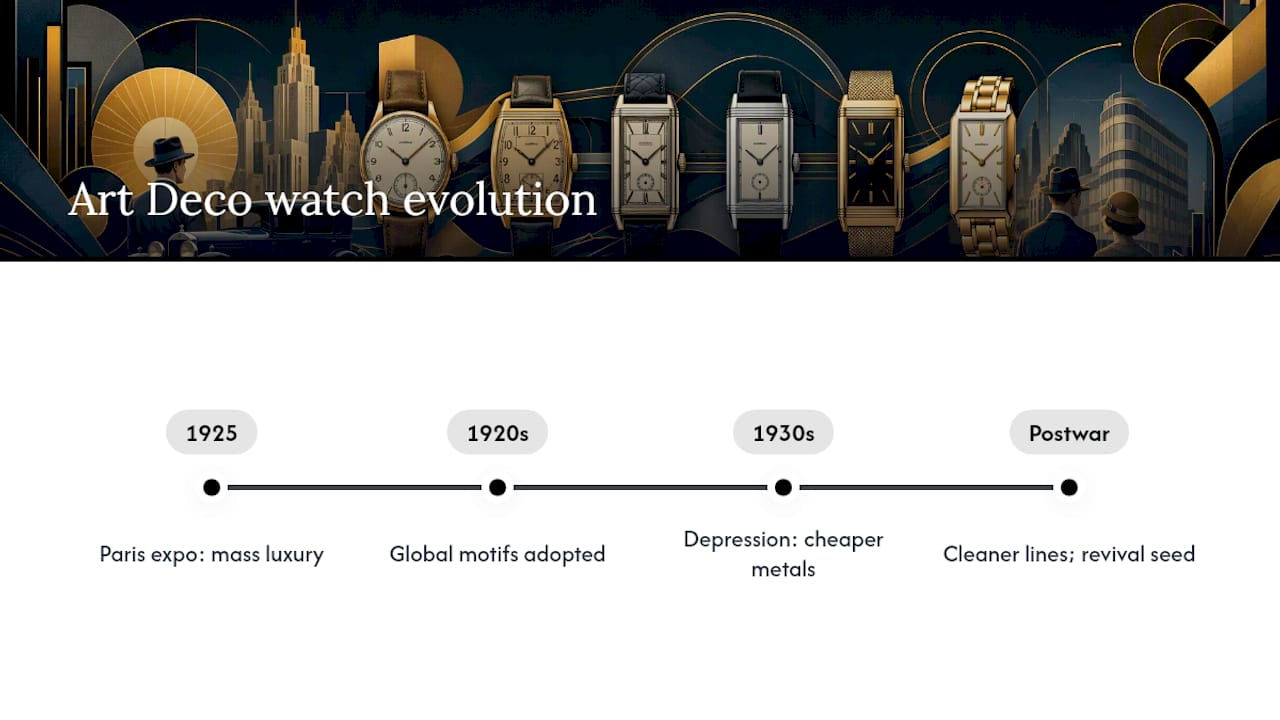
Art Deco takes its name from the 1925 Exposition Internationale des Arts Décoratifs in Paris, an event that turned decorative luxury into something the middle class could actually buy. Before this, elaborate ornamentation belonged mostly to aristocratic jewelry and furniture. After it, geometric pattern work showed up on everything from radio cabinets to wristwatches.
The style borrowed freely. Egyptian sun motifs, Aztec stepped forms, and Japanese lacquer techniques all found their way into watch design during this period, giving Art Deco pieces a global visual vocabulary that older Edwardian styles never had. Through the Roaring Twenties, watchmakers pushed this decoration hard: engraved bezels, enamel accents, gold cases with platinum trim.
Then the 1930s hit, and the Depression forced a rethink. Watchmakers shifted from gold and platinum to chromed base metal to keep prices down, which is exactly why surviving late-1930s Art Deco pieces in precious metal tend to command higher prices today. Decoration simplified too. By the postwar years, the style had thinned into cleaner lines, setting the stage for the mid-century revivals that borrowed its geometry without its excess.
The Design Features That Signal Art Deco
Spotting Art Deco watch design gets easier once you know what to look at first: the case, then the dial, then the small decorative details that tie it together.
Case geometry is the fastest tell. Original Art Deco cases favor rectangular, tonneau (barrel-shaped), or stepped profiles that stack like a ziggurat toward the crystal. Lugs tend to be short and angular rather than curved, and proportions run narrow compared to today’s oversized sport watches. This geometric discipline is what separates true Art Deco pieces from watches that simply added a retro numeral font, according to WatchTime’s design analysis.
Dial architecture carries just as much weight as the case shape. Sector dials, split into distinct zones by concentric rings or radiating lines, are one of the period’s signature moves. Strong two-tone or three-tone contrast, often black against silver or cream against navy, replaced the softer palettes of earlier decades.
Key elements to check on any dial:
- Stylized Arabic or Roman numerals with sharp, angular strokes instead of rounded serifs
- Railtrack minute scales printed as thin double lines around the dial’s edge
- Applied metal numerals and indices that catch light differently than printed ones
- Dauphine or lance-shaped hands with faceted, polished surfaces
- Hand-guilloché engraving or engine-turning on the dial center or bezel
Finishing matters too. Watchmakers of the era alternated polished and brushed surfaces on the same case to create visual rhythm, a technique that shows up on the case sides and lug tops of nearly every well-preserved period piece.
Vintage and Modern Art Deco Watches Worth Studying
Certain models and case types teach you more about Art Deco watch design than any written description can. Here are the ones worth studying closely.
-
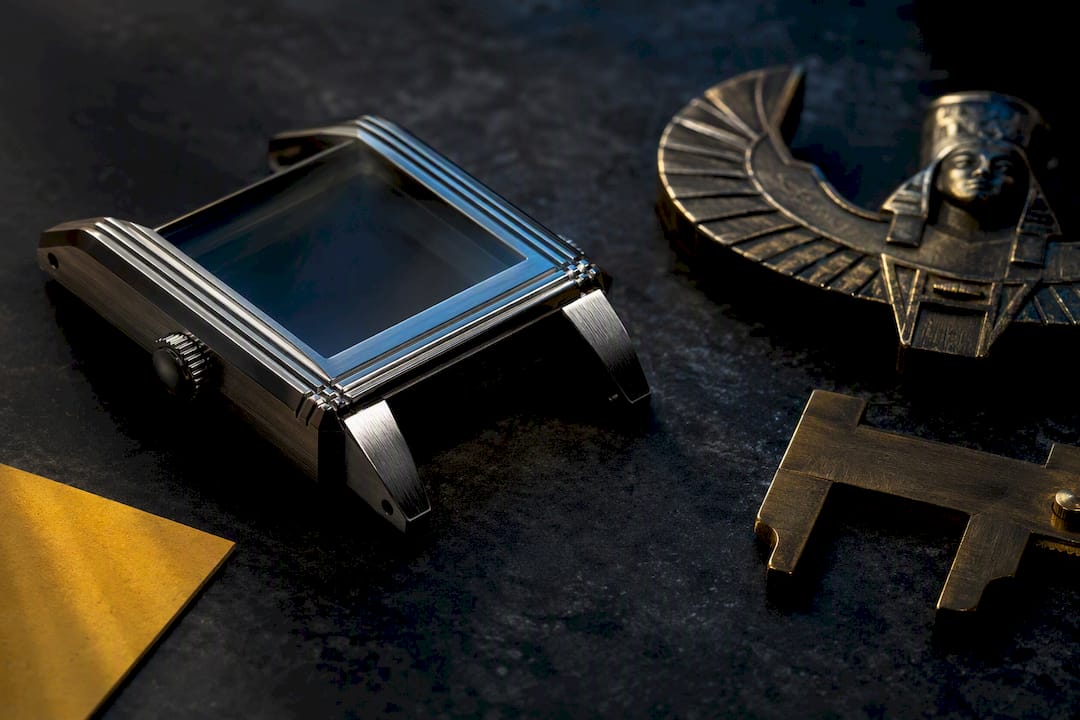
Rectangular reverse-case watches. The horizontal, protruding lines of these designs mirror Manhattan skyscraper geometry, a direct architectural quote that WatchTime highlights as one of the clearest links between Art Deco buildings and Art Deco wrists.
-
Tank-style rectangular dress watches. These popularized the idea that a watch case could be pure architecture, straight sides, sharp corners, no concession to the wrist’s curve.
-
Stepped tonneau cases from the 1920s. The ziggurat profile, narrowing in tiers toward the crystal, is one of the purest expressions of Deco geometry applied to a case that still has to sit comfortably on a wrist.
-
Sector-dial doctor’s watches. Built with oversized seconds registers and bold zone divisions for legibility, these show how Art Deco’s love of segmentation served a practical purpose, not just decoration.
-
Enamel and guilloché cocktail watches. Small, jewelry-like pieces from the late 1920s that paired hand-engraved dials with colored enamel bezels, proof that Art Deco decoration extended well beyond case shape.
-
Contemporary segmented-dial independents. Watches like the Schwarz Etienne Geometry show hand-guilloché and geometric dial segmentation as a living technique, not a museum relic.
-
Neo-vintage stainless steel revivals. Modern brands increasingly pair period proportions with reliable automatic movements, a trend GQ has tracked among collectors who want the look without the maintenance headaches of a genuinely old watch.
How to Identify and Authenticate an Art Deco Watch
Before you trust a listing description, check the watch against these markers yourself.
- Case form and proportions. Genuine period cases run narrow and angular; a “vintage-style” case that feels bulky or oversized is usually a modern reinterpretation, not an original.
- Guilloché and engraving quality. Hand-guilloché patterns have subtle irregularities. Expert collectors know that repro pieces often use modern mass-engraving or stamped patterns that look too perfect up close.
- Hands and numerals. Font style should match the decade. A dauphine hand paired with a distinctly 1960s numeral font is a mismatch worth questioning.
- Movement type and hallmarks. Ask for movement photos. Manufacture marks, jewel counts, and case hallmarks all narrow down the production era.
- Paperwork. Original boxes, service records, or retailer stamps add confidence, though their absence doesn’t automatically mean the watch is fake.
Patina deserves its own conversation. Tropical dial patina forms from UV exposure and humidity over decades, and collectors sometimes prize the resulting brown or chocolate tones as character rather than damage, as long as the numerals stay legible and the dial hasn’t cracked or flaked.
Pro Tip: Ask any seller for close-up photos of the movement and case back before you ask about price. Hallmarks and finishing details there are far harder to fake convincingly than a dial.
How Wynwoodblvd Applies Art Deco Principles Today
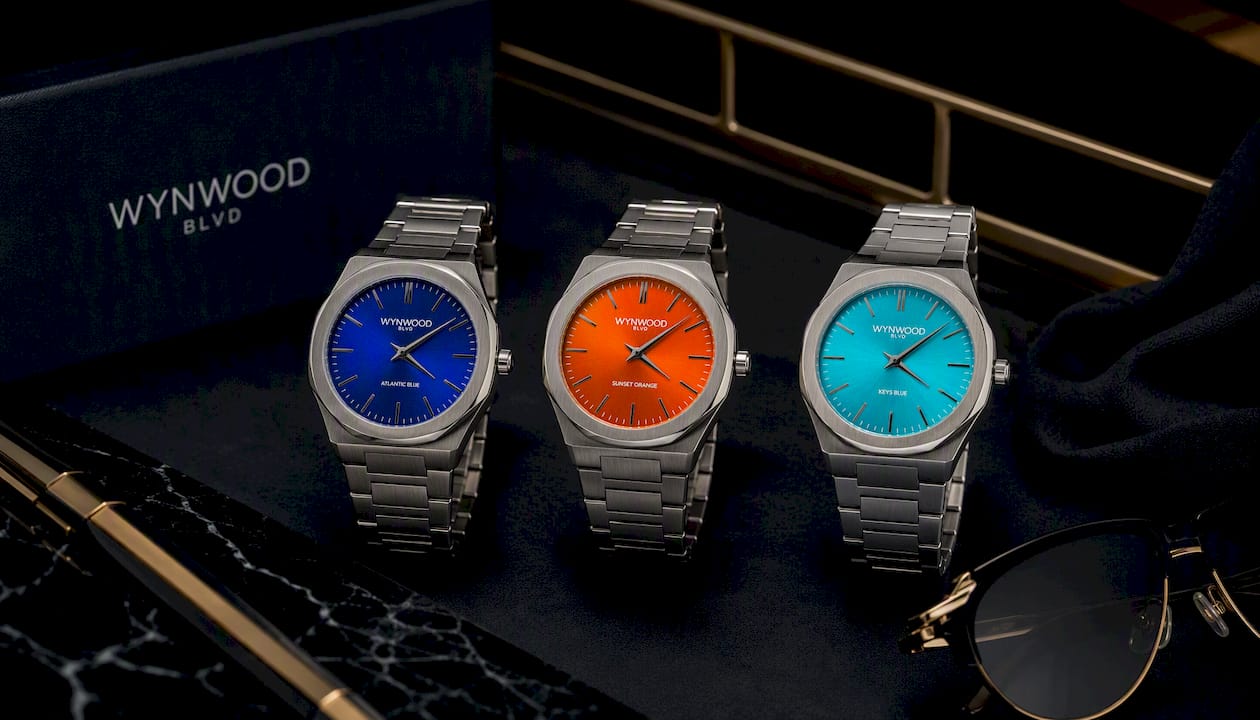
Watches with Miami-inspired designs apply a geometric discipline reminiscent of Art Deco watch design, combined with modern stainless steel automatic movements. Strong color contrast, symmetrical dial framing, and clean case proportions carry that design lineage forward without copying it outright.
Three current models show this translation in concrete terms:
- The Atlantic Blue Stainless Steel Automatic Watch uses deep tonal contrast and symmetrical dial framing reminiscent of period sector dials.
- The Sunset Orange Miami Inspired Watch applies bold color blocking, echoing the high-contrast palettes Deco designers favored over muted tones.
- The Keys Blue Miami Inspired Watch leans on clean proportional balance between case and dial, a nod to the era’s structured geometry.
For brands that want this design language on their own merchandise, Wynwoodblvd’s Corporate Custom Watches program offers logo engraving and dial customization, built on the same geometric foundation.
Why Art Deco Watch Design Still Resonates
Art Deco succeeded originally because it made luxury motifs available to everyday buyers, not just the wealthy, and that same democratizing instinct is why the style still sells today. It photographs well, it wears well on smaller modern wrists, and it never demands you understand horology to appreciate it.
If you’re choosing between original vintage and neo-vintage, let your lifestyle decide. A genuine 1930s piece needs careful servicing and gentle handling. A neo-vintage watch built on a modern automatic movement gives you the geometry and color story without the fragility.
— Mathias
Bring Art Deco Geometry to Your Wrist
Some brands turn Art Deco’s geometric discipline into everyday stainless steel watches designed for daily wear, combining stepped-case proportions and bold color contrast with reliable automatic movements rather than decades-old calibers.
Browse the full Miami Inspired Watches collection to see how these design cues show up across different colorways, or check the Atlantic Blue model directly if geometric dial framing is what caught your eye. Pair a watch with a piece from the Miami Inspired Charms line or the Palm Tree Charms collection for a coordinated look, and if you’re sourcing branded merchandise for a hotel, agency, or event, inquire about Corporate Custom Watches to get Art Deco inspired pieces engraved with your own logo.
Sources
- What exactly is an ‘Art Deco’ watch? | WatchCrunch
- The story behind Art Deco watches (1920-1950) - Catawiki
- Deco by Design: Six of Our Favorite Watches Inspired by Art Deco | WatchTime
- The temptation of tropical dials | A Blog to Watch
FAQ
What Is an Art Deco Style Watch?
An Art Deco style watch is a timepiece built around geometric case shapes, symmetrical dial layouts, and stylized numerals that were most popular from the 1920s through the 1940s. Common traits include rectangular or stepped cases and bold color contrast on the dial.
What Is the Three Watch Rule?
The three watch rule is a general collecting principle suggesting a small, purposeful collection covers three roles: a dress watch, a sport or tool watch, and a daily wear piece. It’s a personal guideline rather than a fixed standard, and many collectors adapt it to their own habits.
What Is the Most Beautiful Watch Ever Made?
There’s no single agreed-upon answer since beauty in watch design is subjective, but Art Deco pieces are frequently cited among the most visually striking for their symmetry and bold geometry. Rectangular reverse-case designs and stepped tonneau cases are often named among the movement’s most admired examples.
What Are Some Good Art Deco Style Men’s Watches?
Good options include original vintage rectangular and tonneau-cased pieces from the 1920s and 1930s, contemporary independent watches with segmented guilloché dials, and neo-vintage stainless steel automatics like Wynwoodblvd’s Miami Inspired Watches, which apply Deco-era proportions and color contrast to modern, low-maintenance movements.