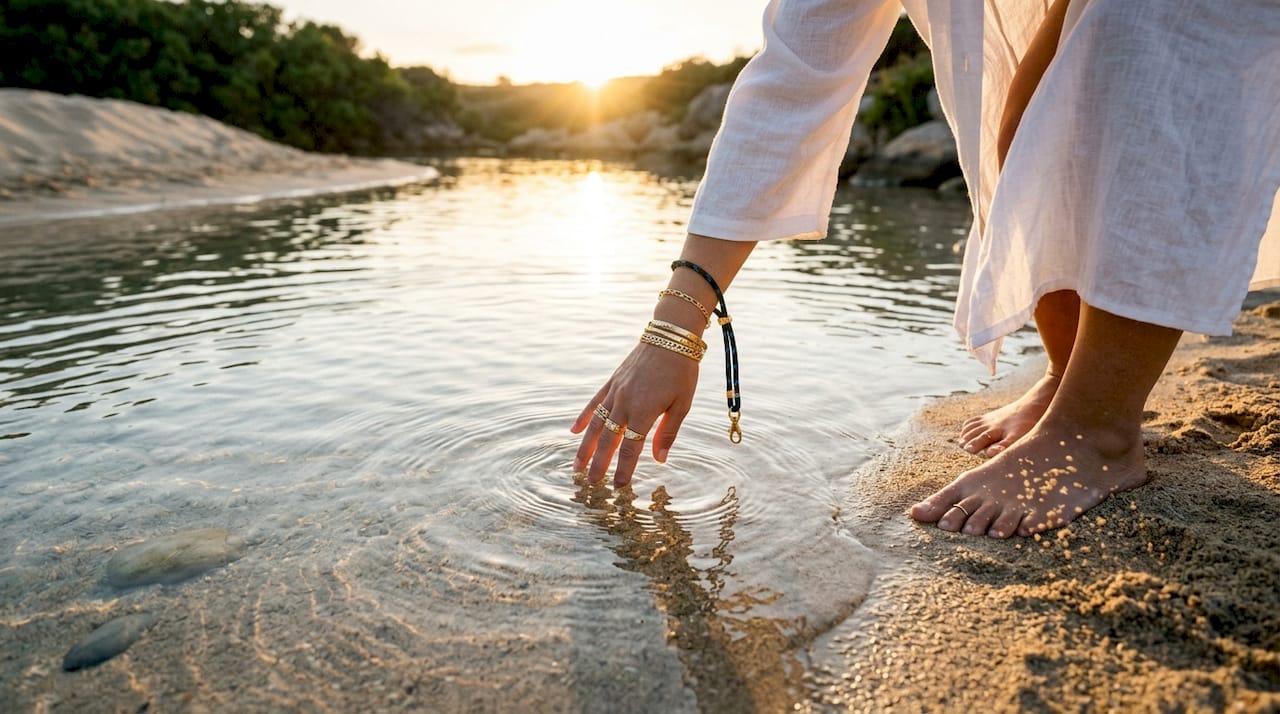
Water Resistant Gold Jewelry: Your 2026 Beach Guide
Water resistant gold jewelry is defined as gold or gold-finished pieces engineered to maintain their appearance and structural integrity through repeated water exposure, whether from ocean swimming, rain, or daily showers. The industry distinguishes two core categories: solid gold alloys (14k and 18k) that resist water chemically by nature, and surface-treated pieces using PVD (Physical Vapor Deposition) coating applied over stainless steel. Both serve travelers and beach lovers well, but they perform differently over time. Knowing which type fits your lifestyle determines whether your jewelry lasts one season or one lifetime.
What materials give gold jewelry the best water resistance?
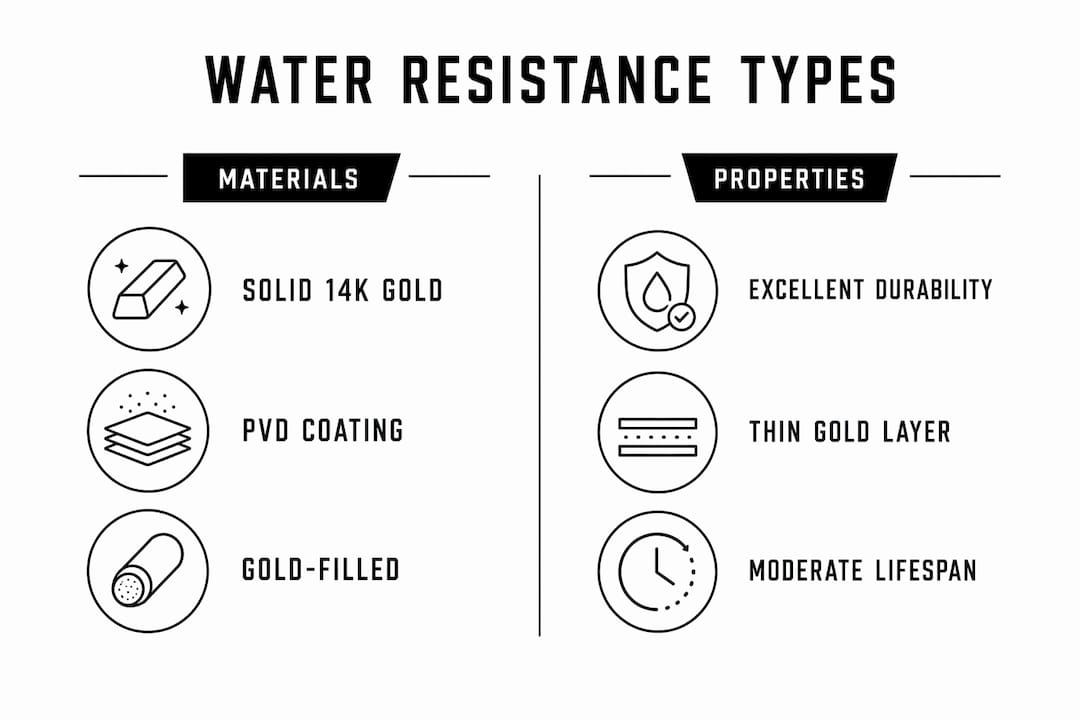
The most durable option for water exposure is solid 14k gold, which contains 58.3% pure gold alloyed with metals like copper and silver for strength. That alloy composition makes it chemically stable against oxidation, corrosion, and degradation from water, skin chemistry, and household chemicals. Solid 18k gold (75% pure gold) offers a richer color but slightly less hardness, making 14k the preferred choice for active wear. Neither will tarnish, fade, or peel because the material is uniform all the way through.
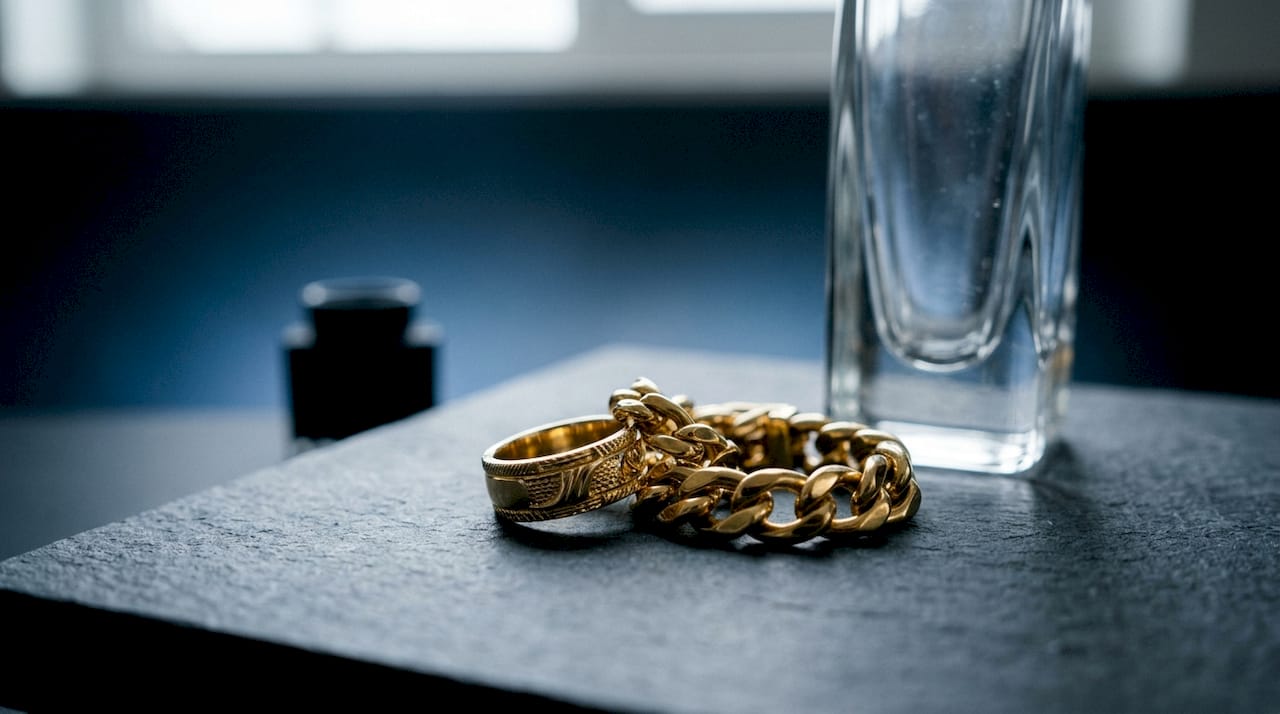
PVD coating is a different story. PVD is applied via a vacuum process that deposits a thin gold layer onto stainless steel, creating strong resistance to tarnishing and fading. The result looks identical to solid gold and costs significantly less. The tradeoff is that the coating is a surface layer. With enough friction, salt, or chemical exposure, it will eventually wear through. Solid gold, by contrast, maintains its structure for generations because the material is the same from surface to core.
Gold-filled and vermeil pieces fall between these two options. Gold-filled jewelry bonds a thick layer of gold to a base metal under heat and pressure, giving it better durability than standard plating. Vermeil is sterling silver with a gold coating, typically thinner than gold-filled. Neither is as water-resistant as solid gold or PVD-coated stainless steel for heavy beach use.
| Material | Water resistance | Lifespan | Maintenance needs |
|---|---|---|---|
| Solid 14k/18k gold | Excellent, permanent | Generations | Low, occasional cleaning |
| PVD-coated stainless steel | Very good, surface layer | 2–5 years with care | Moderate, avoid chemicals |
| Gold-filled | Good | 5–30 years | Moderate, limit submersion |
| Vermeil | Fair | 1–3 years | High, avoid water when possible |
| Gold-plated | Poor | Months to 1 year | High, keep dry |
Pro Tip: If you swim daily or spend long weekends at the beach, choose solid 14k gold or PVD-coated stainless steel. Both handle salt water and chlorine far better than vermeil or standard plating.
How does jewelry construction affect durability in water?
Material choice alone does not make jewelry waterproof. A piece is only as durable as its weakest point, whether that is a thin solder joint, a hollow link, or a flimsy clasp. Construction quality determines how well a piece holds up through repeated beach trips, not just what metal it is made from.
The most common failure points in water-exposed jewelry are:
- Hollow links: Hollow chain links compress and crack under physical stress, especially when wet and under tension. Solid links resist deformation and last significantly longer.
- Spring-ring clasps: These small, coiled clasps weaken with repeated salt water exposure. The spring mechanism corrodes or loses tension, causing the piece to open unexpectedly.
- Glue-set stones: Adhesive weakens in water. Stones set with glue will loosen and fall out after enough submersion. Bezel or prong settings that grip the stone mechanically are far more reliable.
- Thin solder joints: Joints where chain sections meet are stress points. Thin solder applied to save material cost is the first place a necklace or bracelet will break under tension.
Jewelry with hollow links or glue-set stones fails faster in water than solid, bezel-set pieces with lobster or foldover clasps. Lobster clasps use a spring-loaded gate that holds under tension and resists accidental opening. Foldover clasps add a secondary locking mechanism, making them the most secure option for bracelets worn during swimming.
Bezel settings, where a thin metal rim wraps around the stone, protect the gem from impact and water infiltration. They also eliminate the small gaps that prong settings create, where sand and salt can accumulate and cause wear over time.
Pro Tip: Before buying, hold the piece up and look at the clasp and links closely. If the links look thin or the clasp feels flimsy in your hand, it will not survive a summer of beach use.
What are the best maintenance practices for durable gold jewelry?
Even the most water resistant jewelry requires consistent care to stay in top condition. Rinsing pieces with fresh water after swimming in salt or chlorinated water removes corrosive residue before it can settle into joints and coatings. This single habit extends the life of any gold piece more than any other practice.
Follow this care routine after every water exposure:
- Rinse immediately. Hold the piece under cool, clean tap water for 20–30 seconds. This removes salt, chlorine, and sunscreen residue before they dry onto the surface.
- Pat dry with a soft cloth. Use a lint-free microfiber cloth. Never rub aggressively, as abrasion wears down PVD coatings and scratches polished surfaces.
- Air dry fully before storing. Moisture trapped in clasps or chain links accelerates corrosion. Lay pieces flat on a dry cloth for a few minutes before putting them away.
- Store separately. Keep each piece in its own pouch or compartment. Chains and rings scratching against each other cause surface damage over time.
- Clean periodically with mild soap. Warm water and mild dish soap applied with a soft brush removes skin oil buildup from solid gold pieces. Rinse thoroughly, since soap residue dulls the surface if left on.
Sunscreen, perfume, and sand are the hidden enemies of waterproof gold accessories. Sunscreens and perfumes accelerate dulling of the PVD layer through chemical interaction, even when the piece never touches water. Apply sunscreen and let it absorb fully before putting on jewelry. Spray perfume before dressing, not after. Sand acts as a physical abrasive, grinding against coatings and polished surfaces with every movement.
Avoid prolonged submersion even with pieces marketed as fully waterproof. No surface coating is immune to extended chemical exposure. Hot tubs and pools with high chlorine concentrations are particularly harsh on coatings and should be treated as a risk environment for any non-solid-gold piece.
How do you choose the best water resistant gold jewelry for travel?
Choosing the right piece for travel and beach activities comes down to three factors: material, construction, and style versatility. The best water resistant jewelry for active use checks all three boxes, not just one.
- Prioritize material first. Solid 14k gold or PVD-coated stainless steel are the two materials worth buying for regular water exposure. Check product descriptions for these terms specifically. “Gold-tone” or “gold-colored” without further detail usually means basic plating.
- Evaluate construction before aesthetics. Look for lobster clasps, solid links, and bezel or prong settings. Avoid pieces with visible glue around stones or links that feel light and hollow.
- Choose versatile styles. Thin chain necklaces, simple band rings, and flat link bracelets work in the water and look polished at dinner. Avoid large statement pieces with multiple moving parts, as they collect sand and are harder to rinse clean.
- Limit layering for active water use. Layered gold necklaces look great on the beach, but multiple chains tangle and create friction points that wear coatings faster. Keep it to two chains maximum when swimming.
- Check for anti-tarnish certifications or material disclosures. Reputable brands specify the exact material and coating type. If a brand does not disclose the base metal or coating process, treat the piece as standard plating.
Resistant gold rings deserve special attention for travelers. Rings experience more friction than necklaces because they contact surfaces constantly. A solid 14k band or a PVD-coated stainless steel ring with no stone setting is the most practical choice for swimming and beach activities. If you want a stone, choose a bezel setting in a low-profile design. You can find a solid selection of durable gold rings designed with exactly this use case in mind.
The tradeoff between trend-driven design and durability is real. Chunky chain styles and layered looks are popular, but they require more maintenance and are more vulnerable to wear in water. If you want pieces that survive years of travel, lean toward clean, minimal designs with solid construction over decorative complexity.
Key takeaways
Solid 14k gold and PVD-coated stainless steel are the two materials that genuinely deliver water resistance, but construction quality, clasp type, and consistent care determine how long any piece actually lasts.
| Point | Details |
|---|---|
| Material defines permanence | Solid 14k gold resists water chemically forever; PVD coatings degrade over time with wear. |
| Construction matters as much as material | Solid links, lobster clasps, and bezel settings prevent the most common failure points in water. |
| Rinse after every swim | Fresh water rinsing after salt or chlorinated water exposure is the single most effective care habit. |
| Sunscreen and perfume damage coatings | Apply both before jewelry to prevent chemical wear on PVD surfaces. |
| Style and function can coexist | Minimal, low-profile designs in solid gold or PVD stainless steel work for both swimming and travel. |
Why I think most people buy the wrong gold jewelry for the beach
Most buyers focus entirely on how a piece looks in a product photo and ignore the two things that actually determine whether it survives a beach vacation: the base material and the clasp. I have seen people spend real money on beautiful layered sets that turned green after one week in Tulum because the brand buried “gold-plated brass” in the fine print.
The rise of “waterproof jewelry” as a marketing category has been genuinely useful, but it has also created confusion. Waterproof is not a regulated term. It means different things depending on whether a brand is referring to oxidation resistance, PVD coating durability, or just the fact that the piece will not dissolve in a rainstorm. Solid gold is the only material where the claim is unconditional.
My honest recommendation: if you travel more than three times a year and spend real time in the water, buy one or two solid pieces you love rather than a collection of coated ones you will replace every season. The economics favor quality. A solid 14k bracelet bought once beats five rounds of replacing plated pieces. For those who want the gold look at a lower price point, PVD-coated stainless steel from a brand that discloses its materials is a legitimate choice, as long as you follow the care routine consistently.
The buyers who get the most out of their anti-tarnish jewelry are the ones who treat it like a tool, not just an accessory. Rinse it, dry it, store it properly, and it will hold up. Neglect those steps and even solid gold will look dull faster than it should.
— Mathias
Wynwoodblvd’s water-resistant jewelry and watches for coastal living
Wynwoodblvd designs premium stainless steel jewelry and watches built for exactly the lifestyle this article describes: coastal, active, and style-conscious. Every piece draws from real Miami locations, from Wynwood to Key West, giving each collection a distinct identity beyond just the material.

The watch lineup is built on water-resistant stainless steel cases with automatic movements, designed to handle salt air and beach conditions without losing their finish. The Atlantic Blue automatic watch and the Everglades Green are two standout options for travelers who want a durable, Miami-inspired piece on their wrist. The jewelry collections cover necklaces, rings, and charms in gold-finish stainless steel built for daily wear in and out of the water. Browse the full range at Wynwoodblvd.
FAQ
Can you wear gold jewelry in the ocean?
Solid 14k and 18k gold can be worn in the ocean without tarnishing, since gold is chemically stable against salt water. PVD-coated pieces handle occasional ocean exposure well but should be rinsed with fresh water immediately after.
What does PVD coating mean for jewelry durability?
PVD coating deposits a thin gold layer onto stainless steel through a vacuum process, creating strong tarnish resistance. The coating is durable but will eventually wear through with heavy use, unlike solid gold which is permanent throughout.
How do you clean water resistant gold jewelry after swimming?
Rinse the piece under cool fresh water, pat it dry with a soft microfiber cloth, and let it air dry fully before storing. Avoid harsh chemicals, abrasive scrubbing, and prolonged submersion even with pieces marketed as waterproof.
Is gold-filled jewelry good for swimming?
Gold-filled jewelry handles occasional water exposure better than vermeil or standard plating, but it is not ideal for daily swimming. Repeated salt water and chlorine exposure will eventually degrade the bonded gold layer faster than solid gold.
What clasp type is best for waterproof gold bracelets?
Lobster clasps and foldover clasps are the most reliable options for waterproof gold bracelets. Spring-ring clasps weaken with repeated salt water exposure and are the most common failure point in beach-worn jewelry.