Hypoallergenic Stainless Steel Jewelry for Sensitive Skin
Hypoallergenic stainless steel jewelry is defined as jewelry made from 316L surgical-grade steel, engineered to release nickel at levels well below the thresholds set by EU REACH regulations and the EN 1811 standard. The term “hypoallergenic” means reduced likelihood of a reaction, not zero risk. For most people aged 20–40 dealing with skin sensitivities, 316L stainless steel is one of the most practical and stylish solutions available. It resists sweat, water, and daily wear while keeping allergen exposure low. Understanding the material science behind it helps you shop with confidence instead of guessing.
What makes hypoallergenic stainless steel jewelry safe for sensitive skin?
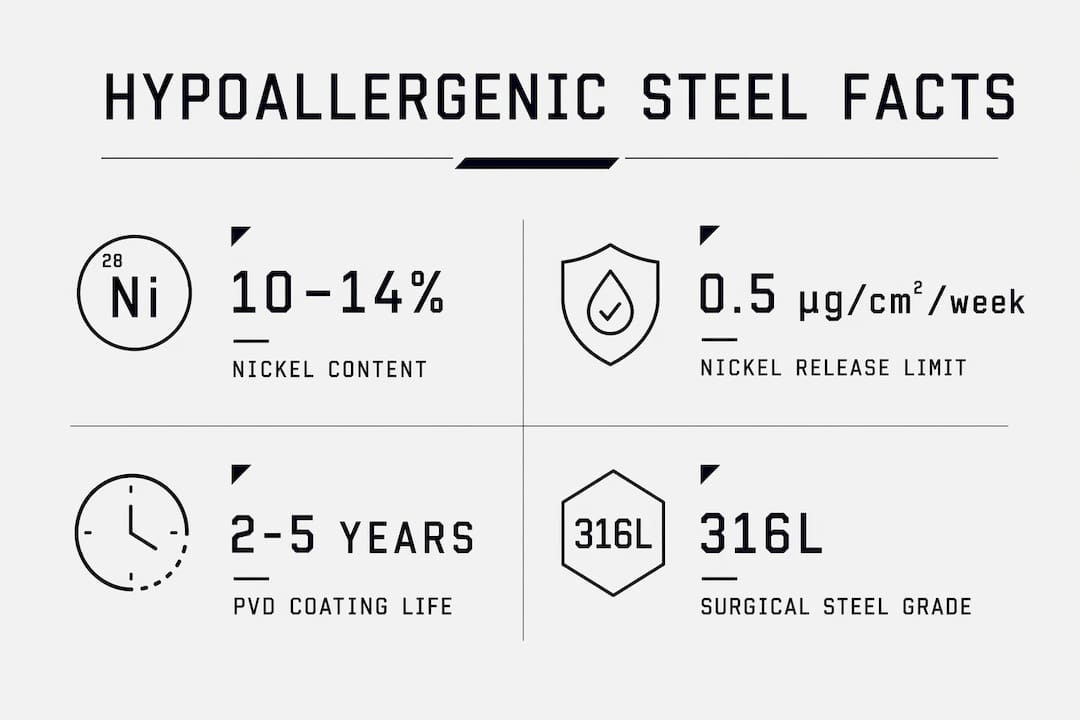
316L stainless steel earns its hypoallergenic reputation through chemistry, not marketing. The alloy contains 10–14% nickel, but high chromium content forms a passive chromium oxide layer on the surface that locks nickel atoms inside the metal. Under normal wear conditions, that layer prevents nickel from migrating to your skin.
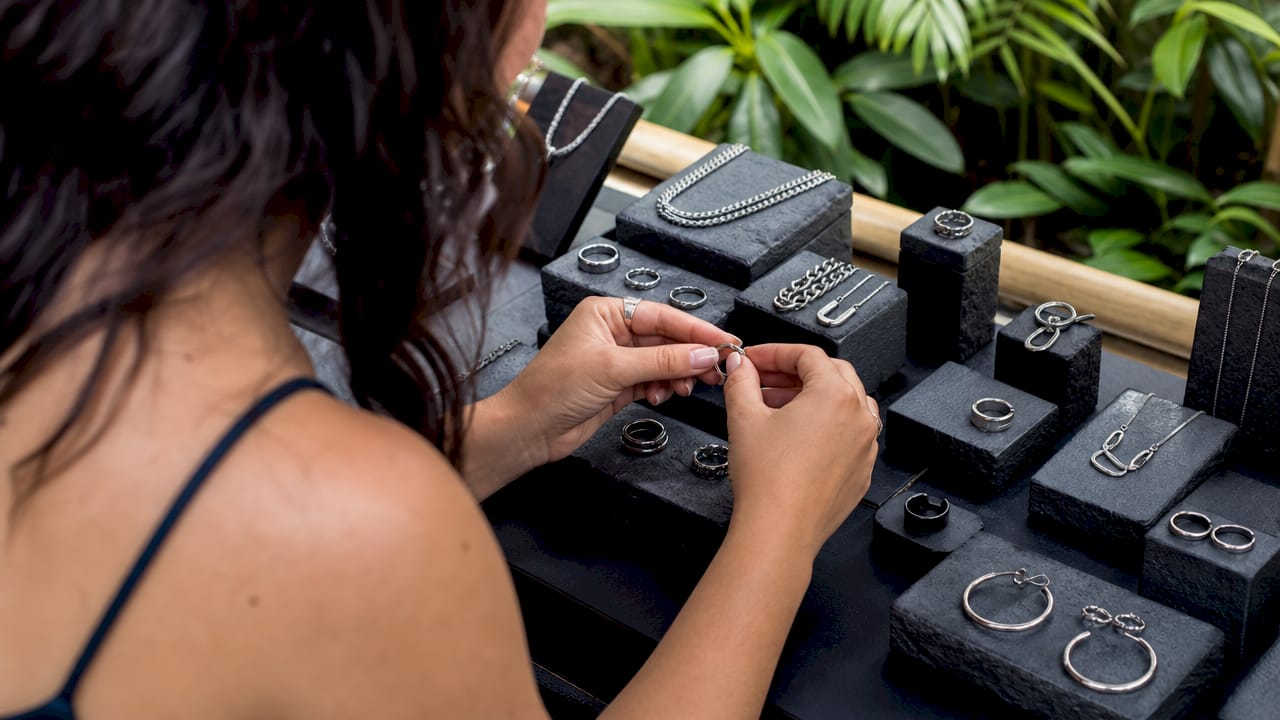
The EU REACH regulation and EN 1811 standard set clear nickel release limits. General jewelry must release less than 0.5 μg/cm²/week, while items that penetrate the skin, like piercing jewelry, must stay below 0.05 μg/cm²/week. Quality 316L steel meets both thresholds. That compliance is what separates it from lower-grade stainless alloys that may look identical but release far more nickel.
Not all stainless steel performs equally. Lower grades like 304 stainless steel contain similar nickel levels but lack the molybdenum content that gives 316L its extra corrosion resistance. Molybdenum protects against chloride pitting, which matters when you wear jewelry in saltwater, sweat, or humid coastal environments. Manufacturing quality also plays a role. Jewelry produced with vacuum melting and XRF testing delivers consistent nickel release levels, while lower-quality production can result in uneven alloy distribution and unpredictable allergen exposure.
Key properties that make 316L stand out:
- Chromium oxide passive layer that physically blocks nickel from reaching skin
- Molybdenum content for resistance to chloride and sweat corrosion
- Controlled nickel release verified through EN 1811 testing
- Bio-inert behavior meaning the metal does not react with body chemistry under normal conditions
- Durability that holds up to daily active wear without degrading the protective layer
Pro Tip: Ask your jeweler for the specific steel grade before buying. “Stainless steel” alone tells you nothing. “316L” tells you everything.
How does PVD coating enhance hypoallergenic performance?
Physical Vapor Deposition, known as PVD, is the gold standard coating method for hypoallergenic jewelry. Traditional electroplating deposits metal ions onto a surface using electrical current, which produces a thinner, less stable layer that can chip and expose the base metal underneath. PVD uses atom-by-atom vapor deposition in a vacuum chamber, producing a thicker, more stable, and biocompatible protective layer.
The process works in four steps:
- Surface preparation. The 316L steel piece is cleaned and polished to remove any contaminants that could interfere with adhesion.
- TiN intermediate layer application. A titanium nitride layer is deposited first, improving corrosion resistance and acting as a barrier between the steel and the outer finish.
- Outer coating deposition. Gold, rose gold, black, or other finishes are applied atom by atom in the vacuum chamber, bonding tightly to the TiN layer.
- Quality verification. The finished piece is tested for coating thickness, adhesion strength, and nickel release levels.
The result is a finish that resists tarnishing for 2–5 years without increasing allergen exposure. That durability matters for people who wear jewelry daily through workouts, beach trips, or long shifts. PVD also preserves the underlying chromium oxide layer, so the steel’s natural hypoallergenic properties remain intact throughout the coating’s lifespan.
PVD-finished jewelry is particularly well suited to active coastal lifestyles where saltwater, sunscreen, and humidity would quickly degrade a standard electroplated finish.
Pro Tip: When shopping for coated stainless steel jewelry, ask specifically whether the brand uses PVD or electroplating. The difference in longevity and skin safety is significant.
Are there any limitations or risks with stainless steel jewelry?
316L stainless steel is safe for the vast majority of people with sensitive skin. It is not guaranteed allergy-free for everyone. People with extreme nickel sensitivity can still react to 316L, particularly if the protective oxide layer is compromised by scratches, harsh chemicals, or poor finishing. Reactions are more likely when the jewelry is low-grade or the surface coating is damaged.
Fresh and healing piercings present a specific risk. When skin integrity is broken, even low nickel release levels can trigger contact dermatitis. ASTM F-136 implant-grade titanium is the preferred material for new piercings because it contains no nickel at all. 316L stainless steel is generally not recommended for healing piercings, regardless of its overall hypoallergenic reputation.
Risks to be aware of before buying:
- Compromised coatings. Scratched or chipped PVD or plating exposes the base metal and increases nickel contact.
- Low-grade production. Jewelry labeled “stainless steel” without specifying 316L may use cheaper alloys with higher nickel release.
- Fresh piercings. Broken skin absorbs more nickel, making even compliant steel a risk during the healing period.
- Prolonged moisture exposure. Leaving jewelry on in pools or hot tubs can degrade the passive layer faster than normal wear.
- Extreme sensitivity. For people with documented severe nickel allergy, titanium or niobium are safer long-term choices.
The distinction between “nickel-free” and “nickel-safe” matters here. Most 316L steel contains nickel but releases well below legal thresholds, meeting REACH standards. A “nickel-free” label on stainless steel jewelry is almost always inaccurate. “Nickel-safe” or “REACH compliant” are the honest, accurate terms.
How to choose and care for stainless steel jewelry for sensitive skin
Choosing the right piece starts with verifying the material grade. “Stainless steel” is not a single material. 316L is the specific grade you want. Here is what to check before you buy:
- Confirm 316L grade. Look for it printed on the product page, tag, or packaging. If it is not listed, ask directly.
- Check for REACH compliance or EN 1811 certification. These confirm the piece has been tested for nickel release at regulated levels.
- Ask about coating type. PVD is preferred over electroplating for durability and skin safety.
- Inspect surface finish. Polished, mirror-finished surfaces reduce friction and preserve hypoallergenic properties better than matte or rough finishes.
- Consider fit and weight. Heavy or tight-fitting pieces trap sweat against skin, which can accelerate surface degradation and increase irritation risk.
Caring for your jewelry extends both its life and its skin-friendliness:
| Care Practice | Why It Matters |
|---|---|
| Rinse after saltwater or sweat exposure | Removes chlorides that can degrade the passive layer |
| Dry thoroughly before storing | Prevents moisture buildup that accelerates surface wear |
| Store separately in a soft pouch | Prevents scratches that compromise the protective coating |
| Avoid harsh chemical cleaners | Bleach and acetone strip PVD coatings and damage the oxide layer |
| Clean with mild soap and a soft cloth | Maintains surface integrity without abrasion |
If you have never worn 316L steel before, do a patch test. Wear a new piece for two to four hours on the inside of your wrist before committing to daily wear. Redness, itching, or swelling within 24 hours suggests sensitivity. No reaction after 48 hours is a reliable green light for most people.
Common myths and facts about stainless steel jewelry
Several persistent myths make it harder for people with sensitive skin to shop confidently. Getting the facts straight saves you money and skin irritation.
| Myth | Fact |
|---|---|
| “Hypoallergenic” means zero allergy risk | It means reduced likelihood of reaction, not zero risk |
| All stainless steel is safe for fresh piercings | 316L is not recommended for new piercings; implant-grade titanium is the standard |
| “Nickel-free” labels on steel jewelry are accurate | Most 316L contains nickel but releases below safety thresholds; “nickel-safe” is the correct term |
| Stainless steel jewelry tarnishes quickly | High-quality 316L with PVD coating resists tarnish for years under normal wear |
| Expensive jewelry is always hypoallergenic | Price does not guarantee material grade; always verify 316L and REACH compliance |
The most damaging myth is the first one. Consumers who believe “hypoallergenic” equals “zero risk” skip the patch test and then blame the material when a reaction occurs. The term has no universal legal definition in the United States. That means any brand can use it without meeting a specific standard. Prioritizing REACH compliance and EN 1811 testing over the word “hypoallergenic” alone gives you a measurable, enforceable guarantee.
Transparency from the brand matters as much as the material itself. A brand that lists the exact steel grade, coating method, and compliance certifications is one that stands behind its product.
Key takeaways
316L stainless steel is the most practical hypoallergenic jewelry material for active, style-conscious people with sensitive skin, provided it carries verified REACH compliance and a quality PVD coating.
| Point | Details |
|---|---|
| 316L is the standard | Only 316L surgical-grade steel reliably meets EU REACH and EN 1811 nickel release limits. |
| PVD outperforms electroplating | PVD coatings last 2–5 years, preserve the chromium oxide layer, and reduce allergen exposure. |
| “Hypoallergenic” is not zero risk | The term means reduced risk; people with extreme nickel sensitivity should consider titanium. |
| Fresh piercings need implant-grade titanium | 316L is not safe for healing piercings; broken skin absorbs nickel even at low release levels. |
| Surface quality affects safety | Polished finishes and intact coatings are the first line of defense against nickel contact. |
Why I stopped trusting the word “hypoallergenic” alone
I have spent years looking at jewelry materials, and the single biggest mistake I see people make is buying based on the word “hypoallergenic” without checking what is actually behind it. That word has no legal definition in the U.S. A brand can stamp it on anything.
What actually matters is the grade. 316L with verified REACH compliance is a real, testable standard. When I wear jewelry daily through workouts, beach days, and long travel, I want a material that has been tested, not just labeled. PVD-coated 316L stainless steel is the combination I trust for that kind of use. It holds up, it does not irritate, and it looks good doing it.
That said, I always tell people with documented severe nickel allergies to go straight to implant-grade titanium or niobium. No amount of coating makes 316L the right call for someone who reacts to trace nickel exposure. For everyone else, 316L with a quality PVD finish is the most practical daily wear choice I know of, especially for people who want style without sacrificing comfort.
The waterproof and tarnish-resistant options available now are genuinely impressive. The gap between “hypoallergenic” marketing and actual material science has never been easier to close if you know what to look for.
— Mathias
Wynwoodblvd’s stainless steel jewelry collection
Wynwoodblvd designs every piece with certified 316L stainless steel and PVD finishes built for daily wear in coastal conditions. The collections draw from Miami, Key West, and the Florida Everglades, so the style is bold and the materials are built to match.
If you have sensitive skin and want jewelry that holds up through saltwater, sun, and active days, the Atlantic Blue Automatic Watch is a strong starting point. It combines 316L steel with a PVD-finished case and a design rooted in Miami’s coastal identity. For those who prefer color, the Everglades Green and Sunset Orange models bring the same material standards with a different visual energy. You can also browse stainless steel necklaces and earrings built with the same certified materials and protective coatings.
FAQ
Is stainless steel jewelry truly hypoallergenic?
316L stainless steel is hypoallergenic in the sense that it releases nickel well below EU REACH and EN 1811 thresholds, making it safe for most people with sensitive skin. It is not guaranteed reaction-free for individuals with extreme nickel sensitivity.
Are stainless steel earrings safe for sensitive ears?
Stainless steel earrings made from 316L are safe for healed ear piercings in most people. For fresh or healing piercings, implant-grade titanium is the recommended material because it contains no nickel.
What is the difference between 316L and surgical steel?
“Surgical steel” is a marketing term with no fixed standard. 316L stainless steel is the specific, tested grade that meets medical and jewelry safety standards for nickel release. Always confirm the grade is 316L rather than accepting “surgical steel” as a guarantee.
Does PVD coating make stainless steel jewelry safer?
Yes. PVD coating adds a durable, biocompatible barrier that preserves the chromium oxide layer and prevents nickel leaching. It outperforms traditional electroplating in both longevity and skin safety, typically lasting 2–5 years without degrading.
Can I wear 316L stainless steel jewelry every day?
Yes. 316L stainless steel resists sweat, water, and corrosion, making it one of the most practical choices for daily wear. Rinse pieces after saltwater or heavy sweat exposure and store them dry to maintain the protective surface layer.