Bracelet Clasp Types: Your Complete Selection Guide
The most common bracelet clasp families are lobster, spring ring, toggle, box, magnetic, barrel/screw, hook and eye, S-hook, bolo/slide, push-release, fold-over, tube/multi-strand, and hidden or concealed clasps. For security, box clasps with safety catches and high-quality fold-over locks rank highest. For ease of use, magnetic and toggle clasps win — both close with one hand and require no fine motor precision.
Here is a quick breakdown by priority:
- Most secure: Box clasp with safety catch, fold-over/box lock, high-quality lobster clasp
- Easiest single-handed: Magnetic clasp, toggle (T-bar)
- Best for delicate chains: Spring ring, small lobster
- Best decorative double-duty: Toggle, hook and eye
- Best for multi-strand: Tube/slide lock, barrel clasp
| Priority | Best choice | Why |
|---|---|---|
| Maximum security | Box clasp with safety catch | Dual-locking mechanism resists accidental opening |
| Easiest to fasten | Magnetic clasp | Snaps closed without alignment or fine grip |
Key Takeaways
Choosing the right bracelet clasp comes down to matching security level, ease of use, and finish to the specific piece and the person wearing it.
| Point | Details |
|---|---|
| Match clasp to weight | Heavy or charm-loaded bracelets need a lobster or box clasp; lightweight strands can use a spring ring. |
| Prioritize ease for limited dexterity | Magnetic and toggle clasps close one-handed, making them the right choice for elderly wearers or those with arthritis. |
| Add a backup on valuable pieces | A safety chain or secondary catch prevents loss on fine or high-value bracelets. |
| Test before wearing or selling | A visual check, load tug, and gate rotation take under a minute and catch most marginal clasps. |
| Wynwoodblvd hardware standard | Wynwoodblvd uses stainless steel findings chosen for finish consistency and daily-wear durability across its jewelry line. |
Table of Contents
- What are the main bracelet clasp types and how does each one work?
- How do the most common clasps compare at a glance?
- How do you choose the right clasp for your bracelet?
- Which clasps are most likely to fail, and how do you test one?
- What designers and buyers need to know about materials and sizing
- How do you maintain clasps and know when to replace them?
- A note from Wynwoodblvd on clasp quality
- Wynwoodblvd jewelry: built with the right hardware from the start
- Sources
What are the main bracelet clasp types and how does each one work?
Every clasp in this catalogue follows the same structure: how it works, where you see it, and the honest trade-offs.
Lobster clasp
A spring-loaded lever opens a small gate; releasing the lever snaps it shut. Lobster clasps are among the most popular everyday options, offering a solid balance of strength and usability for chain and bead bracelets. You will recognize one by its rounded, claw-shaped body.
Typical uses: Chain bracelets, charm bracelets, bead strands. Materials: Sterling silver, gold-filled, stainless steel, brass with plating.
- Pros: Durable spring, widely available in many sizes, secure for daily wear.
- Cons: Requires two hands for most wearers; small versions are fiddly.
Spring ring clasp
A tiny circular tube with a spring-loaded slide. You pull the slide back, hook the ring onto a jump ring, and release. Spring ring clasps suit light, delicate chains but are less convenient for one-handed fastening than lobster clasps.
Visual ID: Flat, round, coin-like profile with a small pull tab. Materials: Sterling silver, gold-filled, base metal with plating.
- Pros: Low profile, inexpensive, works well on fine chains.
- Cons: Spring weakens over time; not suited to heavy pieces or wearers with limited dexterity.
Toggle clasp (T-bar)
A bar (the T) passes through a ring, then gravity and the weight of the bracelet hold it in place. Toggle clasps are decorative and easy to fasten single-handedly, but they depend on weight and are generally less secure than locking mechanisms.
Visual ID: A ring on one end, a straight bar on the other. Materials: Sterling silver, gold, brass, oxidized metal for vintage looks.
- Pros: One-handed closure, strong design feature, great for chunky or beaded styles.
- Cons: Can slip open on lightweight bracelets; not recommended for fine or high-value pieces without a secondary catch.
Box clasp (tongue-and-groove)
A flat, folded tongue slides into a box housing and clicks into a groove. With a safety catch, a secondary tab locks the tongue in place. Box clasps with safety catches are widely recommended for fine bracelets and rate among the most mechanically secure options available.
Visual ID: Rectangular or square body; look for a small side tab (the safety catch). Materials: Gold, sterling silver, stainless steel; often set with stones or engraved.
- Pros: Excellent security with safety catch, flat profile, elegant finish.
- Cons: Requires two hands; safety tab can be stiff for arthritic fingers.
Magnetic clasp
Two magnetized ends snap together automatically. Magnetic clasps are extremely easy to use, especially for wearers with limited dexterity, but they are less suitable for heavy or active pieces and can interfere with pacemakers.
Visual ID: Smooth cylindrical or round ends that attract each other. Materials: Stainless steel, silver-plated, gold-plated; magnet is internal.
- Pros: Effortless one-handed closure, great for arthritis or mobility issues.
- Cons: Can open under lateral stress; not safe near pacemakers or implanted medical devices; weaker magnets demagnetize over time.
Barrel/screw clasp
Two threaded cylinders screw together to form a single tube. Barrel clasps can be very secure but are slower to fasten and require both hands.
Visual ID: Cylindrical shape that unscrews into two halves. Materials: Gold, sterling silver, stainless steel, base metal.
- Pros: Secure when fully threaded, low-profile, works on single-strand chains.
- Cons: Threads wear down; easy to cross-thread; not ideal for wearers with limited grip.
Hook and eye clasp
A curved hook slips into a loop or ring. Simple, fast, and often decorative.
Visual ID: An S-curve or J-hook on one end, a plain ring or loop on the other. Materials: Sterling silver, gold, oxidized brass, copper.
- Pros: Easy to open and close, artisan-friendly, attractive on handmade pieces.
- Cons: Can work loose with movement; lower security than spring-loaded options.
S-hook clasp
Similar to hook and eye, but shaped like an S. Both ends are open, so the clasp can be squeezed slightly closed for added security.
Visual ID: Symmetrical S-shape, often hand-formed. Materials: Sterling silver, copper, brass, gold-filled wire.
- Pros: Simple to make, adjustable length, decorative.
- Cons: Open ends can snag; needs crimping or squeezing to stay secure.
Bolo/slide clasp
A cord or chain threads through a sliding mechanism that tightens or loosens to adjust length. Common on bolo ties and adjustable bracelets.
Visual ID: A small sliding bead or tube on a cord or thin chain. Materials: Metal slide with cord, leather, or chain.
- Pros: Fully adjustable fit, no separate fastening step.
- Cons: Slide can loosen over time; not suitable for rigid or heavy strands.
Push-release/push-button clasp
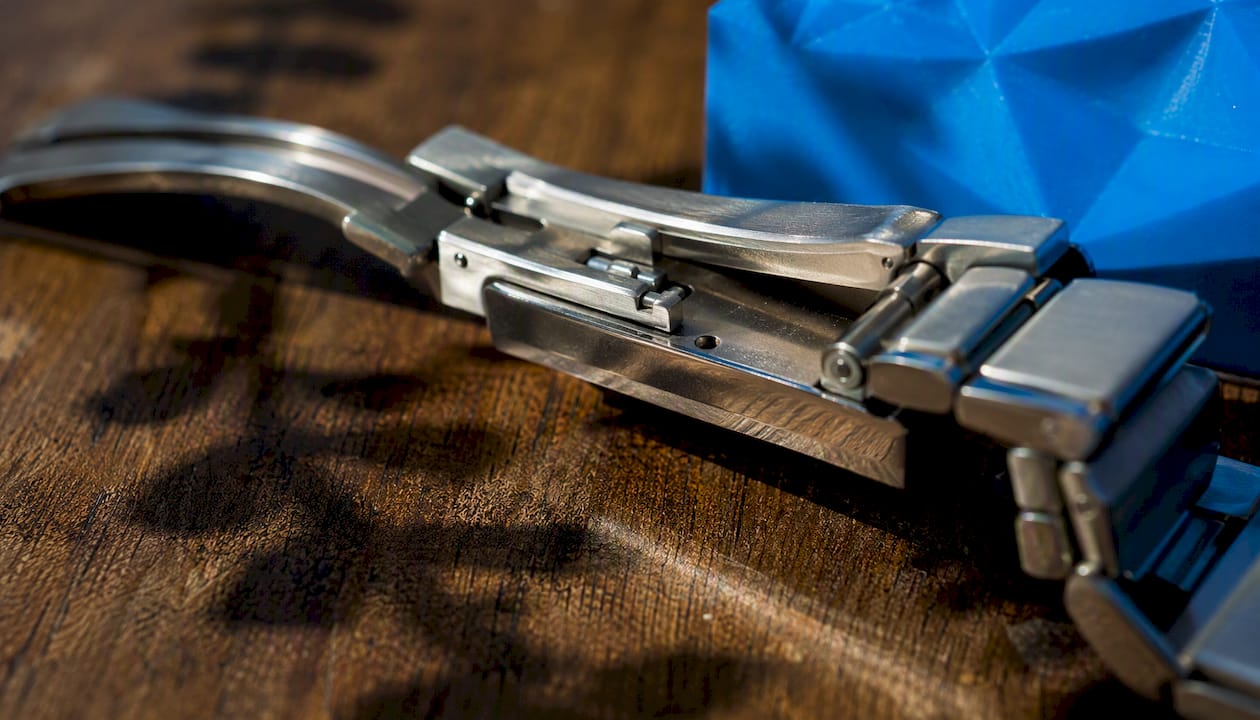
A button or tab is pressed to release a spring-loaded pin or tongue. Common on watch-style bracelets and fold-over designs.
Visual ID: A flat body with a visible button or tab on the side. Materials: Stainless steel, gold, silver; often used on metal link bracelets.
- Pros: Secure, clean look, one-button release.
- Cons: Button can stiffen with wear; requires some hand strength to operate.
Fold-over clasp (box lock)
A hinged flap folds over a box and clicks into a latch. Often combined with a push-button release. Used on tennis bracelets and fine link chains.
Visual ID: A flat rectangular body that folds flat when closed. Materials: Gold, sterling silver, stainless steel; often polished or brushed.
- Pros: Very secure, flat profile, professional finish.
- Cons: Requires two hands; latch can wear with heavy daily use.
Tube/multi-strand clasp
A rectangular or cylindrical bar with multiple loops on each side accepts several strands simultaneously. Tube and slide-lock clasps keep strands aligned and reduce wear compared with individual jump-ring terminations.
Visual ID: A bar with two, three, or more attachment points per side. Materials: Sterling silver, gold, stainless steel, base metal.
- Pros: Keeps multi-strand designs neat, distributes tension evenly.
- Cons: Bulkier than single-strand clasps; more complex to attach.
Hidden/concealed clasp (pearl clasp, fishhook, strand clasp)
A small tongue or hook is concealed inside a decorative element — a pearl, a bead, or a metal bead cap. The clasp is invisible when the bracelet is worn.
Visual ID: Look for a seam in what appears to be a bead or decorative element. Materials: Gold, sterling silver, often set with a pearl or stone cover.
- Pros: Seamless aesthetic, no visible hardware.
- Cons: Harder to locate and open; requires practice; repair is more complex.
How do the most common clasps compare at a glance?
The table below covers the main clasp families across the criteria that matter most for design and purchase decisions. For any piece worth more than casual wear, designers and retailers often add a safety chain or secondary catch rather than relying on a single mechanism alone.
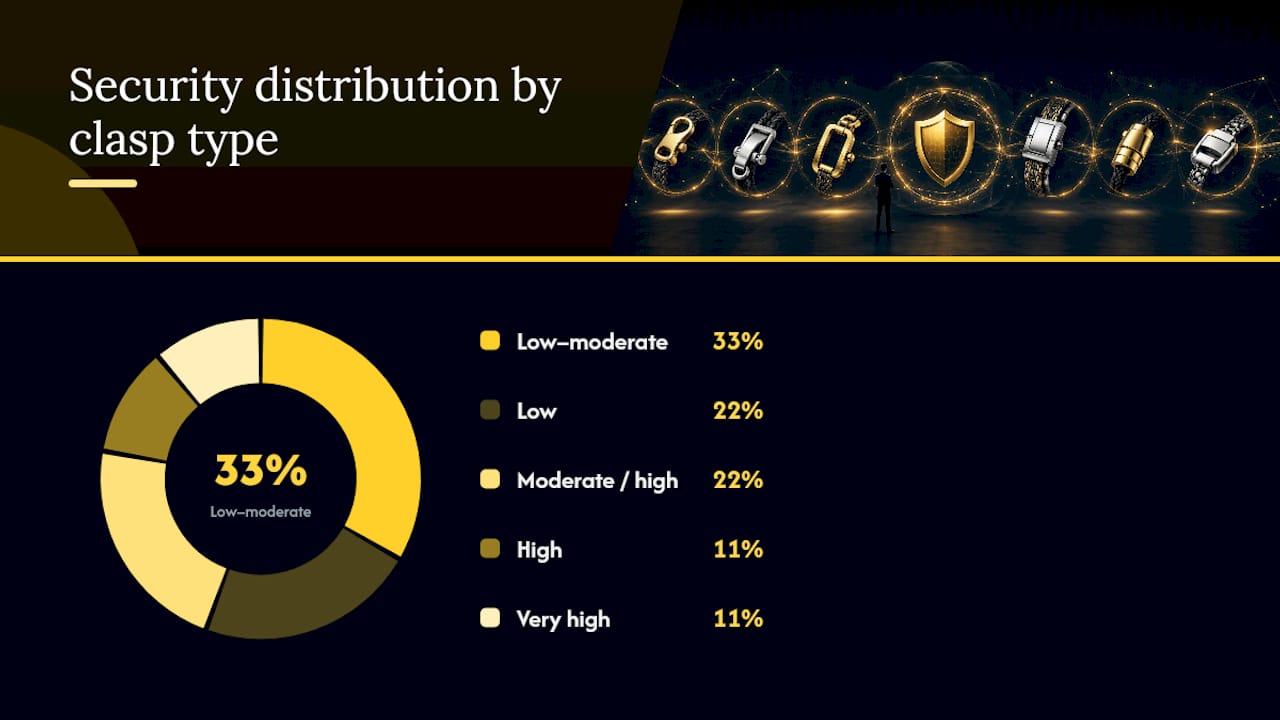
| Clasp type | Best for | Security | Ease of use | Typical materials | Common bracelet types | Repair difficulty |
|---|---|---|---|---|---|---|
| Lobster | Everyday chain, charm | High | Moderate (two hands) | SS, gold-filled, brass | Chain, bead, charm | Low / inexpensive |
| Spring ring | Delicate, lightweight chain | Moderate | Low (two hands, fiddly) | Sterling, gold-filled | Fine chain | Low / inexpensive |
| Toggle (T-bar) | Decorative, chunky bead | Low–moderate | High (one hand) | Sterling, brass, gold | Beaded, chunky chain | Low |
| Box + safety catch | Fine, high-value | Very high | Moderate | Gold, sterling, SS | Tennis, fine chain | Moderate |
| Magnetic | Limited dexterity, casual | Low–moderate | Very high (one hand) | SS, plated metal | Bead, leather, casual | Low |
| Barrel/screw | Single-strand, everyday | Moderate–high | Low (two hands, threading) | Gold, sterling, SS | Chain, single-strand | Moderate |
| Hook and eye | Artisan, handmade | Low–moderate | High | Sterling, brass, copper | Leather, handmade | Very low |
| S-hook | Adjustable, artisan | Low | High | Wire, sterling, brass | Cord, leather | Very low |
| Bolo/slide | Adjustable fit | Low | Very high | Metal + cord/leather | Cord, thin chain | Low |
| Push-release | Link bracelet, watch-style | High | Moderate | SS, gold | Metal link, tennis | Moderate–high |
| Fold-over (box lock) | Tennis, fine link | Very high | Moderate | Gold, SS, sterling | Tennis, fine link | Moderate–high |
| Tube/multi-strand | Multi-strand designs | Moderate–high | Moderate | Sterling, gold, SS | Multi-strand bead/chain | Moderate |
| Hidden/concealed | Pearl, seamless aesthetic | Moderate | Low (hard to locate) | Gold, sterling | Pearl, bead strand | High / specialist |
For high-value or active-wear pieces like tennis bracelets, a fold-over or box clasp with a secondary safety latch is the standard recommendation. A safety chain costs very little and can prevent losing a piece entirely.
How do you choose the right clasp for your bracelet?
Pick by four things first: the weight of the piece, the dexterity of the wearer, whether the clasp should be visible as a design feature, and how much the piece is worth. Everything else follows from those four.
Quick decision checklist:
- Match clasp strength to piece weight. A heavy charm bracelet needs a lobster or box clasp; a lightweight seed-bead strand can use a spring ring or toggle.
- Prioritize ease of use for one-handed wearers. Magnetic or toggle clasps are the right call for elderly wearers, children, or anyone with arthritis.
- Match finish and metal type. A gold-filled bracelet deserves a gold-filled clasp — mixing metals looks unfinished and accelerates galvanic corrosion.
- Consider repairability. Lobster and spring ring clasps are cheap and easy to swap. Hidden clasps require a jeweler.
- Add a backup on valuable pieces. A safety chain or secondary catch is worth the small extra cost on any piece above casual price points.
Sample pairings:
- Delicate chain bracelet — small lobster or spring ring; keep the clasp proportional to the chain gauge.
- Charm bracelet — medium lobster clasp; the weight of charms keeps it secure and the lobster is easy to add or remove charms from.
- Toggle bracelet — toggle clasp works best when the bracelet is heavy enough to hold the T-bar in the ring; pair with chunky beads or thick chain.
- Tennis-style stone bracelet — box clasp with safety catch or fold-over lock; add a safety chain for pieces with significant stone value.
- Leather cuff — fold-over clasp, buckle, or snap; avoid spring ring (incompatible end fittings).
- Multi-strand bead bracelet — tube or slide-lock clasp; keeps strands parallel and prevents tangling.
- Pearl strand bracelet — hidden/fishhook clasp for a seamless look, or a box clasp with a pearl cover.
- Casual everyday bracelet for a wearer with limited dexterity — magnetic clasp; confirm the wearer has no pacemaker before recommending.
A note on jump rings and gauge sizing: The clasp’s attachment loop must match the jump ring gauge of the bracelet. A 4mm jump ring on a heavy chain paired with a clasp rated for fine wire will fail at the connection point, not the clasp itself. When in doubt, upsize the clasp and the jump ring together. For hypoallergenic considerations, stainless steel clasps are a reliable choice for sensitive skin.
Which clasps are most likely to fail, and how do you test one?
Box clasps with safety catches and high-quality fold-over locks rate highest for security. Standard toggle and magnetic clasps are easier to use but generally less secure under active wear or with heavy pieces.
At-home clasp test protocol:
- Visual inspection. Look for bent tongues, worn spring tabs, cracked box housing, or stripped threads on barrel clasps. Any visible deformation is a reason to replace.
- Load test. Hold the bracelet by the clasp and let the full weight of the piece hang. Give a light, controlled tug. A sound clasp does not flex or pop open.
- Rotate and check. For lobster and spring ring clasps, rotate the clasp body while it is closed. The gate should not open under lateral pressure.
- Magnet pull test. For magnetic clasps, pull the two halves apart with a steady lateral force (sideways, not straight out). If they separate easily under light sideways pressure, the magnet is too weak for anything heavier than a lightweight bead strand.
- Thread check. For barrel clasps, screw and unscrew three times. The threads should feel smooth and snug. Grinding or wobbling means the threads are worn.
Common failure modes:
- Spring fatigue on lobster and spring ring clasps (the gate stops snapping shut cleanly)
- Bent or worn tongue on box clasps (the click becomes loose)
- Stripped threads on barrel clasps
- Magnet demagnetization on cheap magnetic clasps after exposure to heat or other magnets
- Worn safety tab on box clasps (the secondary catch no longer engages)
Protection upgrades: Add a small safety chain between the bracelet ends as a backup. For leather pieces, a sewn-in reinforcement at the clasp attachment point prevents tearing. On high-value pieces, a locking fold-over or a secondary catch is worth the added cost.
Pro Tip: Designers in production settings flex the clasp gate rapidly 20–30 times before shipping. A spring that weakens noticeably within that short cycle will fail quickly in real wear — replace it before the piece leaves the bench.
What designers and buyers need to know about materials and sizing
Metal type and plating thickness affect how long a clasp looks good and how safe it is against skin reactions. Plated findings can wear through at moving parts; the hinge, spring gate, and tongue are the first places plating fails. For everyday pieces, specify a plating thickness of at least 2.5 microns over a compatible base metal, or choose solid stainless steel or solid gold findings.
Nickel is a common allergen in base-metal findings. If you or your customer has sensitive skin, specify nickel-free or stainless steel clasps. Designers selling in regulated markets should check supplier documentation for restricted substances. California’s Prop 65 program, for example, requires consumer warnings for certain chemicals that may be present in some jewelry findings and finishes — worth confirming with your supplier before selling.
Sizing guide by use case:
- Fine chain (under 1.5mm gauge): Spring ring 5–6mm or small lobster 8–10mm; use a 3–4mm jump ring.
- Medium chain (1.5–3mm gauge): Lobster 12–14mm; use a 4–5mm jump ring.
- Heavy chain or charm bracelet (3mm+ gauge): Lobster 16–20mm or box clasp; use a 5–6mm jump ring, soldered for security.
- Bead strand (bead hole 1–2mm): Spring ring, toggle, or box clasp with compatible end caps or crimp covers.
- Multi-strand (2–5 strands): Tube or slide-lock clasp sized to match strand count; each loop should accept the strand’s wire gauge without binding.
Installation notes:
- Solder jump rings on high-value or active-wear pieces. An open jump ring is the most common failure point, not the clasp itself.
- Use crimp beads or crimp tubes on bead-strand bracelets; a double crimp adds redundancy.
- For leather ends, use fold-over crimp ends or glue-in end caps rated for the leather thickness, then attach the clasp with a soldered or heavy-gauge jump ring.
- When in doubt, have a jeweler attach the clasp. The cost is small relative to the value of the piece.
For pieces meant to resist water and tarnish, solid stainless steel findings are the most practical choice. More on waterproof and anti-tarnish options is worth reading before you finalize your hardware spec.
How do you maintain clasps and know when to replace them?
Most clasps last years with basic care. The ones that fail early usually show warning signs first.
Inspection checklist (run this every few months for pieces you wear regularly):
- Spring tension: does the gate or tongue snap shut with a clean click, or does it feel loose?
- Bent tongues: hold the box clasp up to light and check that the tongue sits flat and straight.
- Thread integrity: screw and unscrew barrel clasps; any grinding or wobbling means the threads are worn.
- Magnet strength: press the two halves of a magnetic clasp together and try to slide them apart sideways. Significant weakening means the magnet has degraded.
- Plating at moving parts: check the hinge, gate, and tongue for bare metal showing through.
Repair vs. replacement: Replacing a spring mechanism on a lobster clasp is inexpensive and any jeweler can do it. Rethreading a barrel clasp is possible but rarely worth the cost — a new clasp is usually cheaper. Hidden and fold-over clasps with worn latches should go to a specialist; a failed latch on a high-value piece is not a DIY fix. When the base metal is showing through plating at a stress point, replace the clasp rather than replate — replating a single finding is rarely cost-effective.
Maintenance tips:
- Wipe plated clasps with a dry cloth after wear, especially after contact with sweat or salt water. Moisture accelerates plating wear at the hinge.
- Store bracelets unclasped to reduce spring fatigue.
- Avoid ultrasonic cleaners on magnetic clasps; vibration can weaken the magnet.
Safety note: Magnetic clasps can interfere with pacemakers and other implanted cardiac devices. Anyone with a pacemaker should avoid magnetic clasps entirely and choose a lobster, box, or toggle clasp instead.
A note from Wynwoodblvd on clasp quality
At Wynwoodblvd, clasp selection is not an afterthought. Every piece in our stainless steel jewelry line is designed with the hardware in mind from the start — because a bracelet that looks great but fails at the clasp is not a finished product. We choose findings that match the weight, finish, and daily-wear demands of each design, and we hold the same standard for our custom-branded pieces made for hotels, brands, and corporate clients.
If you are designing a piece and want guidance on hardware that fits your brief, or if you are looking for custom jewelry with specific clasp requirements, reach out directly. We are happy to discuss options.
Wynwoodblvd jewelry: built with the right hardware from the start
When you want jewelry that holds up in real life, the clasp is where quality shows first. Wynwoodblvd’s stainless steel bracelet and necklace collection is built with findings chosen for durability and finish consistency — the same attention to hardware that goes into our Miami-inspired watches.
Browse the full jewelry collection to see how clasp choice and material quality come together in pieces designed for coastal, everyday wear. If you need custom-branded jewelry or watches for your business, the B2B custom program covers logo engraving, dial customization, and bulk ordering with the same hardware standards applied to every piece.
Sources
These sources informed this guide and are worth bookmarking for deeper technical detail or parts sourcing.
- Types of Jewelry Clasps: A Complete Guide for Jewelry Designers
- Types of jewelry clasps — MyGemologist
- Types of Jewelry Clasps and Closures — Halstead
- 12 Types of Jewelry Clasps Compared — SageStone
- Top 15 Bracelet Clasp Types: a Complete Guide to Choosing the Best Closure | Tianyu Gems
- P65warnings